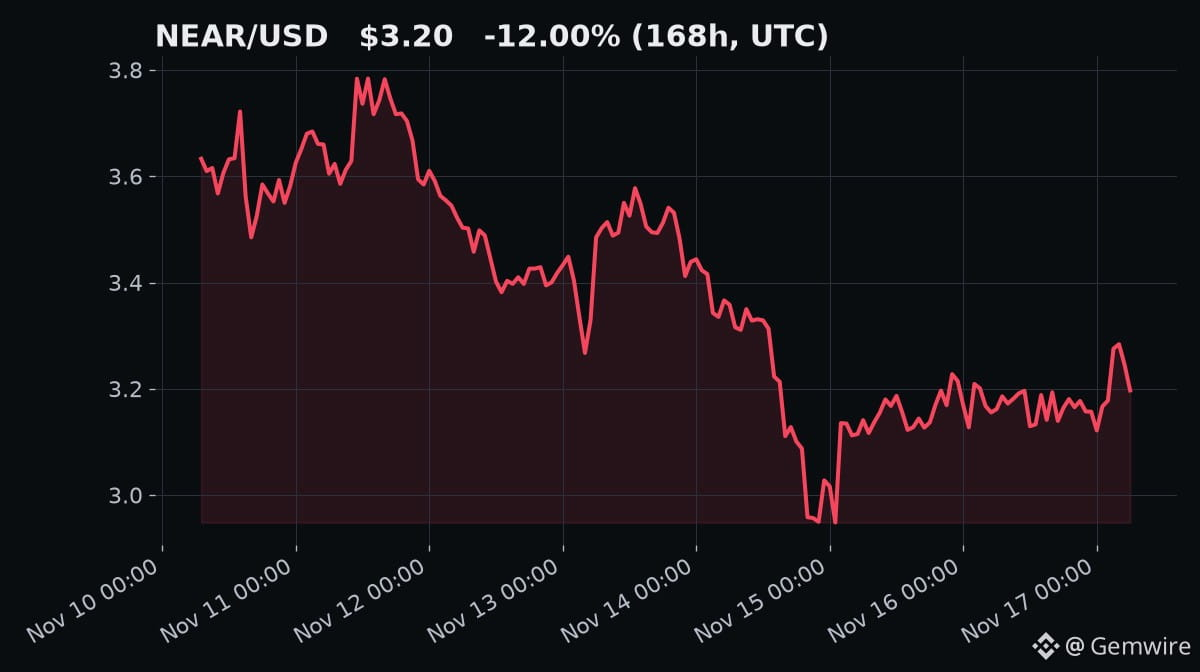
NEAR's inflation cut cleared its last veto window yesterday. Here's what it changes for holders.
$NEAR 's House of Stake voted 99.96% in favor (Nov 2). The Security Council's review closed Nov 16 with no veto. Max annual issuance falls from 2.5% to 1.6%, in tiny steps every epoch over 24 months.
What it means:
• Stakers: the proposal models gross yield dropping from about 5.27% to about 3.37% at the target, if the staking ratio holds.
• Non-stakers (more than half of supply): dilution slows.
• Supply: about 11.8M NEAR never created over two years vs staying at 2.5% (NEAR's own model).
The catch: it isn't live. There's a one-quarter grace period, then validators must adopt the upgrade. Meanwhile NEAR sits at $3.20, down 12% over 7 days, so the market isn't paying for a 2027 schedule yet.
Does lower issuance matter more than demand for the token? Where do you land?
#NEAR #Tokenomics
Disclosure: Write to Earn may pay me a commission on cashtag trades.