



Global markets “evaporated” about $2.2 trillion on November 16 as US stocks, precious metals and Asian shares all plunged. Technology stocks and AI-related names suffered the steepest declines.
However, the sell-off was not triggered by a single shock. Five key factors converged, fueling investor concerns and prompting them to flee.
5 Key Reasons the Market “Evaporated” $2.2 Trillion
A sell-off usually describes a sharp decline in asset prices as investors collectively reduce risk. This time, losses spread across many different asset classes.
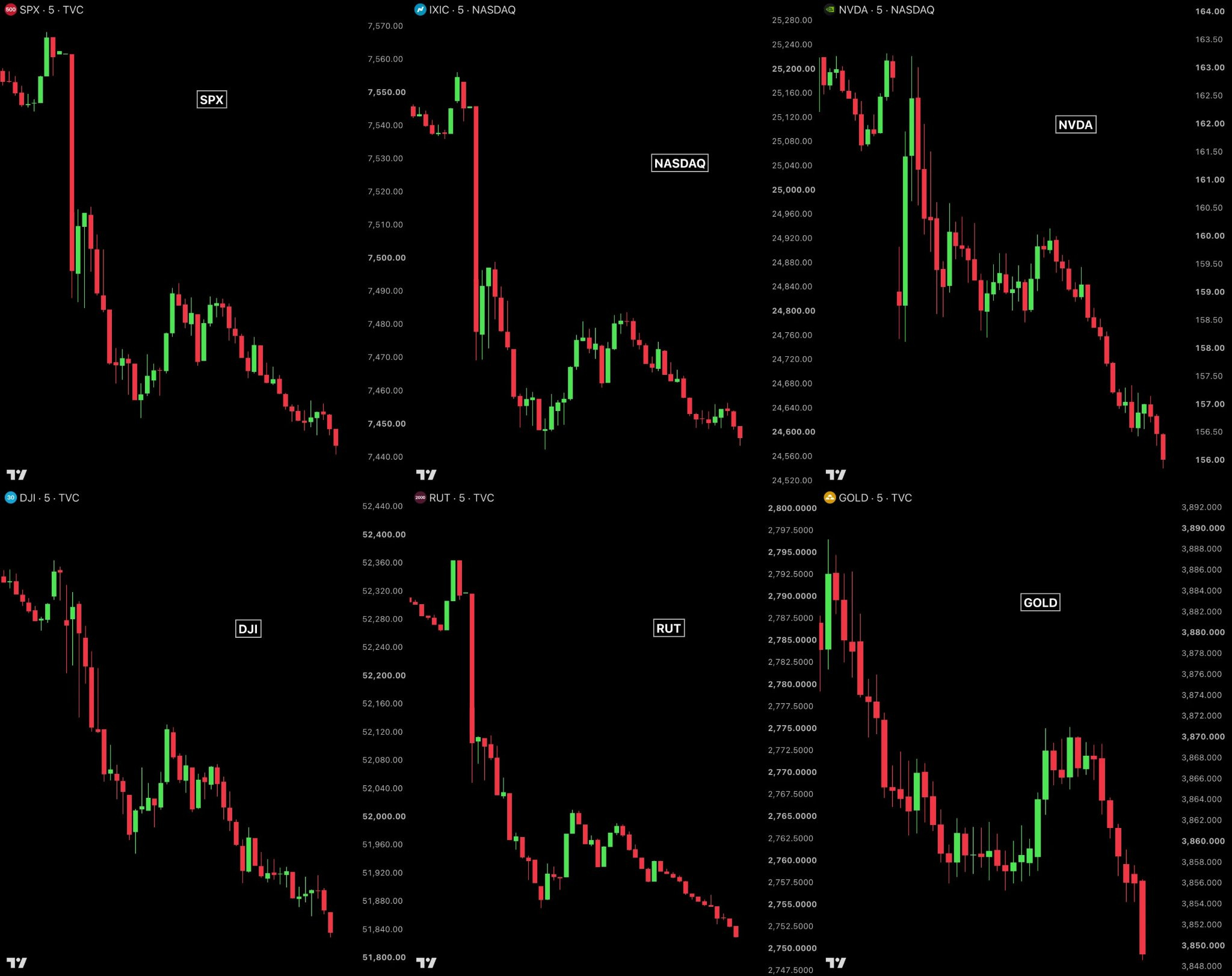
According to market data, the S&P 500 alone lost about $1.06 trillion. The Nasdaq shed $870 billion, the Dow fell by $270 billion, and the Russell 2000 lost $55 billion.
Gold also “evaporated,” losing about $420 billion, while silver shed $130 billion and Asian stocks fell by $600 billion.
1. NVIDIA Leadership Crisis
The biggest trigger was NVIDIA CEO Jensen Huang’s sudden resignation. According to reports, the board has no plans to bring him back.
In addition, sources say the board is considering an investigation into national security concerns, following allegations related to his personal relationships and suspicions that U.S. authorities have linked him to Chinese espionage.
This has caused chip stocks to fall further. Investors are also concerned that turmoil at NVIDIA could negatively affect the entire AI sector.
2. Fed Chair Warsh Warns of AI Risks
Federal Reserve Chair Kevin Warsh also added to market concerns. He raised the possibility that the wave of AI investment might not deliver the expected results.
According to Warsh, that could lead to falling stock prices, slower growth, and higher unemployment. His remarks suggest policymakers are concerned about excessive concentration in AI stocks.
3. U.S. Tightens Chip Export Controls
Semiconductor stocks faced renewed policy pressure. The U.S. has tightened regulations on exports of advanced chips overseas, sending the sector into a steeper decline.
Intel fell more than 6% after facing a class-action lawsuit alleging that the company concealed information about declining PC sales. Meanwhile, shares of Alphabet and Amazon each fell about 3%.
As a result, the Nasdaq fell nearly 2.5%, while the VIX volatility index surged to 24%.
4. Concerns Ahead of Earnings Season and Rising Yields
Investors also face a packed event calendar. NVIDIA will report earnings on Tuesday, while Anthropic’s much-anticipated IPO is scheduled for later this week.
At the same time, U.S. Treasury yields are approaching their highest levels in years, while the U.S. dollar continues to strengthen. Markets also expect the Fed to keep raising interest rates to control inflation.
These factors have weighed heavily on growth stocks and non-yielding assets such as gold and silver. Asian chip stocks also plunged overnight, with the sell-off spilling over into U.S. equities.
5. Banking Outages Send Financial Stocks Lower
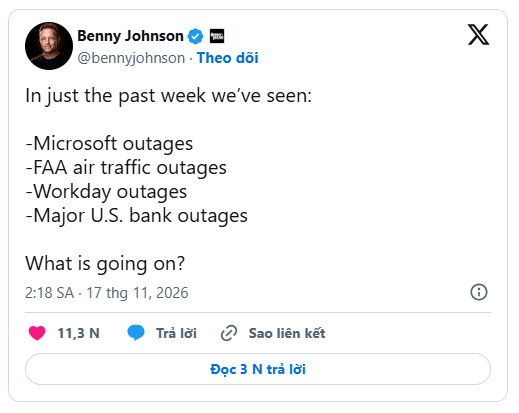
Late in the trading session, several major U.S. banks experienced online outages. Downdetector reported problems with the systems of Chase, Bank of America, Wells Fargo, and Capital One.
Chase said a “technical” issue had delayed some transactions, but insisted customers could still access their accounts and funds.
Even so, financial stocks fell sharply, pushing the market to its session lows. JPMorgan fell more than 2.4%, Bank of America dropped over 2.1%, and Wells Fargo lost nearly 2%.
Scenarios for the Market After This Sell-Off
What happens next will depend heavily on this week’s events. NVIDIA’s results and Anthropic’s stock market debut will be key signals for the AI rally. Asian markets also matter greatly, as these countries are closely tied to the global chip supply chain.
For now, the sharp one-day decline reflects mounting tensions surrounding the AI story. After months of volatility, valuations had risen so high that many investors decided to reduce their risk.
Together, these factors triggered a broad-based sell-off. Investors sold technology stocks, precious metals, and Asian equities all at once.
Interest rate expectations also matter greatly. If there are signs that the Federal Reserve will raise rates further, pressure on growth stocks and gold will persist. However, if NVIDIA reports strong results, this sell-off may prove temporary.
Conversely, if NVIDIA’s outlook is poor, confidence in the AI-driven growth trend could be shaken further.