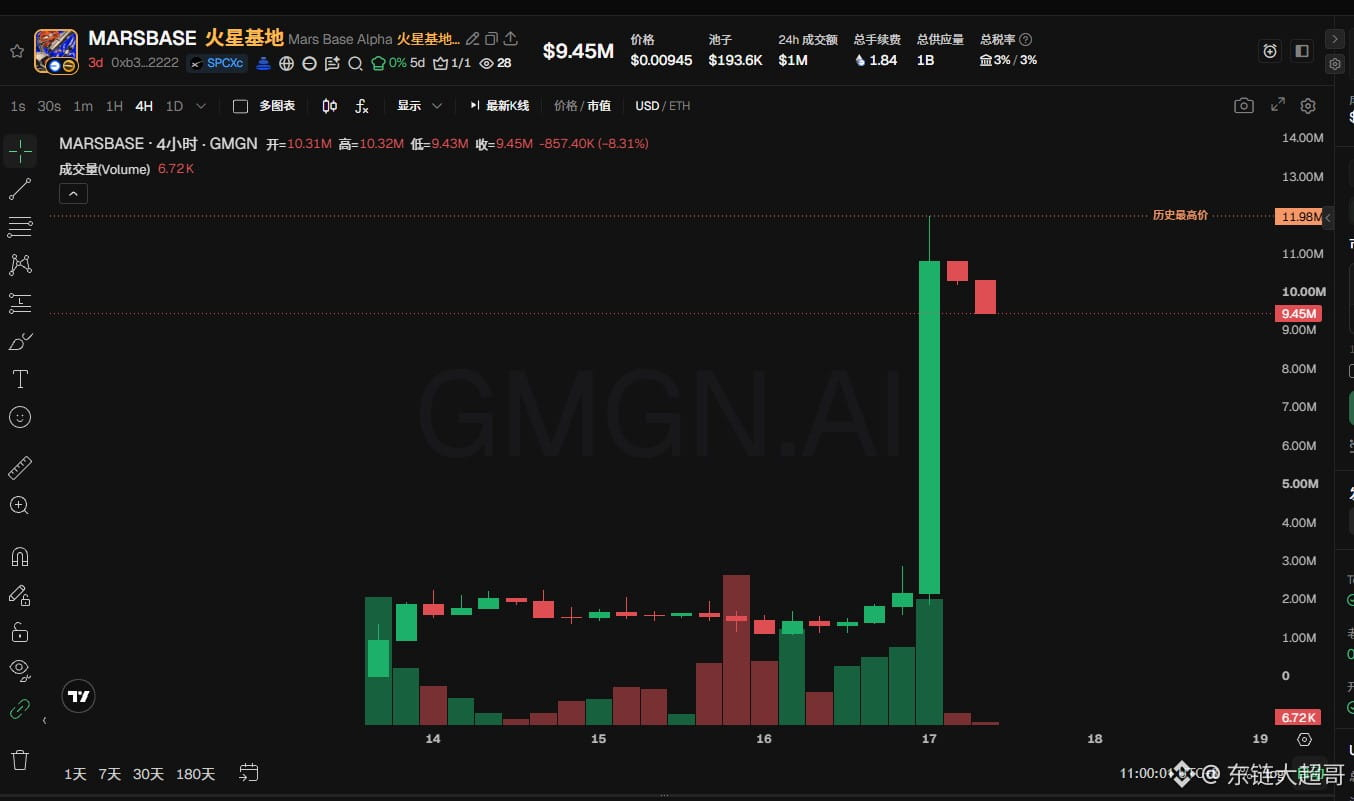
The token hadn’t even launched, and the wallets were already ready.
Mars Base went up 7x in a day, and everyone was asking how it had taken off. Dachao traced its early buyers on-chain, and what he found sent a chill down his spine.
The earliest wallets at the top all looked almost identical. Every one of them entered three days ago, each traded back and forth 20 or 30 times, and each now holds around $11,000 worth of tokens. They all have roughly a 0.12% share. It’s like they were copied and pasted.
Looking further into where the money came from, he found that these wallets had all been funded by a handful of the same addresses, 8 or 9 days ago. But the token itself only launched 4 days ago.
Here’s roughly how it worked: first, set up a bunch of small accounts. As soon as the token launches, buy in batches, with each account holding only a little. That way, the top 10 wallets add up to just 8%, making the holdings look very spread out—anyone would think it was a retail-driven token. Then have those accounts trade among themselves to inflate the volume and get the token onto various trending lists. On Twitter, post things like “just a few votes from making the list.” Once the buzz is manufactured, pump it 7x in one go.
And with Musk’s dream of Mars as a backdrop, the end of this month happens to be the once-every-two-years window when Mars is closest to Earth. The story was already there for the taking.
So it didn’t take off because a huge wave of people suddenly got bullish on Mars. Someone had laid the groundwork in advance.
Whether it can keep rising now depends not on Mars, but on whether the market maker wants to pump it again. He can push it higher if he wants—but all those small accounts he controls can just as easily dump their holdings together at any moment.
Trading a setup like this means betting against the market maker. Make sure you know what you’re getting into, guys.
CA: 0xb3c86288f00ca2ee9de57f6cd5db1ab75c2d2222
#MarsBase $MARSBASE