The work is done; there’s no need to look back: To Jensen Huang as he leaves Nvidia
In 1993, in a booth at a Denny’s in Silicon Valley, 30-year-old Jensen Huang spent a long time talking with two other young men over bottomless coffee. At another Denny’s, when he was 15, he had washed dishes at one in Oregon. And further back, at age nine, he had been sent to the United States, where he scrubbed toilets at a boarding school in Kentucky.
The company that came out of that conversation was Nvidia. Thirty-three years later, on November 11, 2026, the board accepted his resignation.
His legacy is already written: When people talk about the engine of the AI revolution, Jensen Huang’s name is impossible to leave out. However this month’s news is spun, it cannot change that.
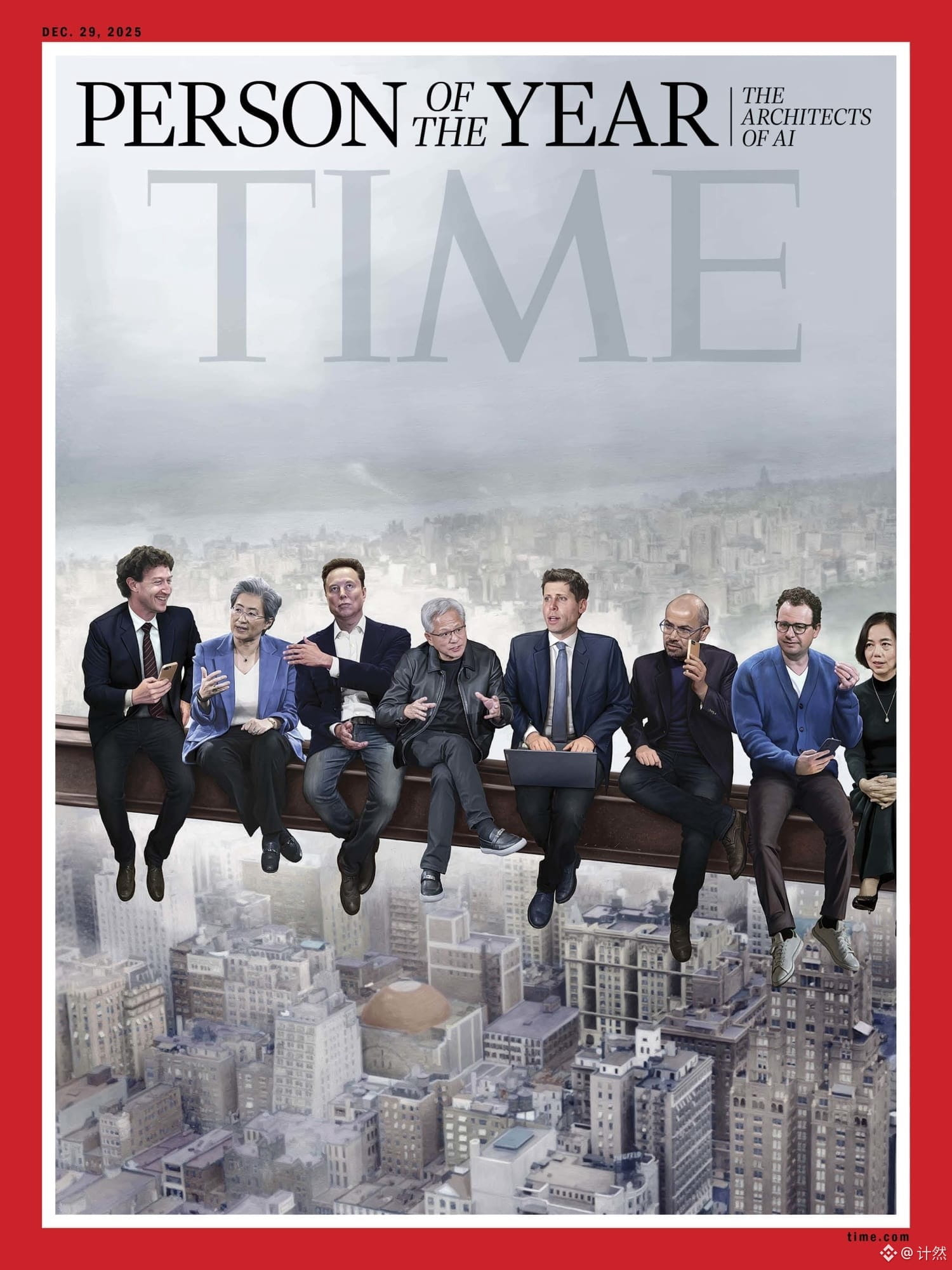
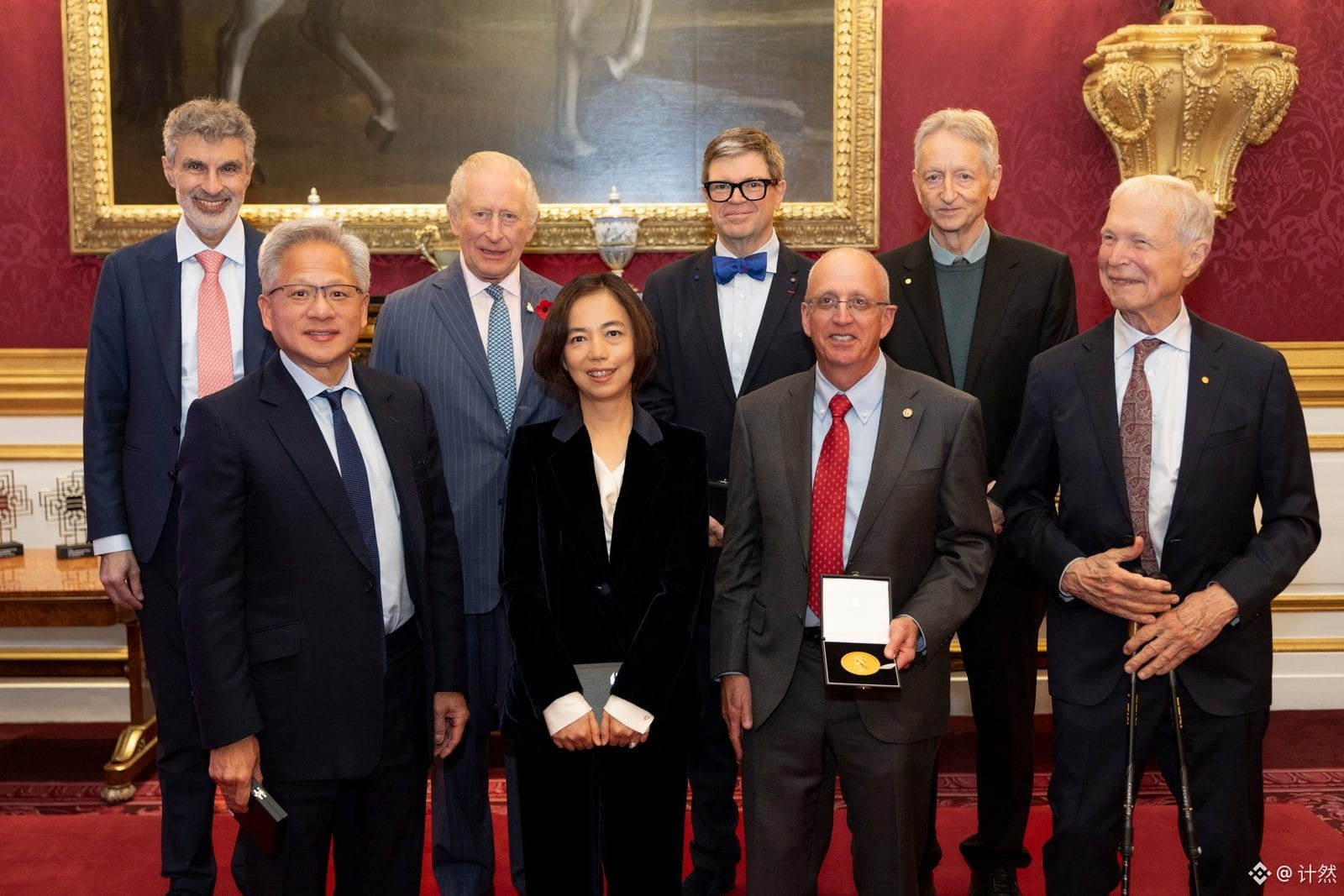
Huang’s achievements are not a matter of favoritism toward any one company. In 2025, the Queen Elizabeth Prize for Engineering went to seven people in recognition of their foundational contributions to modern machine learning. He stood alongside Hinton, LeCun, Bengio, and Fei-Fei Li in the same group photo. The award committee cited the vision to use GPUs for computing, which made it possible to run machine learning at scale. AlexNet, which ignited this wave of AI in 2012, was trained on two Nvidia graphics cards; Hinton was one of its creators. At the end of 2025, Time named “the Architects of AI” its Person of the Year. Eight people sat side by side on a steel beam on the cover, with Huang in the middle.
In 2016, Klaus Schwab, founder of the World Economic Forum, introduced the idea of the “Fourth Industrial Revolution,” with artificial intelligence as one of its core technologies. The age of steam remembers Watt; the age of electricity remembers Edison and Tesla. The AI age will remember Jensen Huang. Watt didn’t invent the steam engine; he made it truly useful. Huang didn’t invent AI; he made it truly run.
What’s even more remarkable is that this engine almost never got built.
A few years into the startup, the company landed a chip contract for Sega’s game console. Halfway through, they realized they had bet on the wrong technology. Continuing meant certain failure; stopping meant they didn’t have enough cash to make it to the next product. Huang went to Sega’s chief, admitted in person that he was wrong and couldn’t fulfill the contract, then asked him to pay anyway, or the company wouldn’t survive. Sega agreed. The money bought the company about six months. The team managed to build its next chip before the cash ran out, and that gave them a chance to catch their breath. Many years later, he told a group of graduates: “Facing your mistakes and humbling yourself to ask for help saved Nvidia.”
Then came CUDA. Huang made sure every graphics card came with it. Chip costs went up, and profits went down. In his own words, the company’s market value hovered just above a billion dollars for years. Shareholders were skeptical and urged him to focus on boosting profits. He lived through that for many years without stopping. Only when the wave of large AI models arrived did everyone see just how important that path was.
Thirty years ago, he bowed his head and admitted he was wrong, saving the company. Thirty years later, he bowed his head once more and handed the company over. The young man who had dared to ask a customer for a lifeline was now 63; he had given more than half his life to Nvidia. When he left, there was no farewell speech.
The company he had built from the ground up changed drivers overnight. On November 8, in a letter to employees, he wrote, “I was unfaithful to my wife.” He apologized to his wife and family, to his colleagues, the board, and shareholders, and said he took full responsibility. The crowds that once chased him for his autograph had become cameras chasing him with questions.
The matters that need investigating must be fully investigated; no one can sidestep that. But before any conclusions were reached, the headlines had already delivered their verdict. It takes courage for someone to stand up and say the most humiliating words himself.
On November 16, the U.S. president was asked about him. He said Huang had “learned a very big lesson,” and that he wouldn’t mind if Huang returned to the job. The lesson has already been learned. Coming from someone in that position, those words can serve as a fair-minded postscript.
There’s an open letter online called “Stand with Jensen Huang,” asking the board to bring him back. By November 16, nearly 180,000 people had signed it. Elon Musk, the founder of Shopify, and Uber’s former CEO had all added their names. When someone leaves and so many people speak up to ask him to stay—colleagues who have worked with him for years, as well as ordinary people who have never met him—that kind of support can’t be bestowed by any job title.
As for whether he goes back, that’s between him and the board. But from the outside, he has no need to prove anything more by chasing a position. Before the investigation reaches a conclusion, the odds of winning are unclear, while the costs are plain to see.
What comes after this unexpected turn? Steve Jobs left Apple in 1985, went on to found NeXT, and bought Pixar. NeXT’s technology later became the foundation of Apple’s operating systems, and Pixar transformed animated films. Leaving doesn’t have to mean the curtain has fallen.
The next step in this industrial revolution driven by AI will very likely take it beyond the data center. In 2024, speaking in Taipei, Huang said the next wave would be “physical AI”—AI that understands the laws of physics. He envisioned a future where factories would be run by robots. If the first act was about chips, the second may be about electricity, robots, and each country’s own computing infrastructure. Where the electricity will come from, who will build the robots’ brains, and how a country will create its own “AI factory”—these questions are far from answered.
Very few people have built this whole thing from scratch, and he is one of them. Once things have been resolved, he could easily sit down again in a booth at some restaurant, order a coffee, and start over. Looking back then, November 11, 2026, may not have been a full stop, but the opening whistle of the second half of his life.
The boy who washed dishes has already won once to get this far. If he wins again, it doesn’t have to be at the same poker table.
Where do you think his next stop should be?
$NVDA #英伟达 #JensenHuang