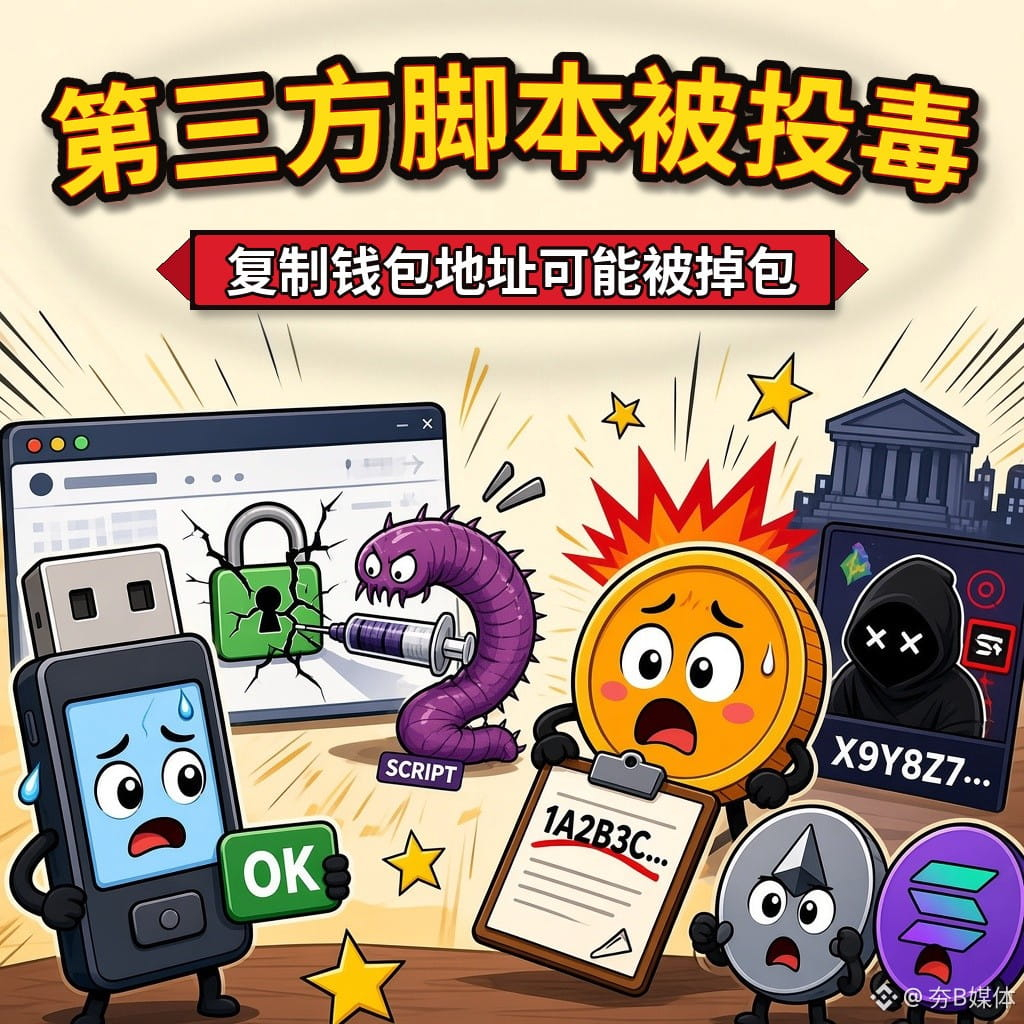
Third-party script poisoned: around 178 websites, including Ledger, affected; copied wallet addresses could be swapped
This was not an official Ledger hack, nor was an exchange hacked. On November 16, Scott Helme of cybersecurity company Report URI disclosed that attackers had injected malicious code into third-party scripts at around 178 organizations through website A/B testing platform Optimizely Web. The organizations named included Ledger, HSBC, the BBC, CNN, and Zoom. The scripts were still served from trusted domains, so the websites’ own servers might not necessarily show any signs of a problem.
The impact on you is quite specific: the malware would replace Bitcoin, Ethereum, Solana, and other wallet addresses found on web pages, in input fields, in links, and on the clipboard with the attackers’ addresses. From the afternoon of the 16th until the early hours of the 17th, if you had tabs open on these websites and copied an address to make a transfer, the funds could have gone to the wrong place. Researchers said that, as of 3:25 a.m. on the 17th (Hong Kong time), they had verified that the attackers’ wallets had received around $7,040 worth of cryptocurrency. This was only what they had observed at the time, not the full extent of the losses. Hardware wallets and exchange-custodied accounts should not be described as having been compromised in this incident.
Researchers also said that a concentrated cleanup took place from around 4:40 to 5:10 a.m. on the 17th, and that the Ledger script had been cleaned up by around 4:41. At the time, it was still unclear how the attackers obtained write access and what Optimizely’s official explanation would be. If you visited these sites and made a transfer during this period, go back and verify the recipient address.
If you recently copied an address on one of these websites and made a transfer, have you gone back to check the recipient address?
This is not investment advice.
Sources: Report URI / Scott Helme (2026-11-16, https://blog.report-uri.com/worlds-largest-brands-infected-with-malware-via-optimizely/); Wu Says X (2026-11-17 08:38 HKT, https://x.com/wublockchain12/status/2122489520168071594); BlockBeats (08:36 HKT, https://x.com/BlockBeatsAsia/status/2122488962069790822) · 2026-11-17 Hong Kong time
#供应链攻击 #钱包安全 #Ledger #夯B媒体 $BTC $ETH $SOL
This was not an official Ledger hack, nor was an exchange hacked. On November 16, Scott Helme of cybersecurity company Report URI disclosed that attackers had injected malicious code into third-party scripts at around 178 organizations through website A/B testing platform Optimizely Web. The organizations named included Ledger, HSBC, the BBC, CNN, and Zoom. The scripts were still served from trusted domains, so the websites’ own servers might not necessarily show any signs of a problem.
The impact on you is quite specific: the malware would replace Bitcoin, Ethereum, Solana, and other wallet addresses found on web pages, in input fields, in links, and on the clipboard with the attackers’ addresses. From the afternoon of the 16th until the early hours of the 17th, if you had tabs open on these websites and copied an address to make a transfer, the funds could have gone to the wrong place. Researchers said that, as of 3:25 a.m. on the 17th (Hong Kong time), they had verified that the attackers’ wallets had received around $7,040 worth of cryptocurrency. This was only what they had observed at the time, not the full extent of the losses. Hardware wallets and exchange-custodied accounts should not be described as having been compromised in this incident.
Researchers also said that a concentrated cleanup took place from around 4:40 to 5:10 a.m. on the 17th, and that the Ledger script had been cleaned up by around 4:41. At the time, it was still unclear how the attackers obtained write access and what Optimizely’s official explanation would be. If you visited these sites and made a transfer during this period, go back and verify the recipient address.
If you recently copied an address on one of these websites and made a transfer, have you gone back to check the recipient address?
This is not investment advice.
Sources: Report URI / Scott Helme (2026-11-16, https://blog.report-uri.com/worlds-largest-brands-infected-with-malware-via-optimizely/); Wu Says X (2026-11-17 08:38 HKT, https://x.com/wublockchain12/status/2122489520168071594); BlockBeats (08:36 HKT, https://x.com/BlockBeatsAsia/status/2122488962069790822) · 2026-11-17 Hong Kong time
#供应链攻击 #钱包安全 #Ledger #夯B媒体 $BTC $ETH $SOL