


for U.S. stocks, alongside declines in gold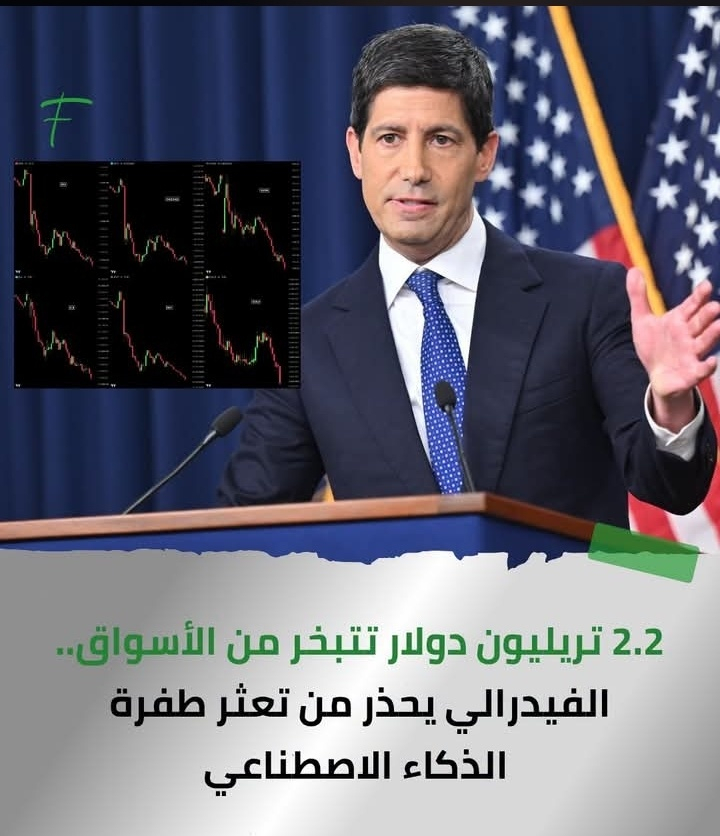
 #NVIDIA and silver and Asian stocks, amid growing concerns about the future of the artificial intelligence boom and its potential impact on the global economy.
The pressure followed remarks by Federal Reserve Chair Kevin Warsh, who outlined possible scenarios for the fallout from the artificial intelligence boom, including the stalling of an economic recovery driven by technology investment, falling stock markets, slower growth and rising unemployment.
📌 Concerns over AI investments faltering
Although massive investments—estimated at trillions of dollars—in AI technologies and data centers have helped support U.S. economic growth, they have also created vulnerabilities and risks that are becoming more apparent as market volatility increases.
In his opening remarks at a conference organized by the Federal Reserve to discuss the impact of advanced technology, or what he called “superintelligence,” on productivity and the labor market, Warsh warned of potential consequences if these investments fail to deliver the expected results.
He explained that the scale of capital investment and rising stock valuations could become a source of pressure if expected returns decline, potentially leading to lower stock prices, a slowdown in economic activity, and a significant rise in unemployment.
He also warned that AI could cause major disruptions in the labor market if it eliminates jobs rather than augmenting them, noting that expanding automation could push unemployment above levels consistent with full employment.
📌 Nvidia loses $165 billion
Amid mounting pressure on technology stocks, Nvidia shares fell 4.2%, wiping out about $165 billion in market value. This came alongside reports that the company’s board is not considering bringing its founder, Jensen Huang, back as CEO.
These developments have raised questions about the company’s future and its ability to maintain its leadership in the AI chip market, given that its expansion has been closely tied to Huang’s vision and experience steering the company and turning it into one of the world’s largest companies by market value.
Investors fear that Huang’s absence could disrupt the company’s long-term strategy and weaken market confidence in its ability to keep growing and compete with leading chipmakers, particularly as competition intensifies and global investment in AI infrastructure accelerates.
These developments put the technology sector to a dual test: preserving returns on massive AI investments and managing the economic and leadership risks that may accompany this boom.