#标普500与纳指期货创季度新低 S&P 500 and Nasdaq futures hit quarterly lows as sell-off in risk assets accelerates
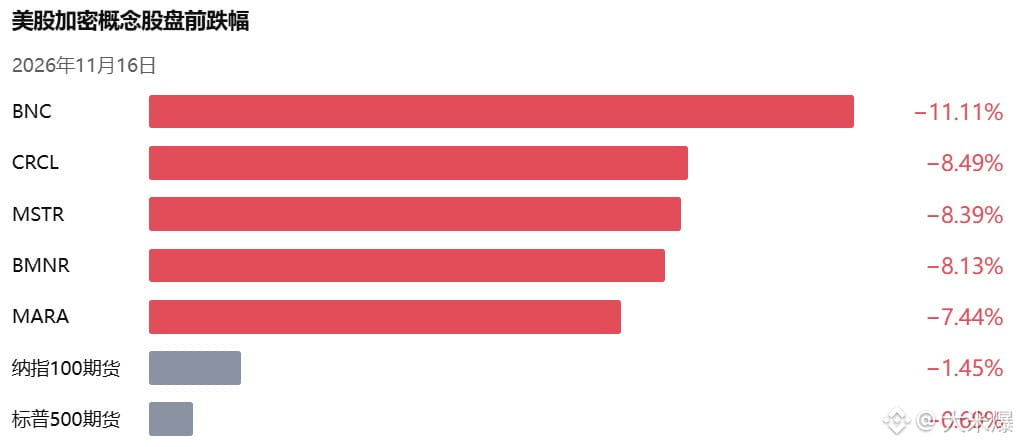
On November 16, futures on all three major U.S. stock indexes weakened. Nasdaq 100 futures fell 1.45% in premarket trading to 27,547.4; S&P 500 futures dropped 0.69% to 7,509.8, with both hitting their lowest levels this quarter, while Dow futures slipped just 0.09%.
Compared with traditional industries, AI- and cryptocurrency-related stocks bore the brunt of the sell-off. BNB Standard fell 11.11%, Circle dropped 8.49%, Strategy declined 8.39%, Bitmine fell 8.13%, and MARA lost 7.44%. The five crypto-related companies posted an average decline of about 8.7%.
The differences in declines across sectors show that this is not simply a broad market sell-off. Rather, investors are concentrating on reducing their exposure to high-risk, highly valued assets. With the yield on 10-year U.S. Treasuries remaining above 5.1%, the opportunity cost of holding risk assets has risen further.
Meanwhile, risk spillovers between cryptocurrencies and U.S. stocks are intensifying. Falling digital asset prices will weaken the balance sheets of companies holding cryptocurrency reserves. In turn, declines in those companies’ share prices could limit their ability to raise capital through the equity markets and increase their cryptocurrency holdings, diminishing a potential source of incremental buying demand.
This two-way transmission of risk could leave crypto markets facing greater pressure to correct than traditional financial markets.
When tech stocks, crypto-related stocks, and digital assets fall in tandem, so-called cross-asset allocation may not truly diversify risk; instead, it may amount to repeating the same liquidity bet across different markets.