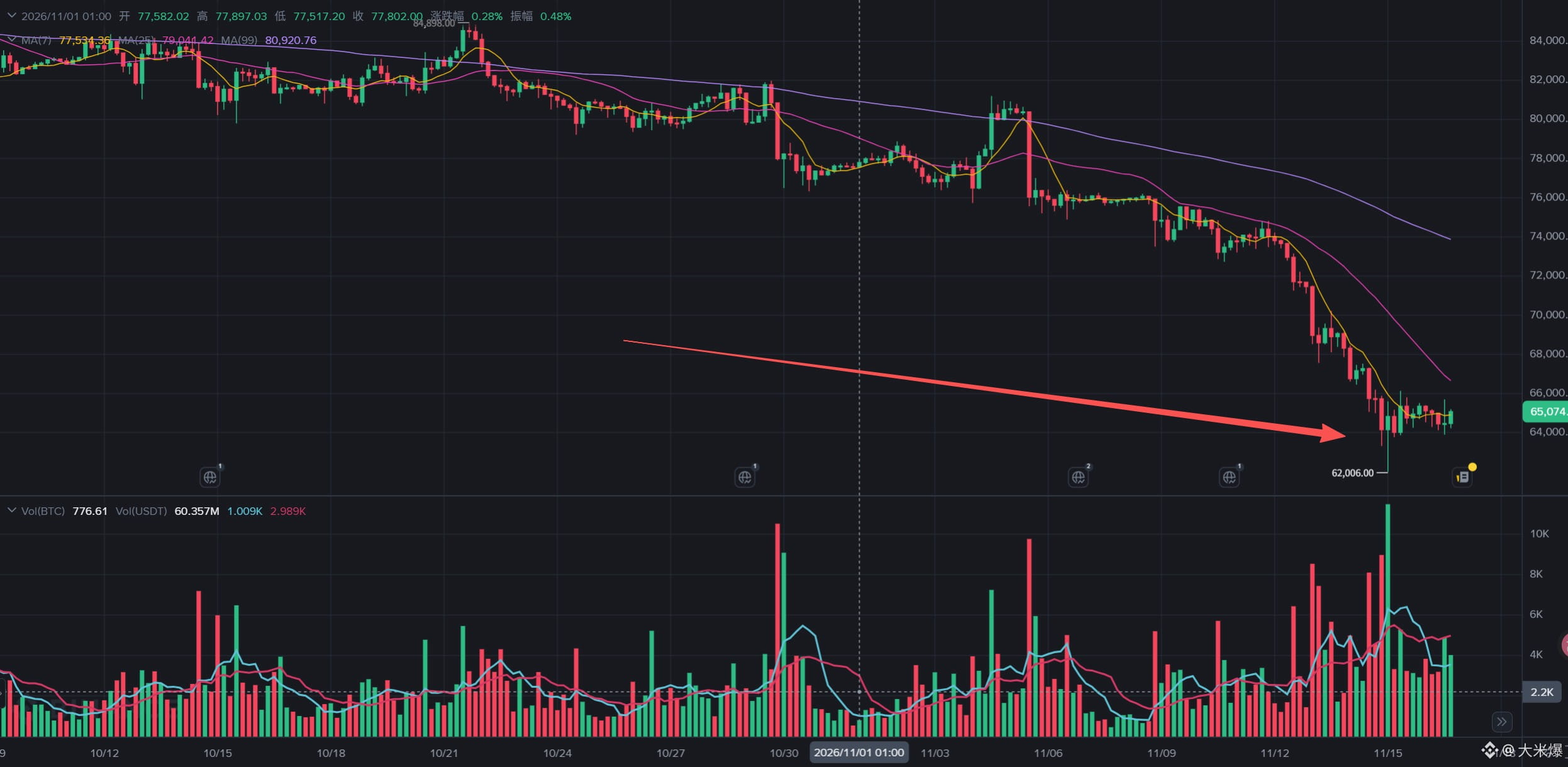
#比特币连续六周下跌 Bitcoin has fallen for six consecutive weeks. Is the market undergoing a structural adjustment?
As of November 16, Bitcoin had recorded losses for six straight weeks, its longest weekly losing streak since late February this year. Over the weekend, BTC briefly fell to around $62,100, its lowest level since July 14. It dropped more than 13% over the past week, while approximately $2 billion in leveraged positions across the crypto market were liquidated.
Historically, Bitcoin’s longest weekly losing streak occurred in 2022, when it fell for nine consecutive weeks. However, more notable than the duration of the current decline is the ongoing withdrawal of institutional capital.
U.S. spot Bitcoin ETFs have recorded net outflows for seven consecutive trading days, totaling approximately $1.91 billion. ETFs were once a major source of incremental capital driving Bitcoin’s rise, but have now become one of the factors weighing on the market.
Meanwhile, Bitcoin has fallen approximately 25% from its September peak. With Treasury yields rising, expectations of Federal Reserve rate hikes growing, and technology stock valuations pulling back, investors are reassessing the value of allocating capital to high-risk assets.
Institutional investment was once seen as an important sign of Bitcoin’s maturation, but institutionalization does not mean greater price stability. On the contrary, when the macroeconomic environment deteriorates, Bitcoin can also become an asset institutions target when reducing risk exposure.
Six consecutive weeks of declines do not mean a bottom is imminent. This market cycle is revealing another side of Bitcoin’s institutionalization: institutional capital can amplify gains in a bull market, but it can also prolong the correction in a bear market.