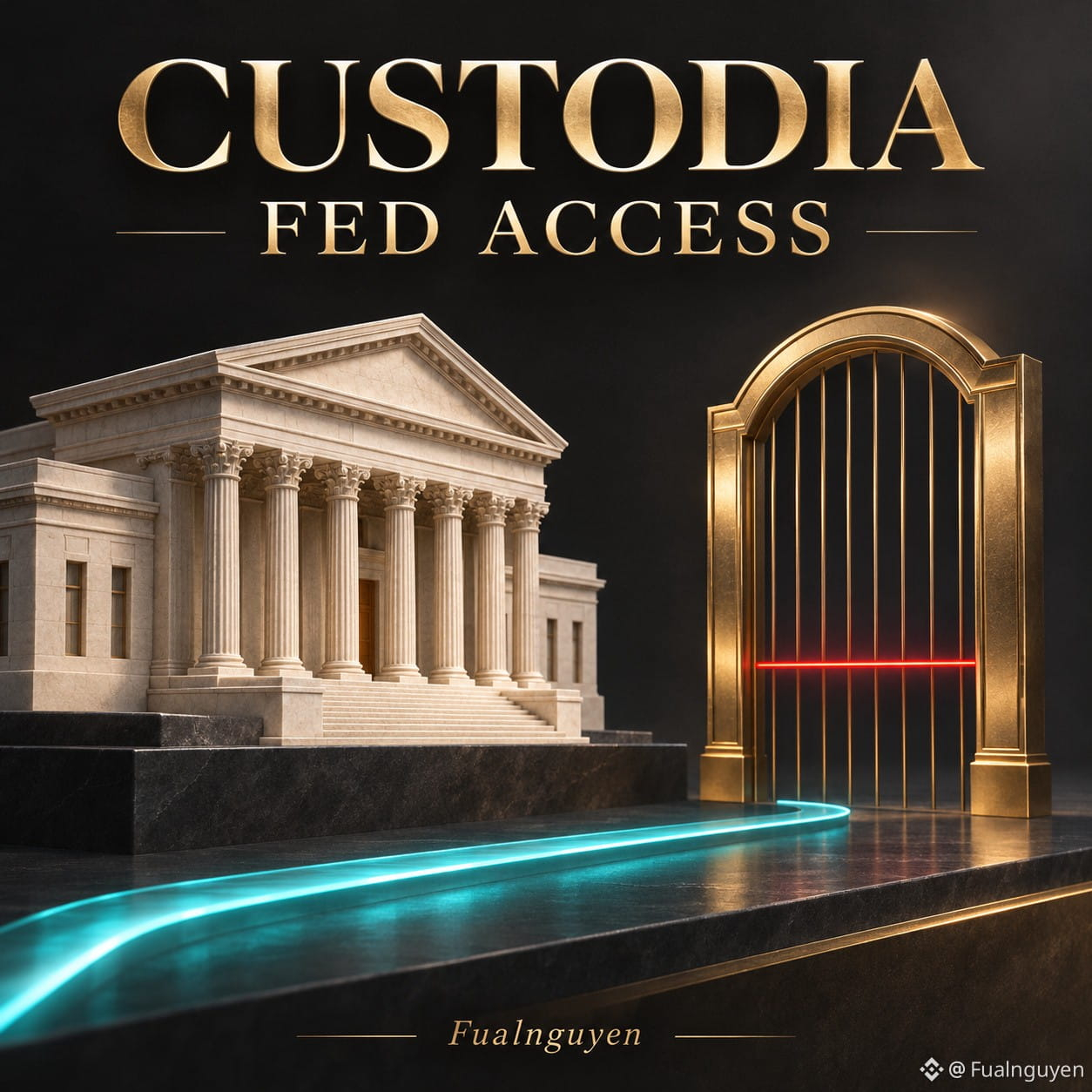
Custodia has not gained access to the Fed’s payment system through this lawsuit.
The official docket in case 26-62 records that on November 16, 2026, the U.S. Supreme Court denied Custodia Bank’s petition for review in its dispute with the Fed. The case was not taken up for review; the lower court’s ruling remains in place.
A master account is an account at a Federal Reserve Bank. For financial institutions, it is part of the infrastructure for accessing the Fed’s payment services; some institutions use another bank’s account to make payments rather than holding their own.
An important distinction: declining to review a case does not mean the Supreme Court has just issued a new ruling on the merits of the entire case. The Court’s own guidance makes this limitation clear.
To me, this news underscores a bottleneck crypto faces when connecting with traditional finance: technology can operate continuously, but access to payment infrastructure still depends on legal requirements and risk management.
This is the outcome of one specific case. It does not mean that all banks connected to crypto are blocked, nor can we conclude that the market will react in any particular direction.
When evaluating a digital finance model, I want to know more: where payments are settled, which intermediaries it depends on, and what happens when that connection is disrupted.
What do you think is the biggest challenge in connecting crypto with banks: technology or access to the payment system?
Source: U.S. Supreme Court, docket 26-62 and order list dated November 16, 2026; Fed materials on master accounts.
$BTC $ETH $BNB
The official docket in case 26-62 records that on November 16, 2026, the U.S. Supreme Court denied Custodia Bank’s petition for review in its dispute with the Fed. The case was not taken up for review; the lower court’s ruling remains in place.
A master account is an account at a Federal Reserve Bank. For financial institutions, it is part of the infrastructure for accessing the Fed’s payment services; some institutions use another bank’s account to make payments rather than holding their own.
An important distinction: declining to review a case does not mean the Supreme Court has just issued a new ruling on the merits of the entire case. The Court’s own guidance makes this limitation clear.
To me, this news underscores a bottleneck crypto faces when connecting with traditional finance: technology can operate continuously, but access to payment infrastructure still depends on legal requirements and risk management.
This is the outcome of one specific case. It does not mean that all banks connected to crypto are blocked, nor can we conclude that the market will react in any particular direction.
When evaluating a digital finance model, I want to know more: where payments are settled, which intermediaries it depends on, and what happens when that connection is disrupted.
What do you think is the biggest challenge in connecting crypto with banks: technology or access to the payment system?
Source: U.S. Supreme Court, docket 26-62 and order list dated November 16, 2026; Fed materials on master accounts.
$BTC $ETH $BNB