
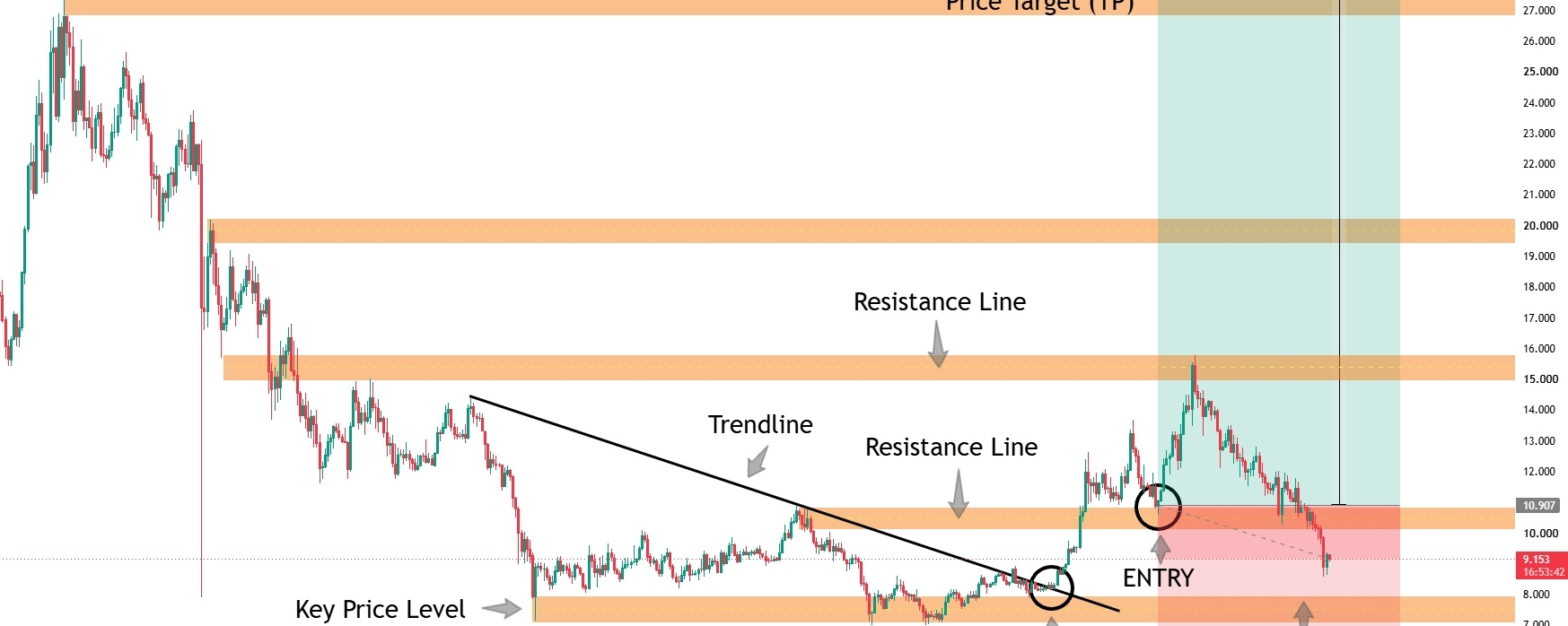
A roughly $7 BILLION cryptocurrency.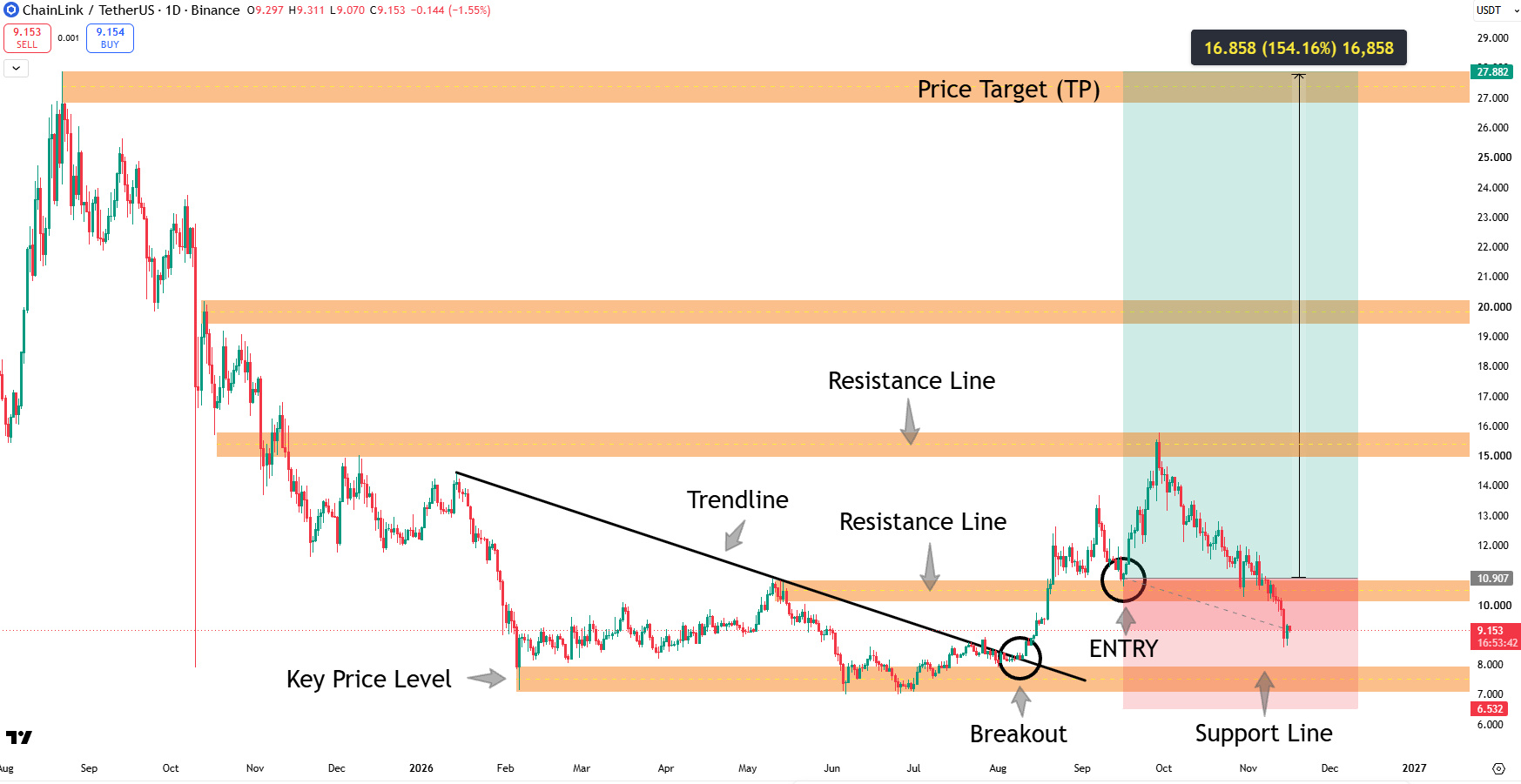
⠀
More than 766 MILLION tokens circulating.
⠀
Infrastructure connecting smart contracts with external data and other blockchains.
⠀
And a token trading approximately 83% below its all-time high.
⠀
But here's the contradiction.
⠀
Chainlink can become more important to blockchain infrastructure without LINK appreciating proportionally.
⠀
The missing link is economic value capture.
⠀
Is $LINK an overlooked investment in the infrastructure behind tokenization?
⠀
Or is the market correctly demanding stronger evidence that adoption creates meaningful token demand?
⠀
Let's examine the numbers.
⠀
01 | WHAT IS CHAINLINK?
⠀
Chainlink provides oracle infrastructure.
⠀
Its services help applications access external information, execute workflows, and communicate across blockchains.
⠀
Data Feeds aggregate information through oracle networks.
⠀
The Cross-Chain Interoperability Protocol, or CCIP, supports cross-chain messages and token transfers.
⠀
The opportunity extends across:
⠀
• Decentralized lending
• Trading applications
• Tokenized assets
• Cross-chain transfers
• Financial data
• Institutional workflows
⠀
The investment thesis is that increasingly complex blockchain applications need dependable shared infrastructure.
⠀
But technical importance and token valuation require separate analysis.
⠀
02 | THE NUMBERS THAT MATTER
⠀
November 16, 2026 research snapshot:
⠀
LINK Price: ~$9.13
Market Cap: ~$7.01B
FDV: ~$9.14B
Circulating Supply: ~766.85M LINK
Total / Maximum Supply: 1B LINK
Circulating Ratio: ~76.7%
24H Trading Volume: ~$203.9M
All-Time High: ~$52.70
Decline From ATH: ~82.7%.
⠀
TRACKED NETWORK ECONOMICS:
⠀
Total Value Secured: ~$30.73B
30D Fees: ~$4.44M
30D Reported Revenue: ~$4.23M
30D Reported Holder Revenue: ~$4.23M.
⠀
Revenue and holder revenue overlap here.
⠀
They should not be added together.
⠀
03 | WHY ORACLES MATTER
⠀
A smart contract can execute instructions correctly while receiving incorrect information.
⠀
That makes data quality an economic security issue.
⠀
Lending protocols need reliable collateral prices.
⠀
Tokenized assets need dependable reference information.
⠀
Cross-chain applications need trustworthy message verification.
⠀
Chainlink's opportunity is to become infrastructure developers prefer to integrate repeatedly.
⠀
Existing integrations can create switching costs.
⠀
However, switching costs do not eliminate competition.
⠀
Customers still care about reliability, latency, price, and implementation complexity.
⠀
The strongest position combines dependable services with commercially sustainable pricing.
⠀
04 | THE TOKENIZATION OPPORTUNITY
⠀
Chainlink's Q3 2026 review reports expanded institutional work, CCIP adoption, and additional data integrations.
⠀
It also reports that the Chainlink Reserve surpassed 6 million LINK.
⠀
These developments support the infrastructure thesis.
⠀
But investors must distinguish:
⠀
An announcement.
⠀
A technical integration.
⠀
A production deployment.
⠀
Recurring paid usage.
⠀
And revenue converted into LINK.
⠀
Those are different stages.
⠀
A large institution testing infrastructure does not automatically create a large recurring token purchase.
⠀
The investment case strengthens when deployments produce measurable economic activity.
⠀
05 | THE PAYMENT ABSTRACTION MODEL
⠀
Chainlink Payment Abstraction allows customers to pay using assets other than LINK.
⠀
Eligible payments can then be programmatically converted into LINK.
⠀
The Chainlink Reserve accumulates LINK funded by onchain service usage and offchain enterprise revenue.
⠀
This addresses an important adoption problem.
⠀
Customers can use familiar payment methods while supporting demand for the network's token through conversion.
⠀
But investors should not assume every partnership payment or every dollar of enterprise revenue immediately enters the Reserve.
⠀
Conversion timing, allocation, and actual purchases determine the economic effect.
⠀
The mechanism matters.
⠀
Its scale matters just as much.
⠀
06 | A RESERVE IS NOT A BURN
⠀
LINK accumulated in the Reserve remains part of the token supply.
⠀
Reserve purchases can create demand and retain tokens outside active trading.
⠀
They do not permanently destroy those tokens.
⠀
At launch, Chainlink said it did not expect Reserve withdrawals for multiple years.
⠀
That expectation is different from an irreversible burn.
⠀
It is also different from a dividend paid to LINK holders.
⠀
Holding LINK does not provide a proportional ownership claim on Chainlink Labs.
⠀
The investment thesis depends on token utility, purchases, retention, and future demand.
⠀
Corporate-equity language can obscure those distinctions.
⠀
07 | WHAT THE REVENUE FIGURES ACTUALLY MEAN
⠀
DefiLlama's methodology defines tracked revenue as LINK transferred from the Payment Abstraction Layer into the Reserve.
⠀
Its holder-revenue metric tracks revenue-funded LINK purchases.
⠀
These figures should not be mistaken for a complete audited income statement covering every Chainlink-related business activity.
⠀
Likewise, total value secured measures exposure supported by oracle infrastructure.
⠀
It is not revenue.
⠀
It is not capital owned by LINK holders.
⠀
A network can support substantial asset value while collecting comparatively modest fees.
⠀
The useful question is how service adoption translates into recurring token purchases after operating requirements and other allocations.
⠀
08 | THE SUPPLY RELEASE QUESTION
⠀
Chainlink's official circulating-supply page states a current release schedule of 7% of total supply annually.
⠀
With a 1 billion token cap, that represents 70 million LINK per year.
⠀
Relative to approximately 766.85 million circulating LINK, that is around 9.1%.
⠀
These releases increase circulating supply from existing allocations.
⠀
They do not increase the maximum supply.
⠀
At $9.13, 70 million LINK has a market value of approximately $639 million.
⠀
That is not a forecast of exchange selling.
⠀
But it shows why a fixed cap does not remove the need to examine additional liquid supply.
⠀
Reserve accumulation and supply releases must be assessed together.
⠀
09 | THE STAKING QUESTION
⠀
Chainlink Staking adds cryptoeconomic security to supported oracle services.
⠀
The v0.2 design introduced a 45 million LINK pool cap and node-operator slashing provisions.
⠀
Staking can encourage token retention.
⠀
But avoid assuming the deployed staking system secures every Chainlink service identically.
⠀
Coverage, participation rules, rewards, and penalties matter.
⠀
Investors should also examine where rewards originate.
⠀
Rewards funded by existing allocations have different economics from rewards sustainably funded by customer fees.
⠀
An attractive token-denominated yield does not automatically represent equivalent growth in purchasing power.
⠀
10 | THE VALUATION QUESTION
⠀
Using the 1 billion maximum supply:
⠀
$10 LINK implies $10B FDV.
⠀
$20 implies $20B.
⠀
$30 implies $30B.
⠀
$50 implies $50B.
⠀
$100 implies $100B.
⠀
These are valuation illustrations, not price targets.
⠀
Annualizing the latest $4.23 million monthly tracked revenue produces approximately $50.76 million.
⠀
Against current valuations, that implies roughly:
⠀
138× circulating market capitalization.
⠀
180× fully diluted valuation.
⠀
These are multiples of annualized tracked Reserve inflows.
⠀
They are not price-to-earnings ratios or a complete valuation model.
⠀
One month also does not establish a durable growth rate.
⠀
The comparison shows how much future expansion investors are anticipating.
⠀
11 | THE BULL AND BEAR CASE
⠀
THE BULL CASE:
⠀
DeFi and institutional deployments generate recurring paid usage.
⠀
CCIP adoption expands.
⠀
Payment Abstraction converts more revenue into LINK.
⠀
Reserve accumulation strengthens.
⠀
And demand absorbs additional circulating supply.
⠀
THE BEAR CASE:
⠀
Integrations produce limited recurring revenue.
⠀
Competition pressures pricing.
⠀
Infrastructure usage grows faster than token value capture.
⠀
Supply releases outweigh incremental purchases.
⠀
And investors continue valuing announcements more highly than realized economics.
⠀
A successful infrastructure platform can still have an expensive token.
⠀
Execution and valuation both matter.
⠀
12 | THE FINAL VERDICT
⠀
Chainlink has a credible infrastructure thesis.
⠀
Its services address real requirements in data delivery and cross-chain communication.
⠀
Payment Abstraction and the Reserve provide an operating connection between eligible revenue and LINK demand.
⠀
But the central question remains:
⠀
How large can that demand become relative to valuation and additional circulating supply?
⠀
Watch recurring paid usage.
⠀
Watch actual Reserve accumulation.
⠀
Watch supply releases.
⠀
And distinguish asset value supported from revenue earned.
⠀
An 83% decline does not establish undervaluation.
⠀
Institutional adoption does not automatically establish token appreciation.
⠀
LINK's strongest investment case requires growing infrastructure demand to become sustained, measurable demand for LINK itself.
⠀
Bookmark this analysis before the next tokenization rotation.
⠀
Which has the strongest long-term infrastructure value-capture thesis?
⠀
⠀
Drop your view below.