#Iran says two oil tankers struck mines in the Strait of Hormuz, renewing concern over safe passage
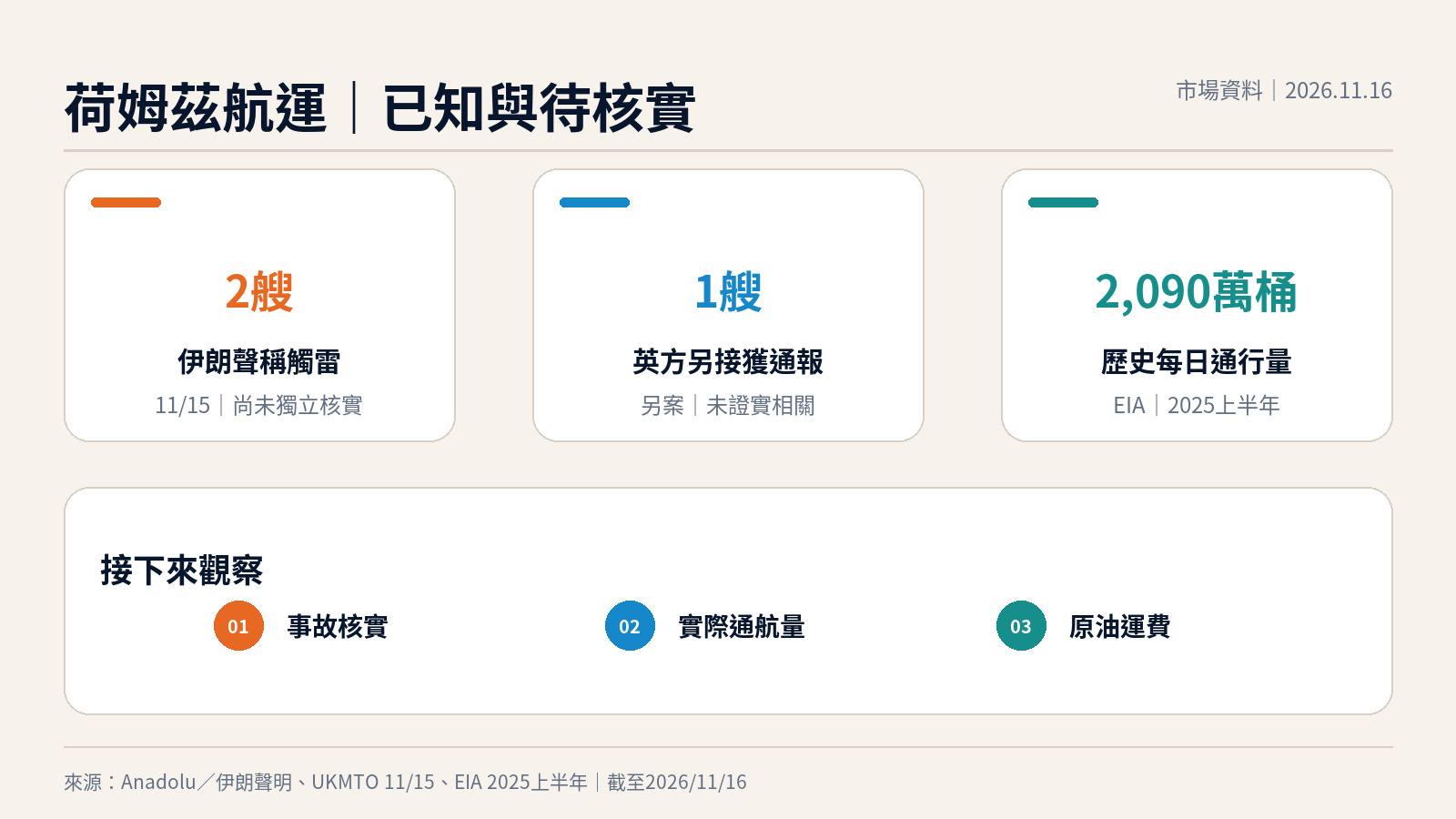
Shipping risks in the Strait of Hormuz are rising again. The key question is whether the tanker incident can be independently verified, rather than immediately assuming a supply disruption. On November 15, Iran’s Revolutionary Guard said two oil tankers caught fire after striking mines south of the strait, and claimed that one of them sank. The vessels’ names and flags have not been disclosed, and the scale of the incident has not been independently confirmed. On the same day, the UK Maritime Trade Operations office separately reported that a tanker had come under attack before entering the strait, without confirming whether it was the same incident described by Iran. If disruption to the shipping lane continues, insurance and freight costs may reflect the risk first, before it feeds through to energy prices and inflation expectations. The U.S. Energy Information Administration estimates that an average of about 20.9 million barrels of petroleum liquids per day passed through the Strait of Hormuz in the first half of 2025, equivalent to roughly one-fifth of global consumption. This is a historical benchmark, not a measure of current flows. Watch for verification from maritime authorities, actual traffic volumes, and crude oil freight rates.
This article is for informational purposes only and does not constitute investment advice.