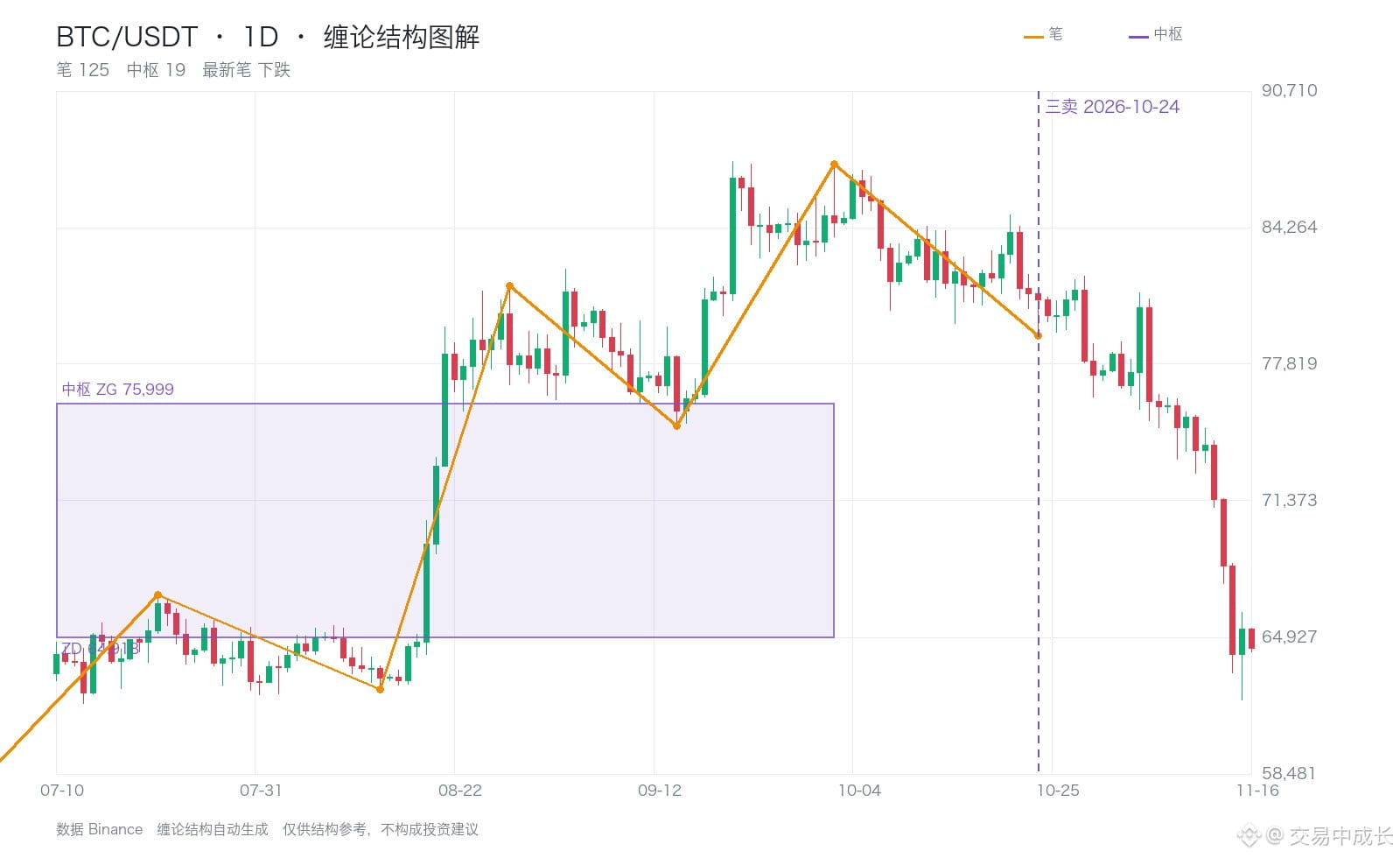
A historical example: On October 24, 2026, BTC gave a first-buy signal on the 1d timeframe.
At the time, the central zone was 64,918–75,999, and the signal price of 79,179 was above the zone's upper boundary of 75,999.
But this first-buy signal failed: within 20 candlesticks, price moved against the signal to 67,449, a 14.8% adverse move from the signal price (closing at 68,280).
A failure usually means the structure has been broken: a sell signal gets engulfed, or a buy signal gets broken. At that point, the stop-loss must be executed—don't hold on.
A first-buy signal is no guarantee of a win. It only ensures a clear entry level and a defined stop-loss; you make money through risk-reward, not by being right every time.
History doesn't simply repeat itself, but structures recur. The more often you see the same pattern, the more confidently you can act on a genuine signal.
$BTC $ETH #缠论 #BTC失守65000 #Whale Unrealized Loss