
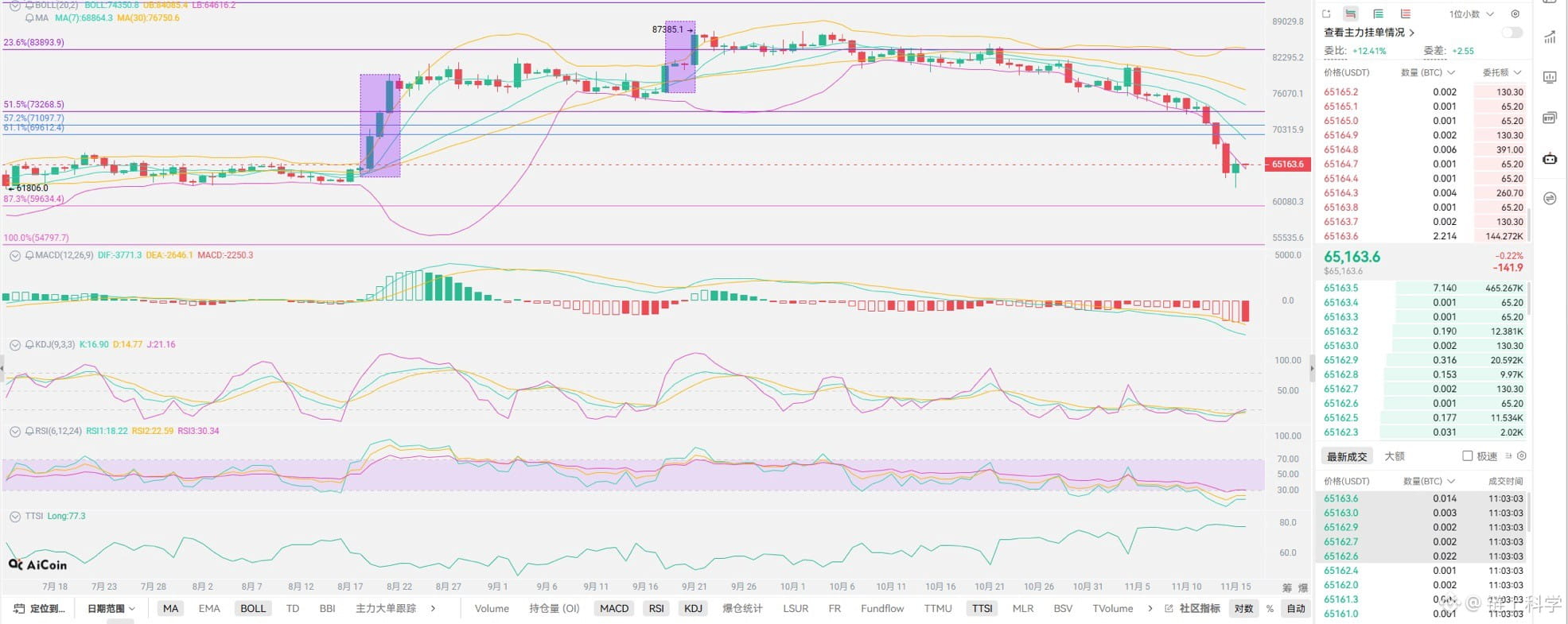

Bitcoin is showing some tentative signs of stabilizing. The earlier plunge also led to a lower wick after yesterday’s recovery. From the low of 61,956 to the 66,000 level, the recovery reached as much as 4,000 points. The accompanying news has also been supportive of the bulls’ comeback: Vanguard’s advisory division bought Bitcoin for the first time; AguilaTrades added 1,000 BTC, bringing its long position to 2,000 BTC; and CZ said Binance had not sold any cryptocurrencies and that he had personally added to his holdings. There has been both actual capital inflow and a verbal pledge from CZ. His personal assurances should still be treated with caution, and Binance’s asset allocation cannot be confirmed until it discloses its holdings. One thing is clear: while Bitcoin is trading below 65,000, capital is still willing to provide support. However, that does not change the overall financial environment. In particular, Bitcoin ETFs saw $2.1 billion in outflows in November, while Bitcoin’s total market capitalization fell from $1.5 trillion to $1.3 trillion, with outflows remaining significant.
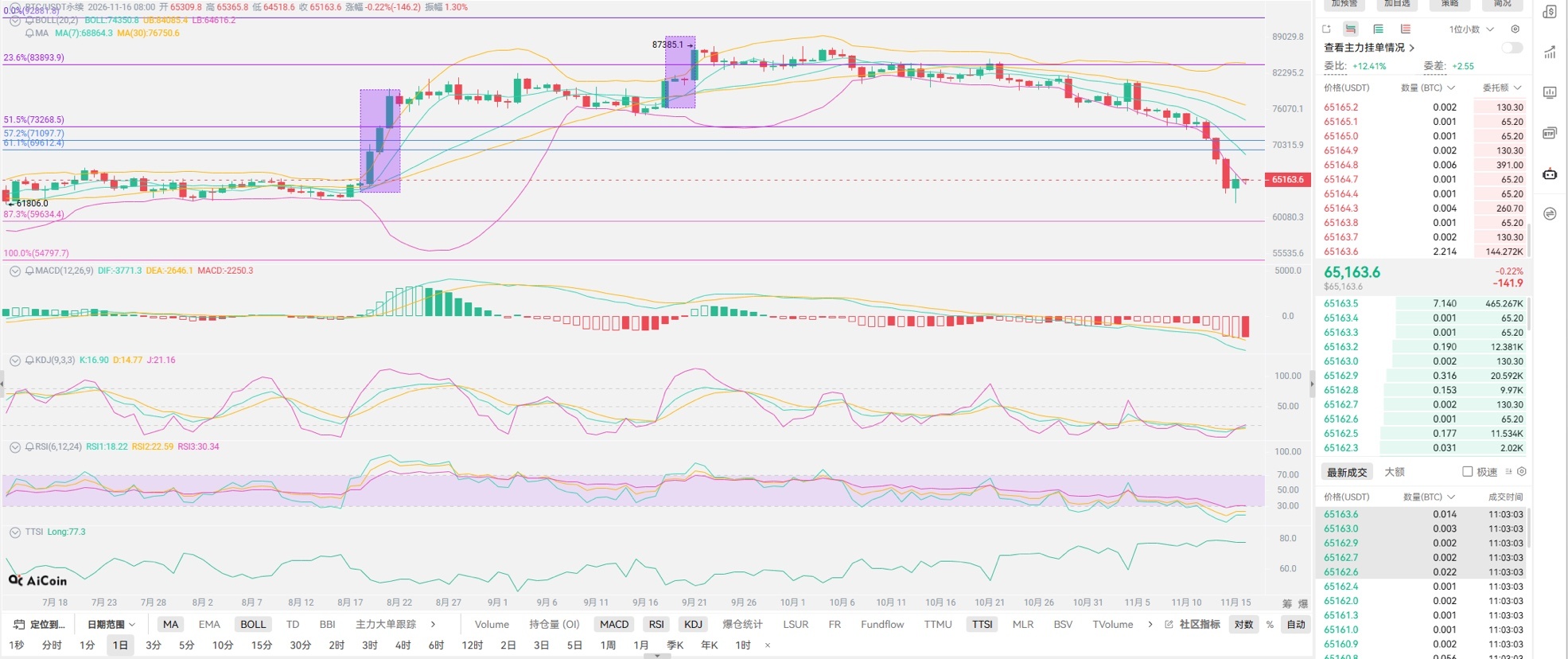
This kind of recovery is the market action Lao Cui wants to see, even though Lao Cui still has a bearish outlook. If prices fall at this rate, with December’s rate hike and domestic selling pressure ahead, they could plunge all the way down! Of course, many people think: if you’re shorting, why fear a falling market? But this depth of decline could disrupt the balance of the entire crypto market, especially Bitcoin, which is not likely to receive strategic support in the short term. Unlike the real economy, the virtual market lacks investor conviction. They won’t commit enough capital to help it through difficult times. For prices to return to their peak from lower levels, more capital will be needed. And if the current major holders—BlackRock and MicroStrategy—start cashing out their spot holdings, it will be even harder to manage. In Lao Cui’s view, the best-case scenario would be for prices to stay between 65,000 and 70,000 this month. Within that range, prices could fluctuate steadily as we wait for the rate-hike signal, then make another move below 60,000. Staying above 60,000 for the rest of the year would be the healthiest outcome.
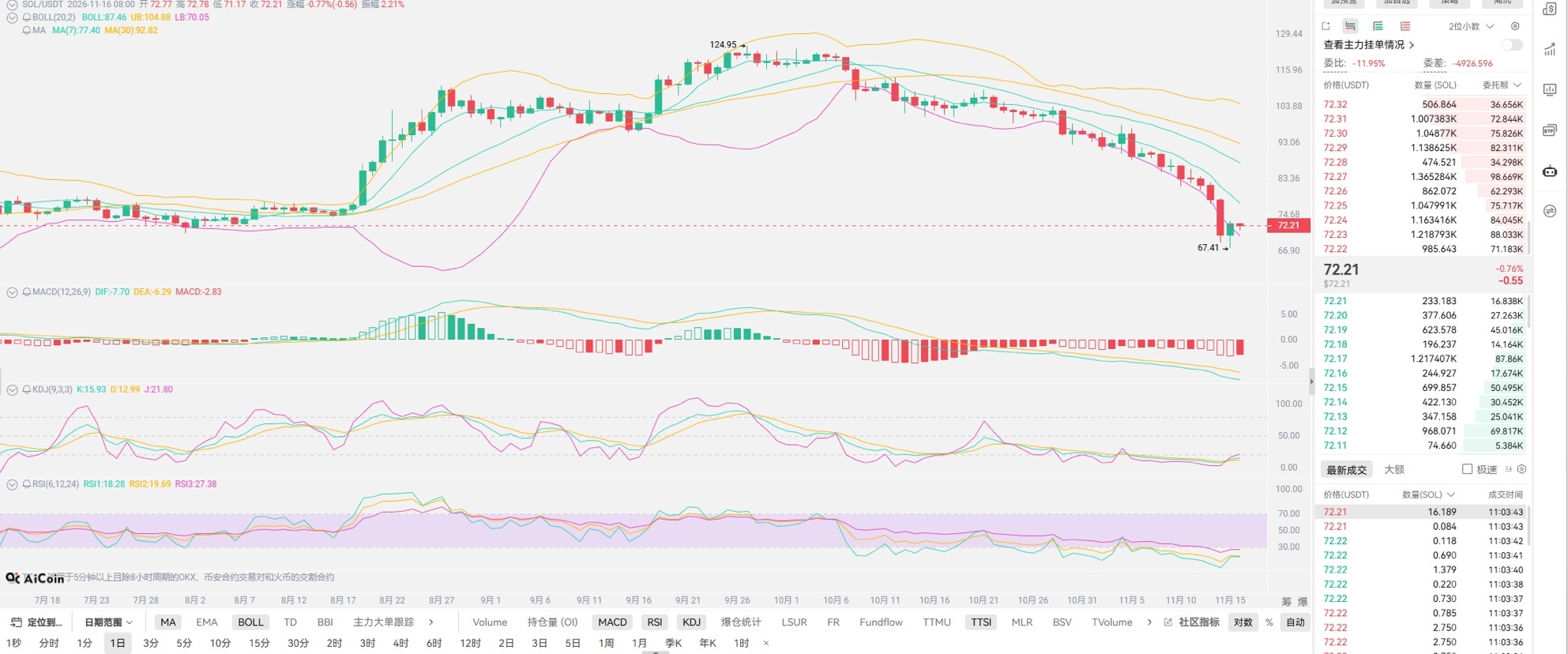
A point mentioned in yesterday’s article: the current price has essentially reached the level where Lao Cui planned to take profit on a mid-term position, a week earlier than expected. This is not good news. A quick look at market forecasts shows that most are leaning toward lower levels, and bearish sentiment is spreading. This is also leading many users to keep increasing the gains on their short positions. A reminder: don’t increase your risk at this point. Lao Cui has been emphasizing lately: don’t chase the downside; enter with a well-planned strategy and set your stop-loss. For mid-term positions, too, be prepared to exit at any time. Lao Cui personally expects prices to fall below 60,000, and for now, there will be no change to the mid-term short positions. As much as possible, trade this market with a mid-term approach and keep position sizes under control. Set your stop-loss around 10,000 points away, if possible, to guard against a rebound by the bulls. To reiterate, the trend has not changed: bearish pressure remains, though the short-term move has exceeded expectations somewhat.
Lao Cui’s summary: Hopefully this feeling is just excessive nervousness. For this round of mid-term positioning, set a take-profit level. Lao Cui’s current plan is to consider exiting when the price reaches the 60,000 mark, in the 58,000–59,000 range. At this stage, Lao Cui needs to consider the price range for securing profits. If you’re still planning to short, you could also position yourself ahead of this bearish news; perhaps this will become the biggest opportunity of the year. As for the remaining month and a half of the year, the trend can almost be forecast at this stage. As long as the price holds around 65,000 before the rate-setting meeting, the recovery after a break below 60,000 will be very strong. Even if Bitcoin makes a new low, it won’t stay there for long and will return above the 60,000 mark. If it breaks below 60,000 before the meeting, another new low may well follow. The key factor will be how quickly domestic holders sell off; there’s still quite a lot of supply this time.