
In the world of finance and business, most investors are accustomed to focusing only on the glowing screens tracking the movements of prominent stock market indices or cryptocurrency prices such as Bitcoin. Yet radical shifts and genuine crises do not usually begin on the surface; they are woven behind the scenes of the complex global financial system.
The current economic landscape is both thought-provoking and concerning. The major shifts markets are experiencing today are not random, isolated events, but interconnected links in a chain of pressures that could have far-reaching consequences.
A map of warnings: A sequence of events reshaping the landscape
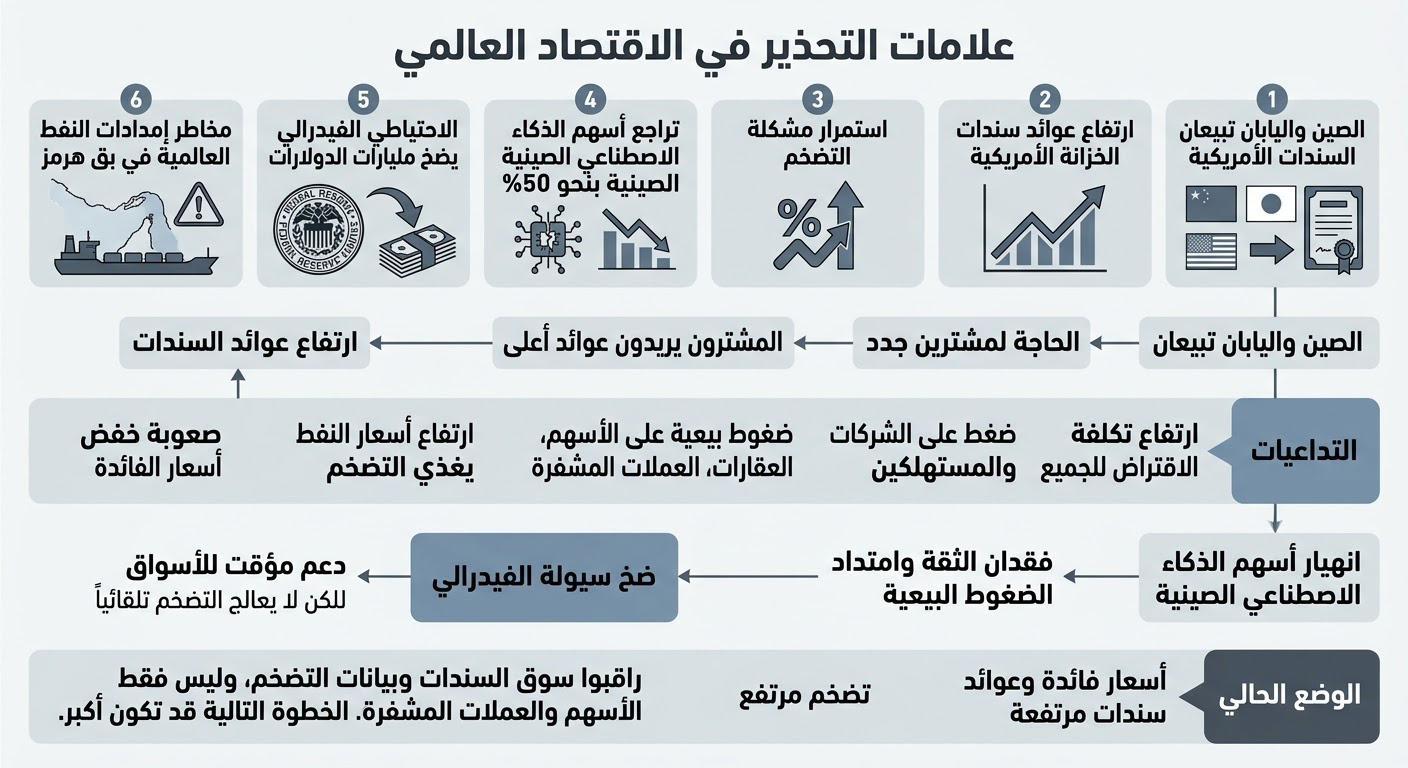
The current danger lies in several negative indicators converging at once. The most prominent include:
Bullet point: Major creditors are shedding U.S. debt: China and Japan are selling large quantities of U.S. government bonds.
Bullet point: Treasury yields are surging: Yields on these bonds are rising rapidly to fill the gap left by these major sellers.
Bullet point: The specter of inflation persists: Inflation remains a formidable obstacle to economic stability.
Bullet point: Shocks in the tech sector: Chinese AI stocks have suffered a sharp decline of around 50%.
Bullet point: Emergency Fed interventions: The U.S. Federal Reserve is injecting billions of dollars into the financial system in an effort to support markets and protect them from collapse.
Bullet point: Ongoing geostrategic tensions: The Strait of Hormuz is under severe pressure, threatening global oil supplies and the stability of energy prices.
The link: How do these crises interact?
The key issue is how these threads are interconnected. Heavy selling of U.S. Treasury bonds by major powers such as China and Japan means new buyers are needed to absorb this enormous debt. Naturally, these new buyers demand higher yields in return for taking on the risk, pushing bond yields steadily higher.
This is where the snowball starts rolling, leaving harsh consequences for the real economy:
1. Costly borrowing: Rising bond yields increase borrowing costs for governments, businesses, and individuals alike.
2. Pressure on various assets: Markets across sectors—including stocks, real estate, and cryptocurrencies—are facing intense selling pressure as liquidity flees toward higher-yielding debt instruments.
3. Energy-driven inflation: High oil prices resulting from tensions in the Strait of Hormuz are adding to inflationary pressures.
4. Central banks’ dilemma: The Federal Reserve is almost powerless; rising inflation makes cutting interest rates extremely difficult, while at the same time it is compelled to inject liquidity to maintain market stability—a temporary remedy that does not treat the underlying cause.
Warning bells: From tech market collapse to shaken confidence
The problem is not limited to government bonds and energy; it also extends to the collapse of Chinese AI stocks. A loss of confidence in this vital, future-oriented sector is not merely a financial loss; it is an early warning that investors’ appetite for risk is steadily declining, potentially signaling that these selling pressures could spread to other global sectors and markets.
On the other hand, the U.S. Federal Reserve’s decision to inject money and liquidity may give markets temporary breathing room, but it does not address the root of the problem: persistent inflation. As long as inflation remains high, interest rates and bond yields will inevitably remain elevated, putting the global economy to a difficult and complex test.
In conclusion... Look beneath the surface
Simply tracking surface-level, day-to-day indicators such as stock prices or cryptocurrencies is no longer enough to understand genuine economic trends. Today, the major warning signs lie deep within the global financial system: in the bond market, inflation data, and monetary policy trajectories.
The next move in markets could be bigger and more far-reaching than many expect. Wisdom calls for vigilance and careful attention to what is happening behind the scenes in the macroeconomy before it is too late.