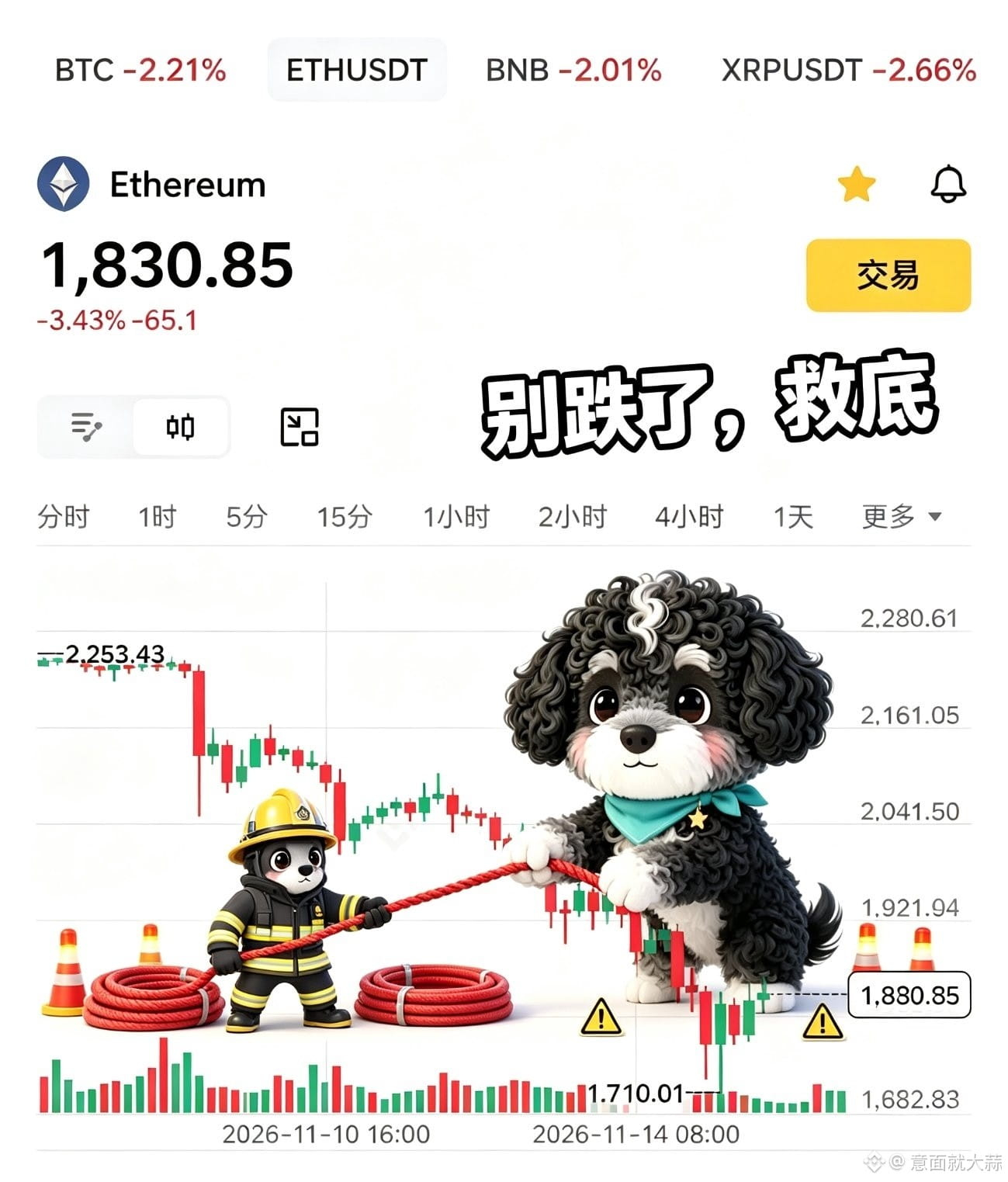
Let me start with a scene from everyday life.
The noodle shop by the entrance to the neighborhood usually does pretty good business. Then one day, the office building next door suddenly lays people off. The noodle shop is still the same noodle shop, and the noodles are still the same bowl of noodles—but the people eating them have less money in their wallets.
This downturn is more or less driven by the same logic.
Nothing went wrong with crypto. Something went wrong in the office building next door.
AI stocks are being sold off, and institutions need to meet margin calls. Their first instinct is to sell whatever they can turn into cash most easily. Crypto is that “thing that’s easiest to turn into cash”—it trades 24 hours a day, and you can get out at any time. Normally, it’s an asset; when you urgently need money, it’s an ATM.
So don’t ask, “What’s wrong with crypto?” Ask, “What’s happening to money?”
History has taught us this, too.
During the 2008 financial crisis, gold crashed along with stocks, falling nearly 30%. Everyone shouted, “Safe-haven assets have failed.” And what happened? Once liquidity loosened, gold was the first to get back on its feet.
In a crisis, everything is a risk asset. Only when the storm passes can you tell who’s been swimming naked.
So what will drive the next rebound?
Not a pretty pattern on the candlestick chart, but the “office building next door” starting to pay salaries again.
More specifically: when the Fed softens its tone, when tech companies’ earnings reports hold up, and when institutional money starts flowing back in.
Not one of these three things happens in crypto.
But every one of them will determine whether we’re doing well next month.
So this week, I’m not watching the charts. I’m watching the news, the Fed, and the foot traffic at that noodle shop.
Price is the effect; money is the cause. Don’t try to force the effect. $HYPE $UNI #加密美股齐跌,下轮反弹的驱动力在哪?