
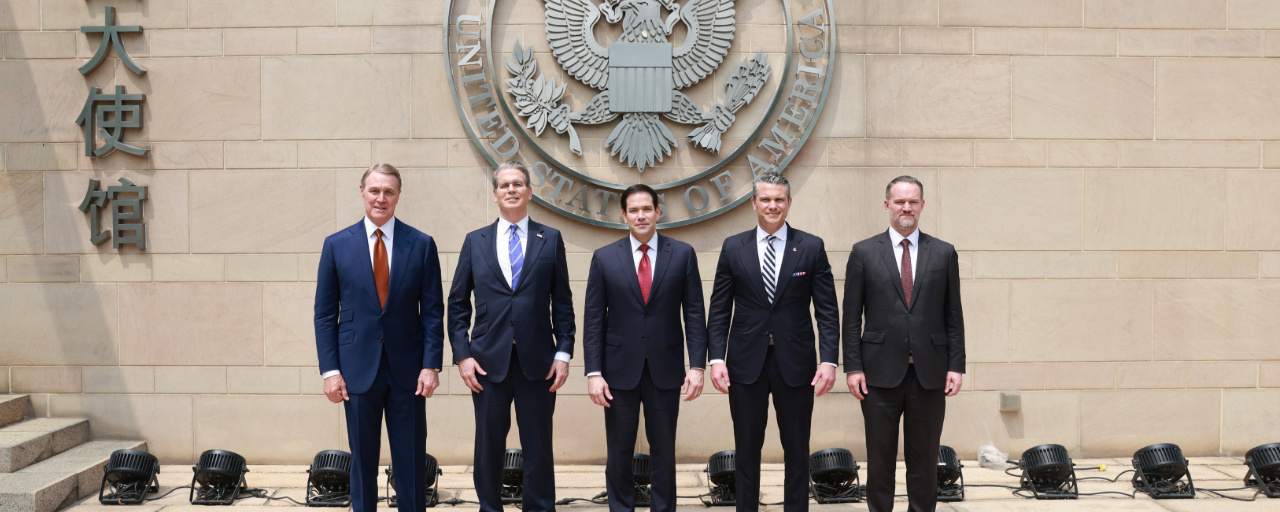

Huang had only just left when Bessent turned his attention to Nvidia’s entire management team.
U.S. Treasury Secretary Bessent just publicly said that Nvidia should look outside the company for a new CEO. He believes the turmoil sparked by Jensen Huang’s sudden departure is no longer just an executive shake-up, but calls for a major restructuring of the company.
Bessent also demanded that Nvidia’s board and outside legal counsel explain within 10 days the company’s compliance culture and whether it had complied with U.S. export restrictions.
The message behind these remarks is already quite clear: the U.S. government may now be scrutinizing not just Jensen Huang, but the accountability structure of Nvidia’s entire management team.
The Seer’s first reaction: Is this a purge of Jensen Huang's loyalists?
Did Bessent make these remarks with Trump's tacit approval, or are China hawks such as Rubio and Bessent pushing for a much larger internal shake-up?
To understand this controversy, we must go back to the conflict within the Trump administration over export controls on Nvidia chips.
1. Bessent and Lutnick: Their rift is now out in the open
On November 13, Bessent openly took aim at the Commerce Department in an interview with CNBC.
He said that the Treasury Department, the Department of Defense, the State Department, and the Office of the U.S. Trade Representative had all supported adding Singapore-based Megaspeed to the U.S. export control Entity List for months, but that the final decision rested with the Commerce Department.
Bessent even said directly:
“The Commerce Department has the authority to sign off. You should ask them about the specific internal process.”
In effect, he was publicly asking: If multiple government agencies support tightening controls, why has the Commerce Department still not acted?
Commerce Secretary Howard Lutnick is one of the central figures in this dispute.
Axios previously cited several people familiar with the matter as reporting that, at a White House meeting, Bessent confronted Lutnick and asked why the Commerce Department had not imposed stricter export controls on the entities in question, particularly Megaspeed.
According to reports, Trump had already approved action several times against companies suspected of rerouting Nvidia's advanced chips to China, but Lutnick had continued to hold back on enforcement measures.
At a subsequent White House meeting, Trump ultimately agreed to move forward with the controls. Lutnick warned that this could trigger a trade war with China.
It should be noted that the details of the meeting in the Axios report came from anonymous sources, and a Commerce Department spokesperson also denied that Bessent had confronted Lutnick in person.
But it is confirmed that U.S. media have publicly reported policy disagreements between Bessent and Lutnick over chip export controls.
2. Which two camps are actually at odds within the Trump administration?
This is the most important aspect of the whole affair.
On one side are the hardliners represented by Rubio and Bessent.
They place greater emphasis on national security, technological containment, and preventing advanced U.S. AI chips from reaching China through third-party channels.
On the other side are those represented by Trump and Lutnick, who place greater value on leaving room for commercial deals.
Trump previously supported easing restrictions on some Nvidia chip sales to China and sought tangible benefits through commercial deals, tariffs, and other means. Lutnick has also been a key enforcer of the relevant chip sales policies.
These two approaches are clearly in conflict:
The hardliners want to close off technology export channels as much as possible, while the pro-commerce camp wants to preserve room for negotiation between national security and commercial interests.
It is worth noting that Trump has not consistently sided with either camp.
Axios previously reported that Trump had approved action several times this year against companies suspected of rerouting Nvidia chips, but at other times had supported easing restrictions on some chip sales to China.
This suggests that Trump himself is more the ultimate decision-maker than someone who simply sides with one camp.
The fact that Rubio, Bessent, and others can push for control measures at meetings does not mean they have gained full authority over Nvidia's leadership decisions.
3. Jensen Huang's departure: The real impact may only just be beginning
After Jensen Huang's departure, Nvidia has entered a new phase of leadership transition.
The company's board appointed longtime CFO Colette Kress as interim CEO, while veteran director Harvey Jones became chairman.
Bessent is now calling on the company to look outside for a new CEO, suggesting that Nvidia's future leadership arrangements may no longer be just a routine succession issue within the board.
More notably, Bessent directly linked the company's compliance culture to its enforcement of export controls.
If the U.S. government ultimately determines that Nvidia has serious shortcomings in customer screening, monitoring chip destinations, or export compliance, those affected may include not only the CEO, but also the executives responsible for these businesses and the company's internal decision-making system.
Of course, there is currently no public evidence proving that Nvidia is systematically purging Jensen Huang's loyalists, nor can we conclude on that basis that Rubio's faction has taken charge of the company's personnel changes.
But one thing is already very clear:
Since Jensen Huang's departure, Nvidia's relationship with the Trump administration has entered a new phase.
There are three key areas to watch next:
CEO candidate: Will Nvidia ultimately choose an internal successor, or bring in a new leader from outside, as Bessent has called for?
Export controls: Will Megaspeed be formally added to the Entity List, and will the U.S. further tighten exports of Nvidia's advanced chips to China?
White House power dynamics: Will Trump support Bessent and Rubio in pushing for stricter controls, or continue to leave room for commercial chip deals?
On the surface, this storm is about Jensen Huang's departure, but beneath it lie America's AI industry, its technology policy toward China, and power dynamics within the Trump administration.
Jensen Huang is gone, but Nvidia's problems are likely far from over.