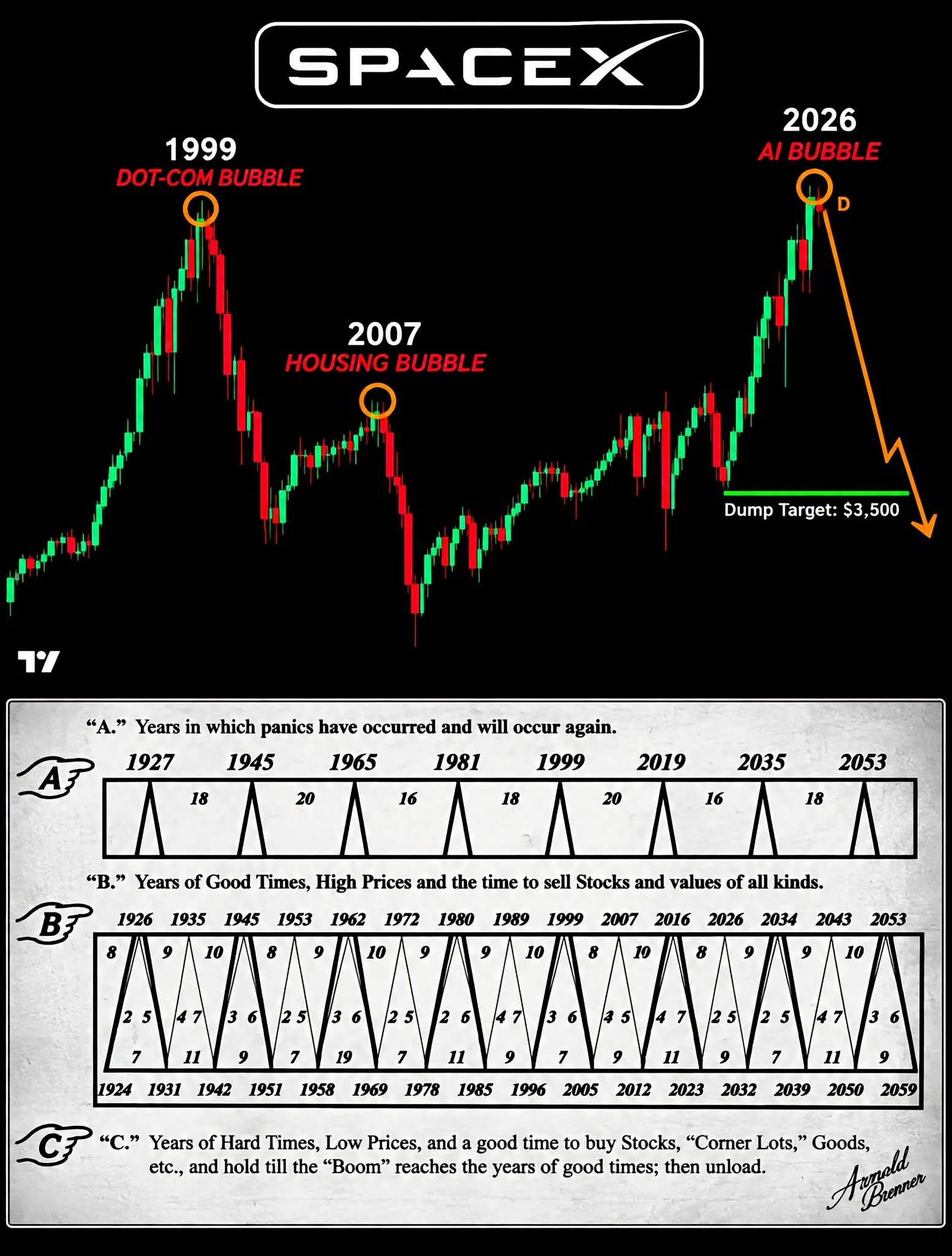
🚨 COULD THE AI BOOM BECOME WALL STREET’S NEXT BIG BUBBLE?
History shows that major crashes often begin when optimism is high and valuations become disconnected from reality.
Two major examples:
- Dot-Com Crash (2000–2002): S&P 500 fell nearly 49%.
- Global Financial Crisis (2007–2009): S&P 500 dropped around 57%.
Today, the AI boom raises a similar question.
AI has enormous potential, but billions are being invested in chips, data centers, and infrastructure. The key question is whether future profits will justify these valuations.
If earnings disappoint, AI spending slows, or financial conditions tighten, technology stocks could face significant pressure.
📊 WHAT I'M WATCHING:
- AI companies' actual earnings and revenue growth.
- Technology stock valuations.
- Federal Reserve policy and Treasury yields.
- Corporate debt and economic conditions.
⚠️ COULD THE S&P 500 FALL TO 3,500?
With the index around 7,561, that would mean a decline of approximately 53.7%. It's an extreme bearish scenario, not a confirmed forecast.
The 2026 Benner Cycle also points to a potential selling period, but historical cycles cannot reliably predict market crashes.
MY TAKE: An AI bubble is not inevitable, but investors should be careful about paying excessive prices based on future expectations.
A revolutionary technology doesn't automatically make every related stock a good investment.
The real risk is paying tomorrow's price for today's expectations.
$NVDA
$AMD
$SPCX