90% of traders operate by watching static support and resistance lines on the chart. Smart money, on the other hand, operates by watching liquidation heatmaps and leverage clusters
The derivatives market doesn’t move randomly; it’s a magnetic system designed to seek out the greatest concentration of financial pain. Here’s how the institutional trap works:
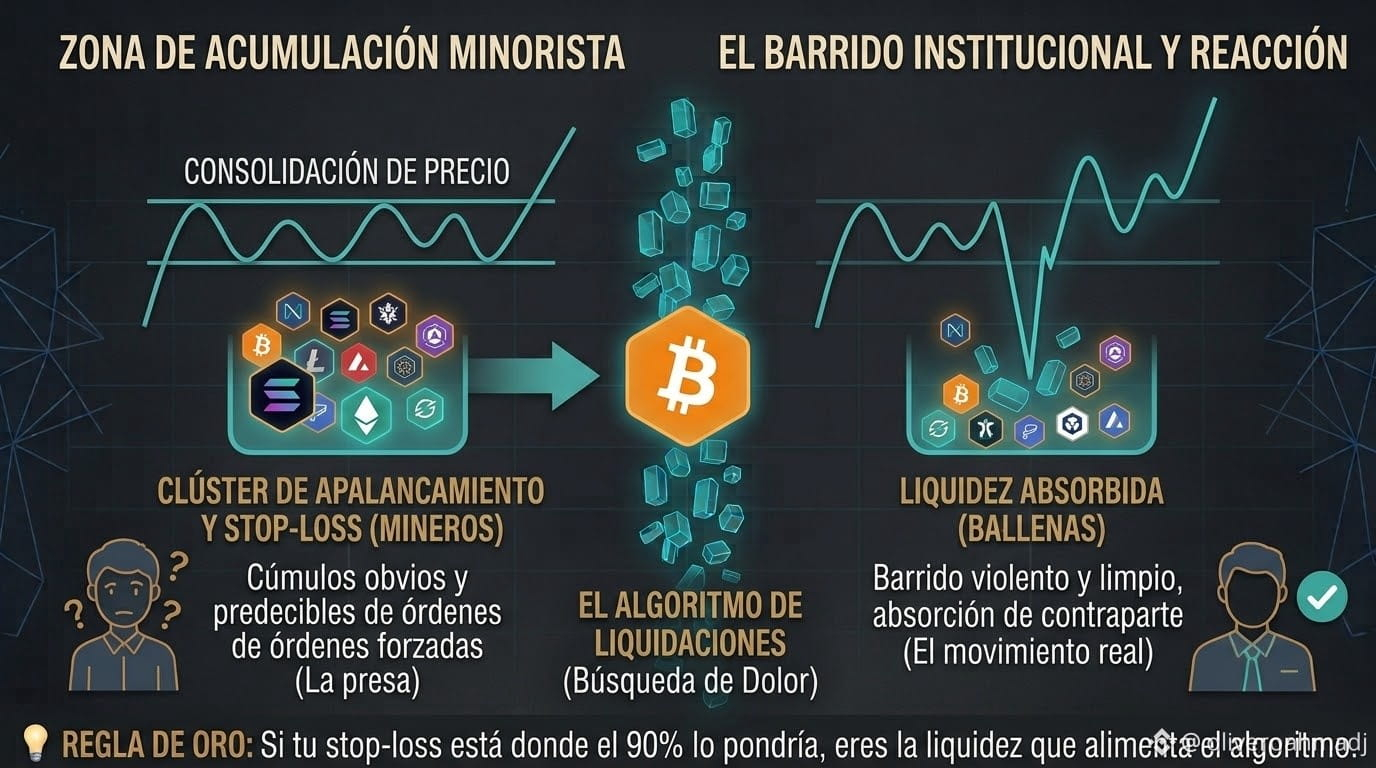
1️⃣ Massive Leverage Accumulation: When the price consolidates, retail traders build up leveraged positions (usually excessive longs or shorts), placing their stop-losses or liquidation zones in very logical, obvious places on the chart
2️⃣ The Price Magnet (Liquidity Pools): Whales spot these massive clusters of forced orders. To fill their own large-scale buy or sell orders, they need massive counterparties. The solution? Temporarily push the price toward that zone to trigger cascading liquidations
3️⃣ The Real Move (Post-Sweep): Once the market clears out retail leverage and absorbs that liquidity all at once, the price makes its real, clean move in the expected direction
💡 Golden rule: If your stop-loss is exactly where 90% of people would place theirs, you’re not trading the market—you’re the liquidity feeding the algorithms
Have you ever felt like the price goes straight for your stop before moving in your favor? Let me know in the comments 👇
#liquidaciones #TradingInstitucional #Derivados #GestiónDeRiesgo $BTC