
They waited 70 hours to disclose that passwords and ID numbers may have been accessed
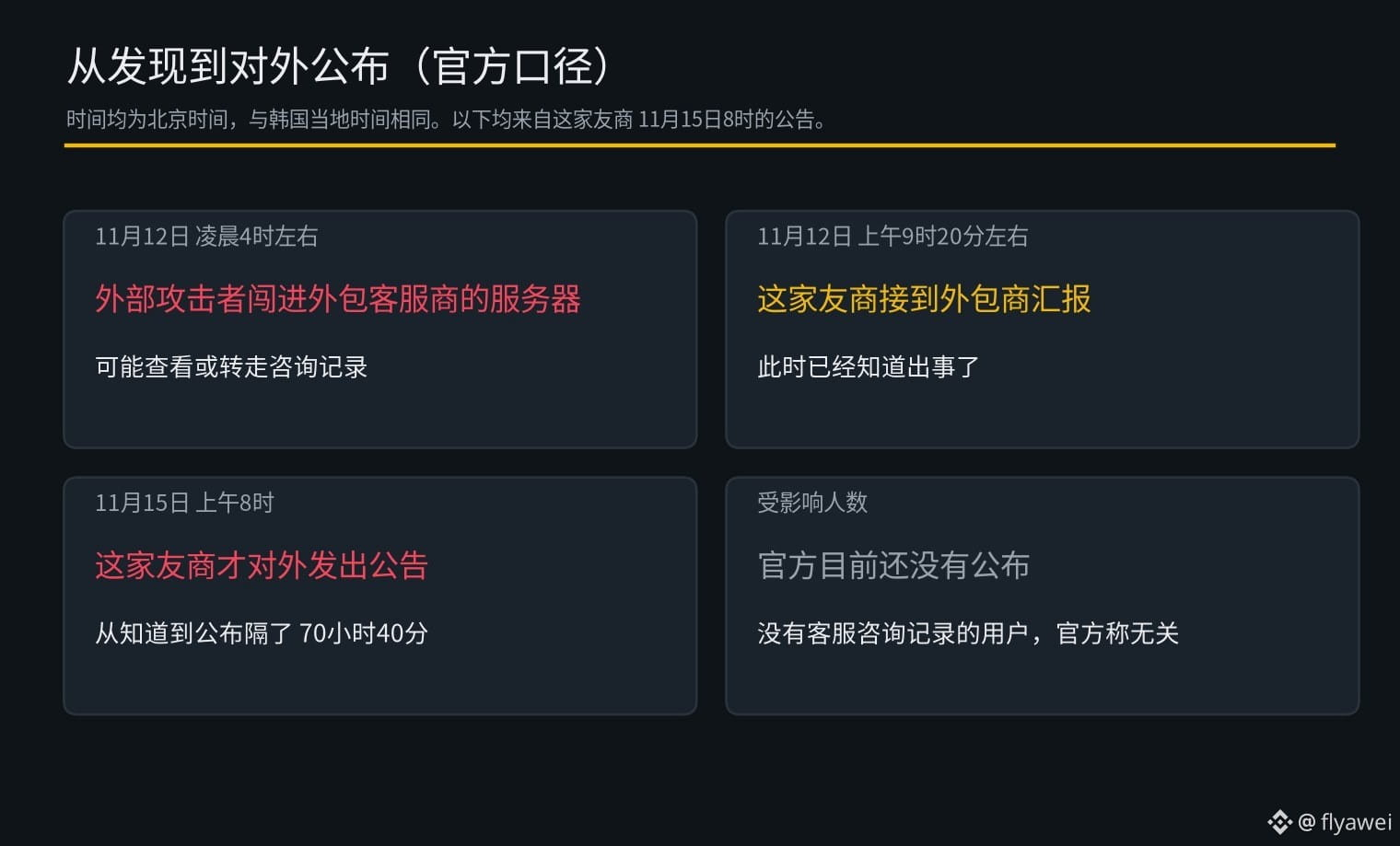
At 8:00 a.m. Beijing time on November 15, a South Korean competitor finally announced that around 4:00 a.m. on November 12, an external attacker had broken into the server of its outsourced customer service provider. Personal information in customer service records may have been viewed or taken.
The company said it only learned about the incident when the outsourcing provider reported it at around 9:20 a.m. that day. It took 70 hours and 40 minutes from learning of the incident to announcing it publicly.
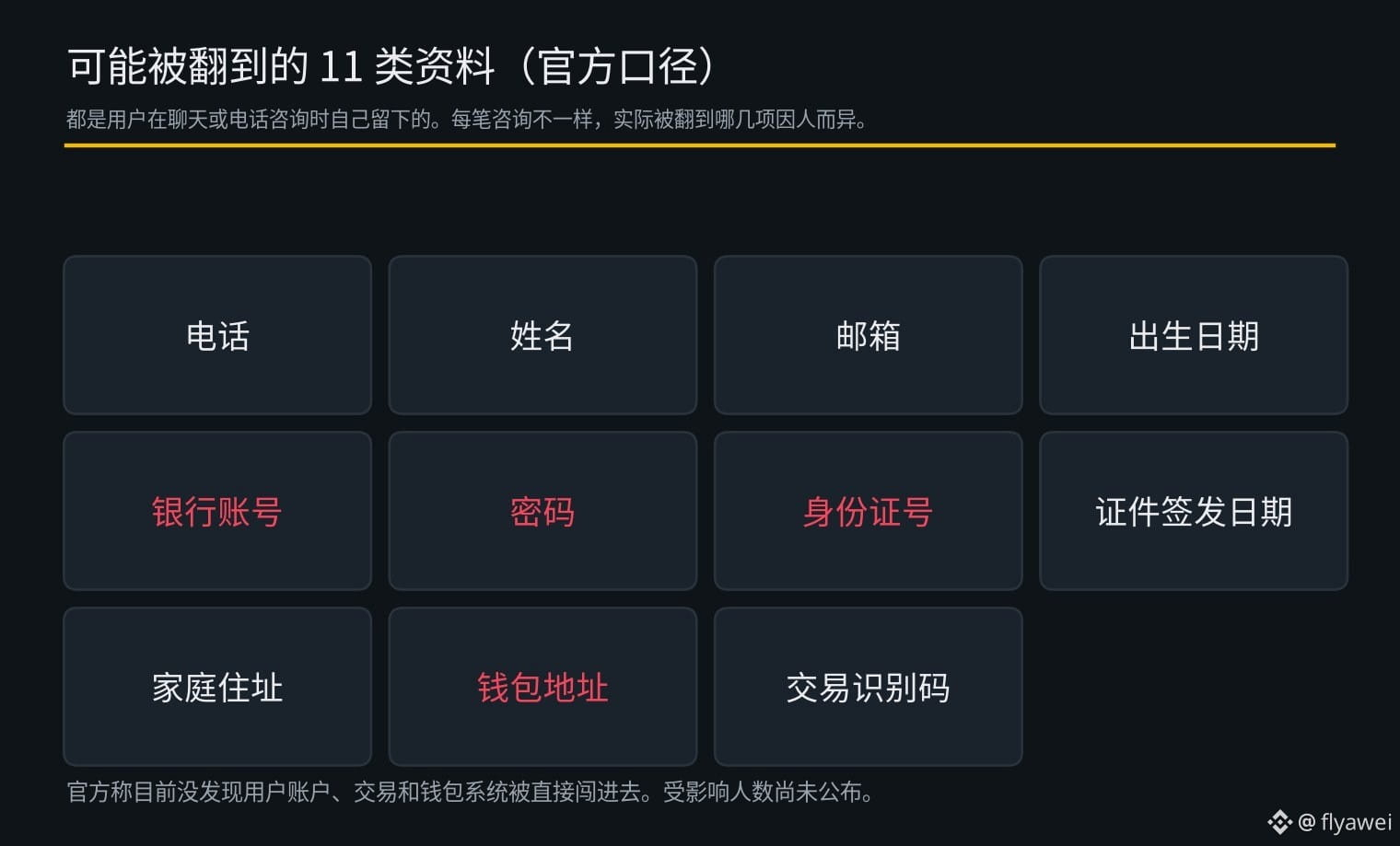
The information that may have been accessed falls into 11 categories. It was all information users had provided during chats or phone consultations, including phone numbers, names, email addresses, dates of birth, bank account numbers, passwords, ID numbers, document issue dates, home addresses, wallet addresses, and transaction IDs. The company said the information left behind varies from one consultation to another, so which items were accessed differs by person. The number of people affected has not yet been announced. Users with no customer service consultation records are not affected by this incident.
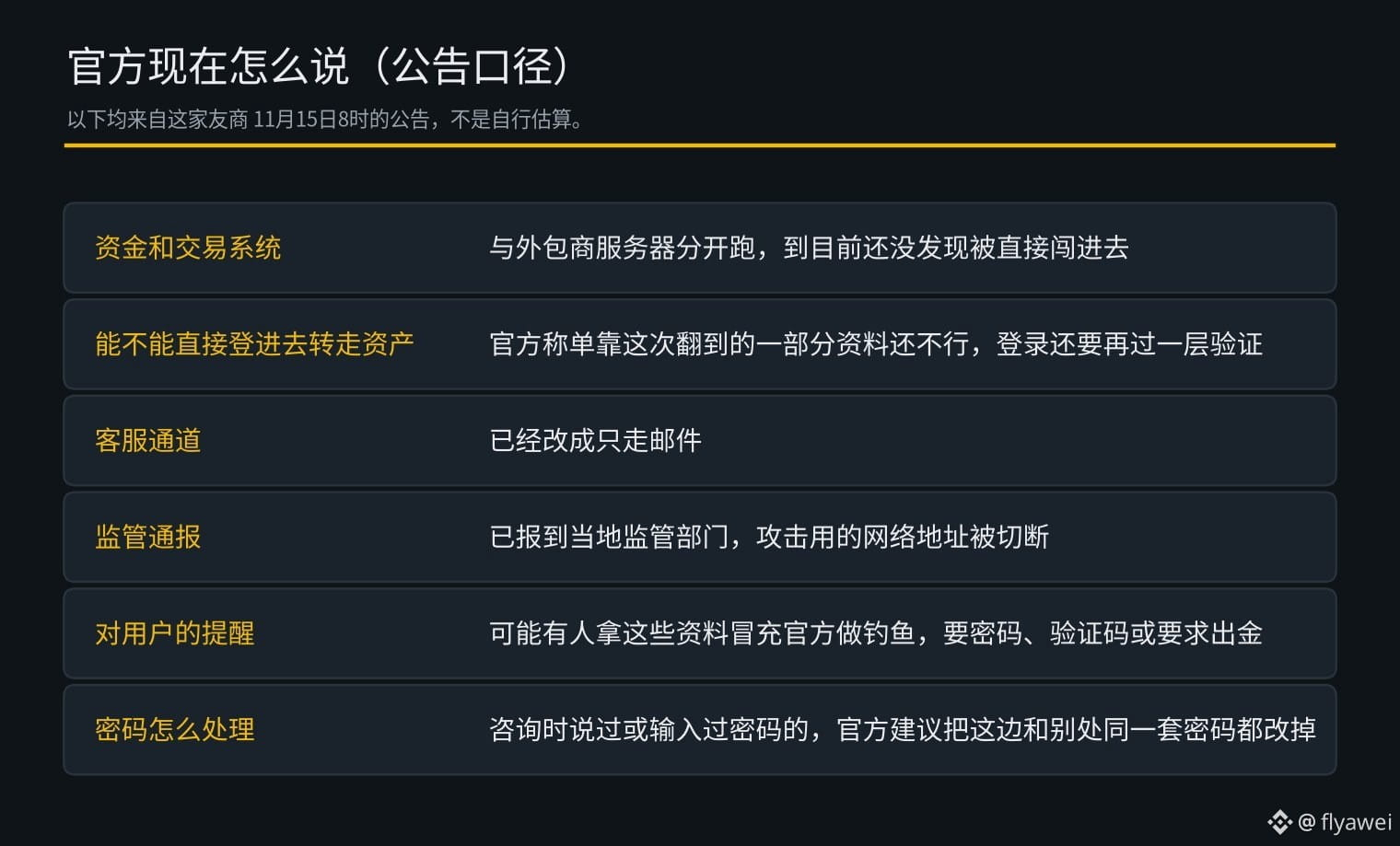
The company also said that user accounts, trading systems, and wallet systems are operated separately from the outsourcing provider's server, and so far there is no evidence that they were directly breached. The information accessed in this incident alone would not allow outsiders to log in to accounts or transfer assets; an additional verification step is required to log in. Customer service is now available by email only, and the incident has been reported to the local regulatory authorities.
It warned that someone might use this information to impersonate the company in phishing attempts. If you shared or entered your password during a consultation, the company recommends changing that password both here and anywhere else you use the same one.
My take: The company says its financial accounts have not been directly breached for now, but if ID numbers, bank account numbers, and wallet addresses fall into the wrong hands, future phishing attempts will be very difficult to guard against. The number of people affected and the cause have not yet been disclosed.
For beginners: observe more and do less. If you buy crypto, buy only $BTC