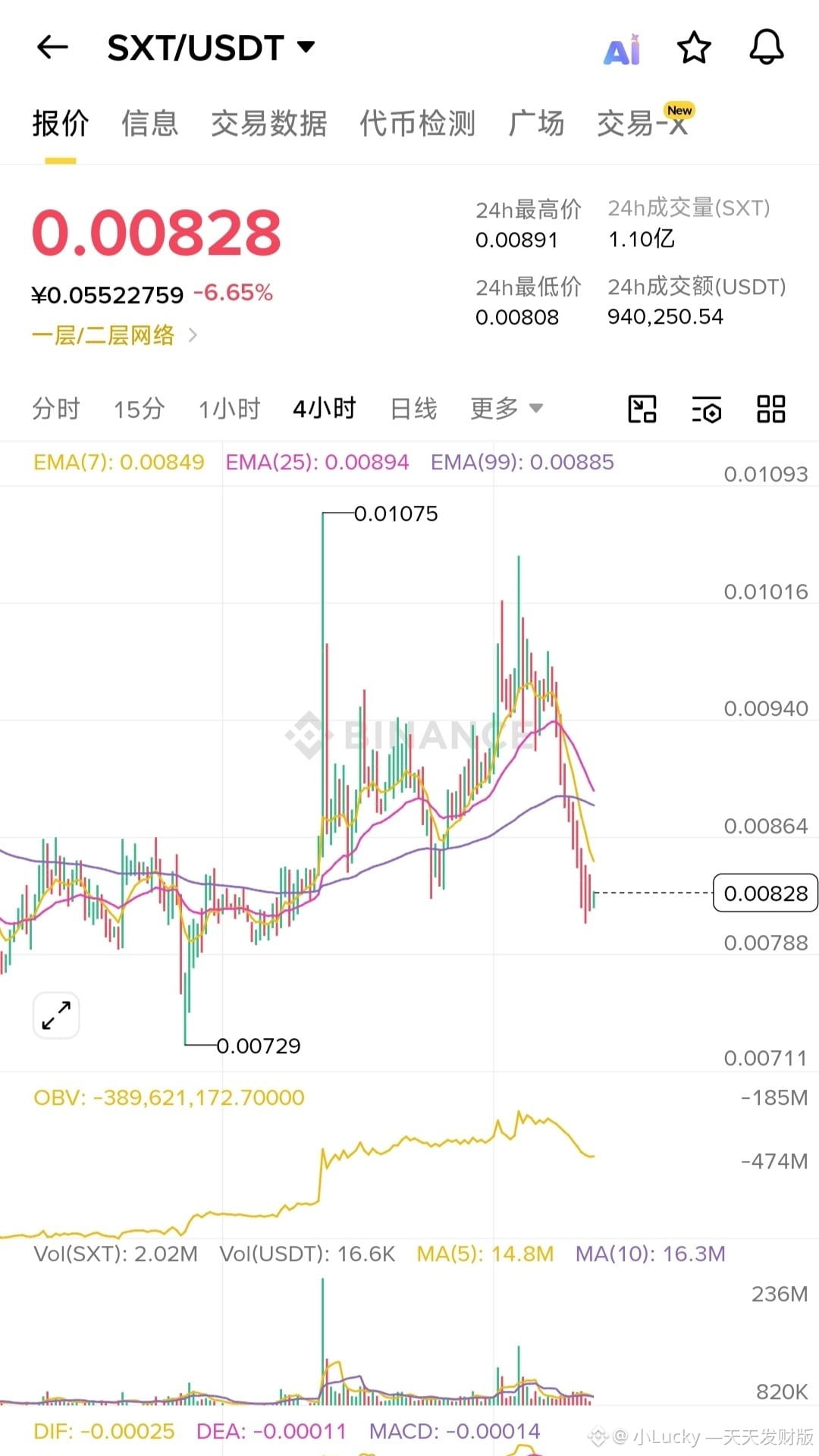
#sxt $SXT @SpaceandTime
Everyone knows that these days, the crypto world is constantly talking about AI and DeFi. It’s enough to make my head spin, but large companies and institutions know exactly what’s at stake: who would dare upload their core ledgers and trade secrets directly to the public internet? If the underlying data has no tamper-proof verification, the results calculated by AI are just a pile of worthless paper—and could even cause serious trouble.
That’s also why I’ve been keeping a close eye on @SpaceandTime lately. Its Proof of SQL really hits the mark: companies can keep their raw tables safely on their own private servers and share only the computation results and mathematical proofs externally, using zero-knowledge proofs. This idea of “keeping data off the internal network and sharing only verified results” perfectly addresses the need for traditional financial giants and complex DeFi systems to have both efficiency and absolute privacy.
One thing I’ll say is that, from a practical implementation standpoint, whether it’s integration with major cloud platforms or the backing of Microsoft’s venture capital arm, M12, the project has established a compelling case for providing verifiable data to AI agents and tokenized assets. As its native token, $SXT is used to stake and secure the network, pay for queries, and support verifiable computation, giving its tokenomics and business use cases the basis for a virtuous cycle.
That said, I’ll be honest: no matter how exciting the technology is, in the end it comes down to whether it can attract real enterprise customers. If private proofs can eventually be widely connected back on-chain and effectively meet ecosystem demand, it will absolutely be worth a closer look. How far do you think AI agents powered by verifiable data are from taking off at scale? #SXT