Two key developments in U.S.–Iran relations over the weekend deserve attention:
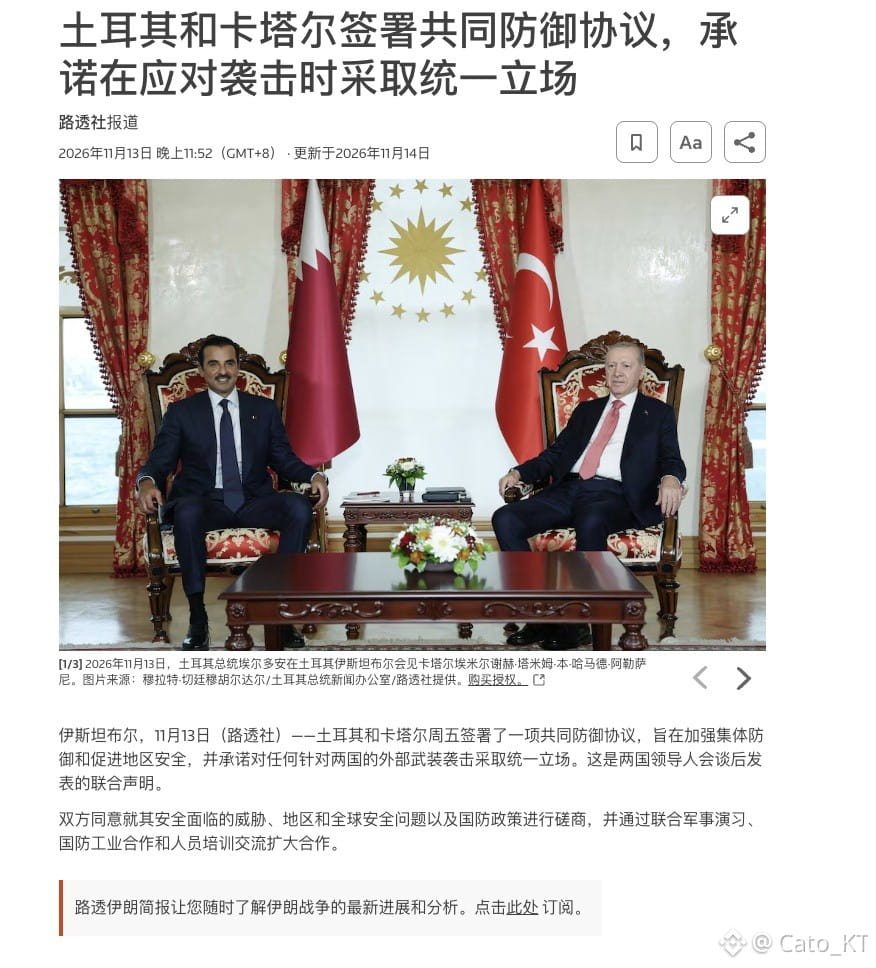
1. Turkey and Qatar formally signed a mutual defense agreement. This is another regional security pact, following the Mecca Mutual Defense Agreement among Turkey, Saudi Arabia, and Pakistan.
Although Qatar has not directly joined the Mecca agreement, Turkey and Qatar have become an important bridge for security cooperation. Qatar’s accession to the Mecca agreement in the future cannot be ruled out.
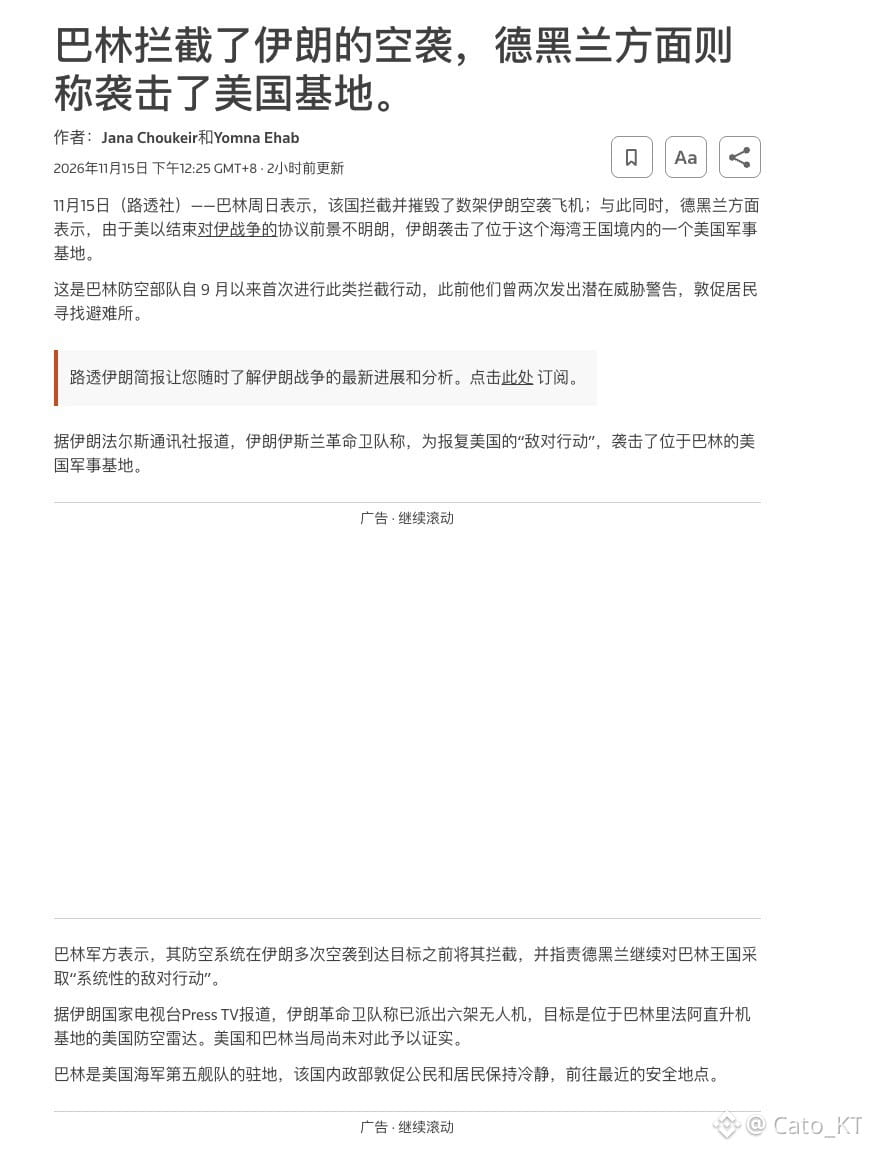
2. Iran attacked a U.S. base in Bahrain. Bahrain said it had successfully intercepted the attack, which means Iran’s retaliation against the U.S. military has not paused.
Taken together, these two developments point to the risk of U.S.–Iran tensions spilling over into the region. The logic is simple: if Middle Eastern countries such as Saudi Arabia, Bahrain, and Qatar reach mutual defense agreements, Iran will have to think carefully before taking action to retaliate against U.S. military bases.
Otherwise, an accidental strike could trigger a mutual defense mechanism, drawing multiple countries into the war to defend or counterattack. This would make the geopolitical situation between the U.S. and Iran even more tense.
If a new security and defense system is established in the Middle East and Iran is excluded, any Iranian retaliation against the U.S. military could have a domino effect, potentially even triggering a regional conflict across the Middle East!
As for the U.S.–Iran negotiations, I think two points deserve attention:
a. At this APEC summit in Shenzhen, where the leaders of three countries are meeting, we should watch to see whether it can help bring about a complete ceasefire in the Russia–Ukraine war and pave the way for a peace agreement. If geopolitical tensions between Russia and Ukraine ease, the pressure on Iran will increase. So whether Trump can maintain his current hard-line stance may depend on this APEC summit.
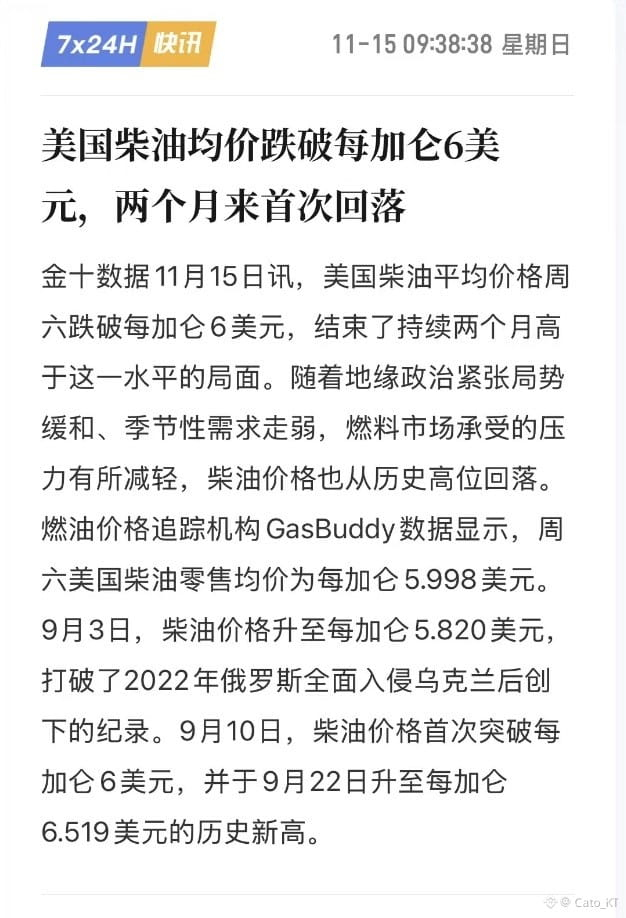
b. U.S. diesel prices have fallen below $6 per gallon for the first time in two months. The easing of pressure on domestic energy supplies will also give Trump more room to pressure Iran, making a U.S.–Iran peace agreement less likely! #加息预期仍强,FOMC纪要会否再添鹰派信号?