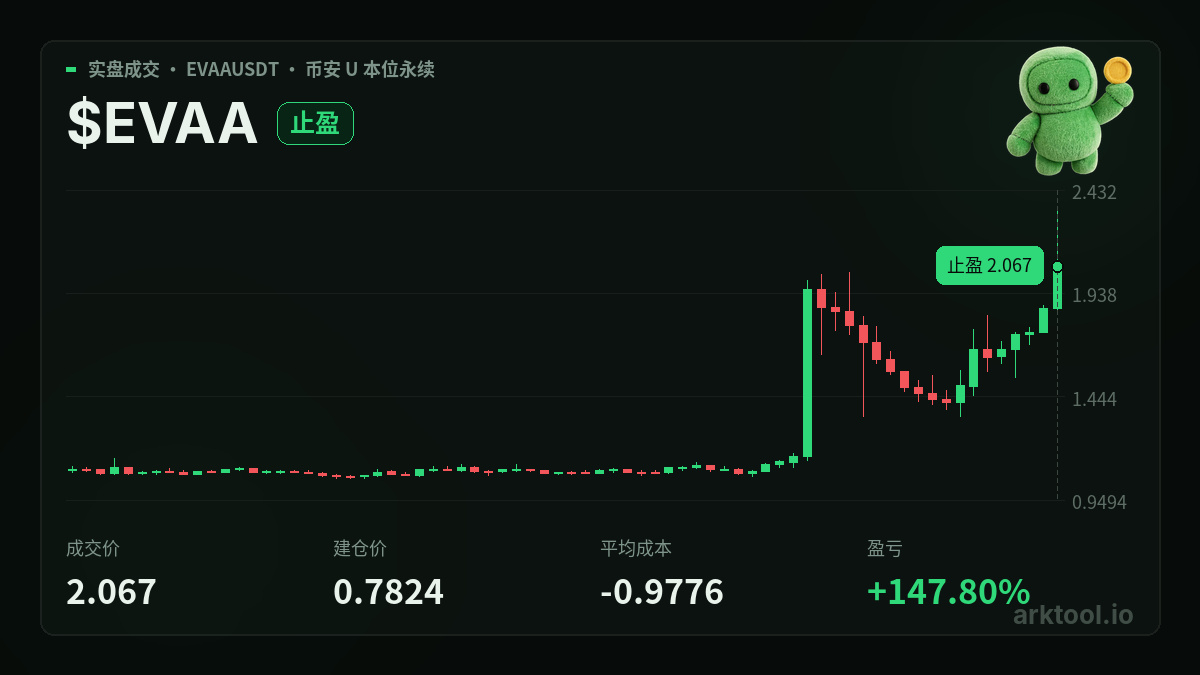
I just took some profits on $EVAA , reducing my position. I’m holding on to the rest for now.
Looking at the chart, after this rally the price has moved above the previous high-volume trading zone. The short-term moving averages are still trending upward, but it’s getting close to a round-number level, with overhead supply from holders who bought at higher prices. Overall, the market has been choppy but slightly warm over the past couple of days—not a full-on rally. In this kind of environment, small-cap assets can make big moves, but they can also pull back quickly. The bullish case is that it has formed higher lows during pullbacks, and trading volume has contracted during those pullbacks, suggesting selling pressure isn’t too heavy. The risk is that volume hasn’t picked up; if the broader market turns, assets like this are usually among the first to get hit.
The project’s narrative is based on the renewed revaluation of on-chain lending. It’s not a new story, but rather an old theme that’s attracting capital’s attention again. It’s in the early stages of being rediscovered—not yet at the point where everyone is chasing it. Investors are being selective: they see the value, but they aren’t euphoric. That also means its price action is more likely to climb in stages than shoot straight up.
Now that I’ve reduced my position, the key question is whether it can hold the round-number level below. If it does, the current structure remains intact; if not, this will have been just an ordinary rebound.