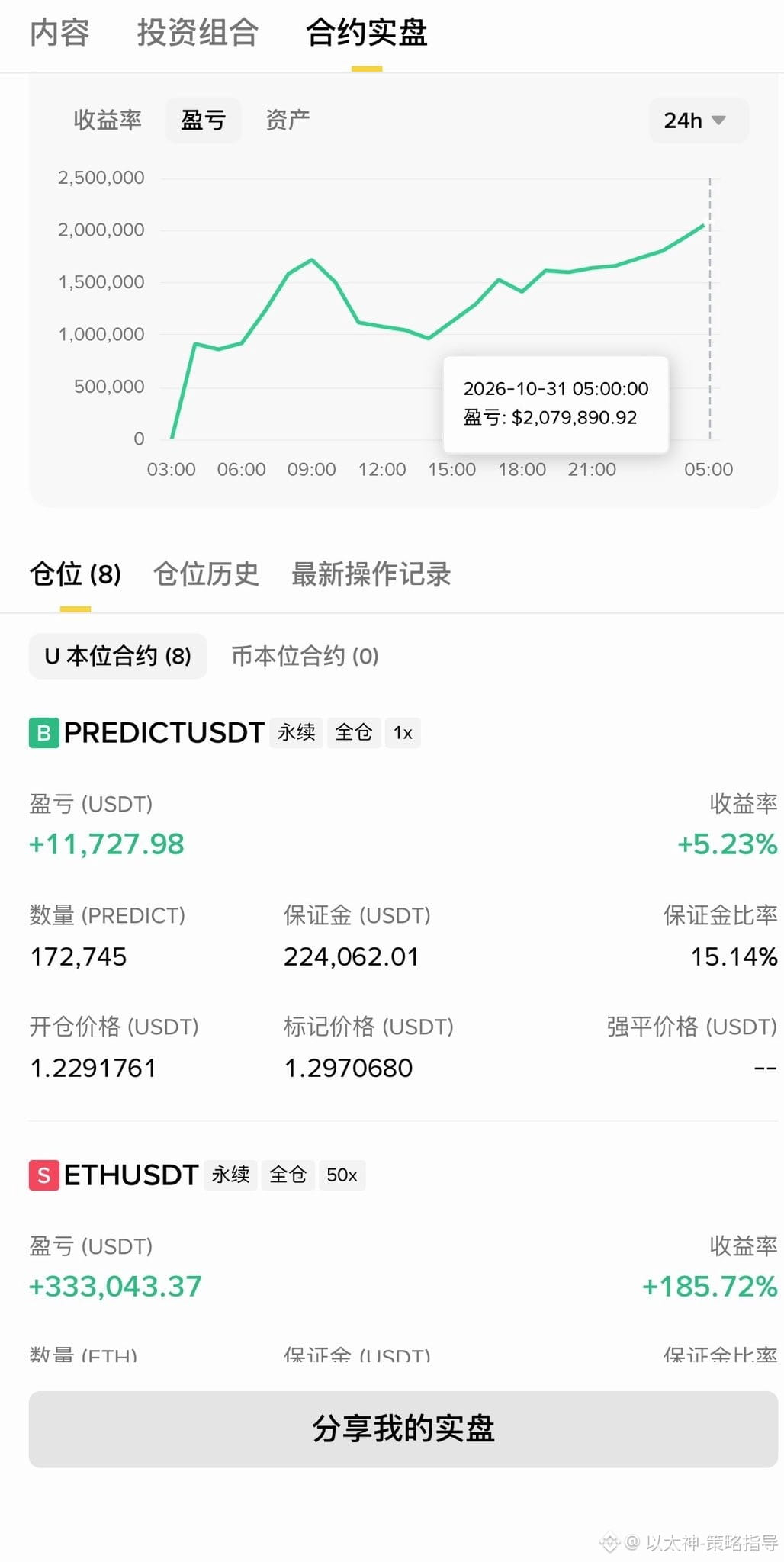
After getting liquidated, many people blame bad luck, bizarre market movements, and vicious wicks.
Honestly, the vast majority of liquidations aren't caused by bad luck. They're caused by not knowing how to scale into positions.
I've seen far too many futures traders make the exact same moves: they panic and take profits after a small rise, missing the big move that follows;
then, as soon as the market drops, they keep adding to their positions until a single wick wipes them out.
They get the direction right, yet a small pullback shakes them out. The root cause is a lack of trading discipline and rhythm.
Experienced traders think the opposite way. Instead of betting big from the start, they focus on three things: protecting their capital, adding at the right levels, and scaling up using profits only.
Many people choose the wrong levels to add at and end up increasingly exposed. Scaling in with a reverse pyramid is a safer approach.
Start by testing the market with a small position. For example, if your account has 10,000 U, use just 500 U for the initial trade and set your stop-loss in advance.
If there's no signal, wait patiently. It's better to miss an opportunity than to enter a trade recklessly.
Once the market moves in the right direction and you're in profit, use part of that profit to add to your position;
if the trend continues to strengthen, keep scaling in with the additional profits.
Try to leave your original capital untouched throughout, using profits alone to pursue further gains.
Once the trend takes shape and your unrealized profit exceeds your principal, protecting those profits should be your priority.
Take profits in stages and hedge your positions to lock in your gains. If the trend continues, capture the final leg of the move.
Experienced traders don't get rich by going all in on one trade. They ride the trend and use profits to steadily amplify their advantage.
Liquidations are never the market's fault. Many people simply treat trading like gambling from the very beginning.
The market is ruthless, but fair: those who stick to the rules steadily build their returns;
those without trading discipline will eventually be eliminated by the market.
#CryptoSelloffTriggersMultipleWhaleLiquidations $ETH