
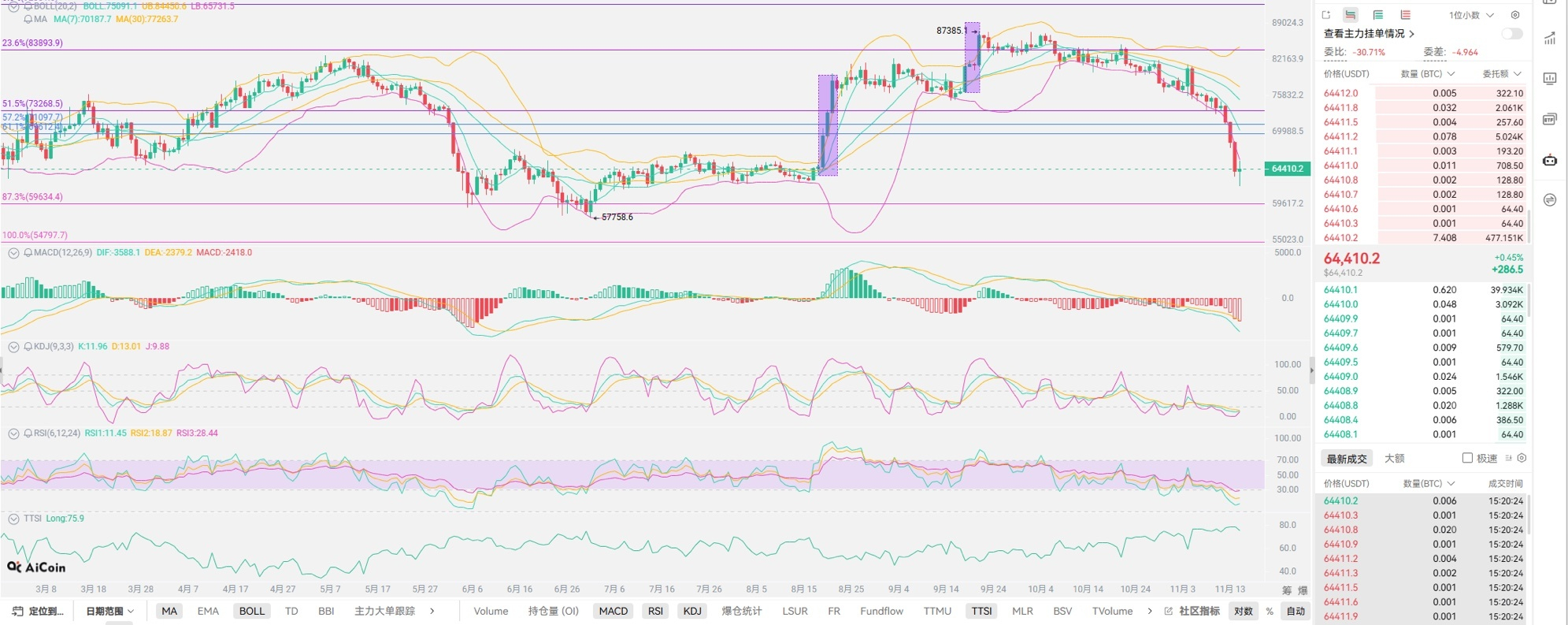

The initial positioning is paying off: the first take-profit target has been reached again, and the 6–6.5 range was completed in just four days. Lao Cui’s original estimate was that this range would be reached around November 20, so it happened almost a week early. At this pace, the entire market is looking bearish. Lao Cui suddenly doesn’t feel much of a sense of accomplishment. The moments truly worth getting excited about are usually turning points like the move at 85,000. Getting the trend call right and continuing to profit afterward aren’t that thrilling either. A word about short-term traders: recently, many people have asked Lao Cui, “Can I short at this price?” Perhaps the way Lao Cui has replied has caused some misunderstanding. The answer to this question has always been the same: as long as your position is sized appropriately, you can short at any time. I’ve also repeatedly mentioned in my articles that stop-losses should be set within the 3,000–5,000-point range. Be sure to follow this approach. Don’t get carried away while you’re making money, and don’t plant the seeds of your own failure.
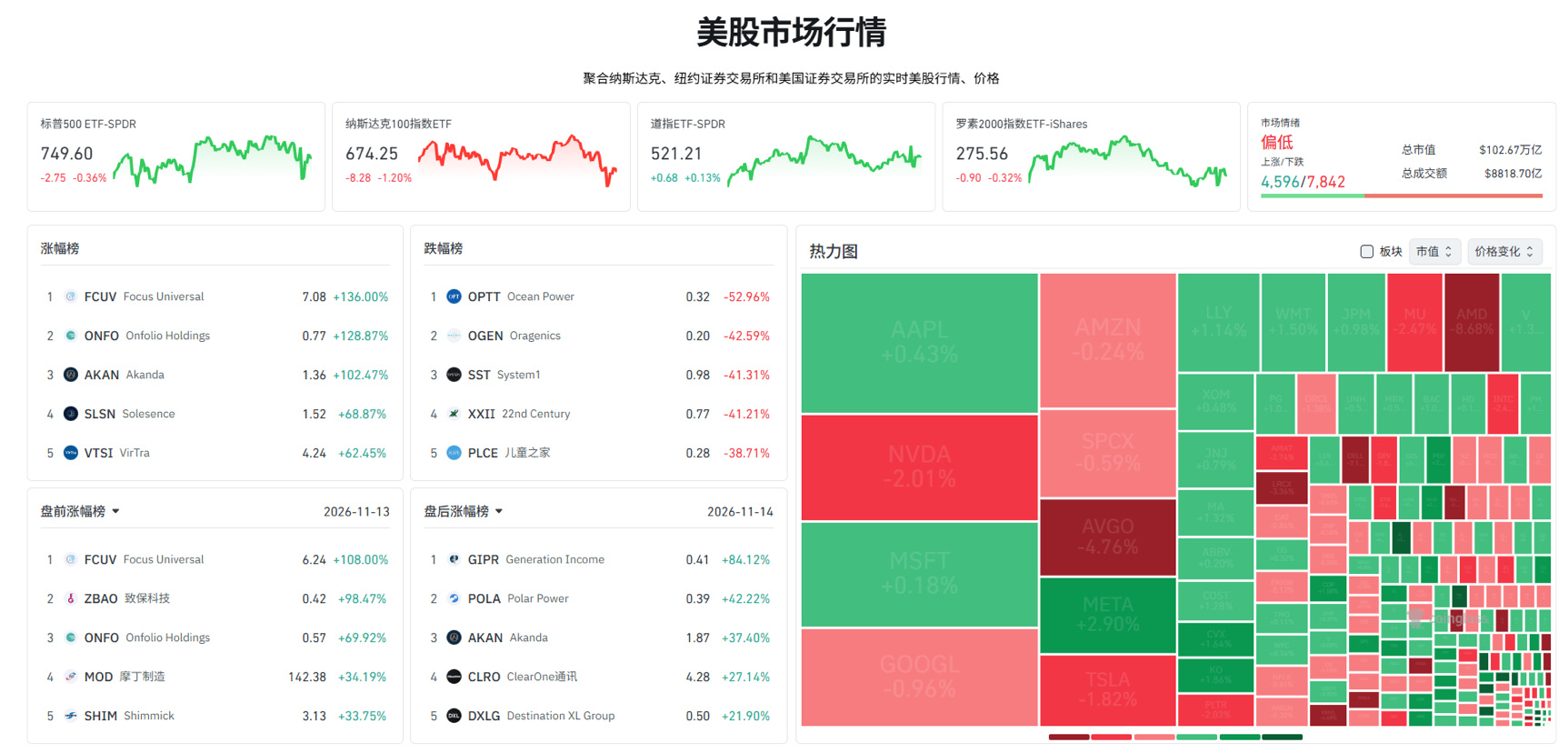
With all markets turning bearish, many people are also predicting whether a financial crisis will break out next year. That prediction is already late. Most people only believe their own way of thinking—or, put another way, they only want to hear opinions that confirm what they already believe. Ever since the US began raising interest rates, Lao Cui has said that the impact of rate hikes must be taken into account when considering the trend ahead. With the AI industry so hot, it won’t suddenly cool down for no reason. To judge whether it will collapse next year, you only need to consider one thing: whether AI can suddenly keep pace with real-world applications, allowing these giant companies to make profits through those applications. At the moment, that seems almost impossible. Lao Cui has also explained the underlying logic of AI. Essentially, it’s a process of continuously fixing bugs. Here’s a very straightforward example: an AI decision-making program can only classify things as right or wrong. It cannot understand the nature of real-world problems, and it still cannot think. What’s called “thinking” is really just the program running a decision-making process. This takes a great deal of time to build up. Lao Cui can’t say exactly how long it will take, but China is indeed doing a better job of pursuing this path: applying automated systems in factories. There’s nothing fundamentally wrong with this approach.
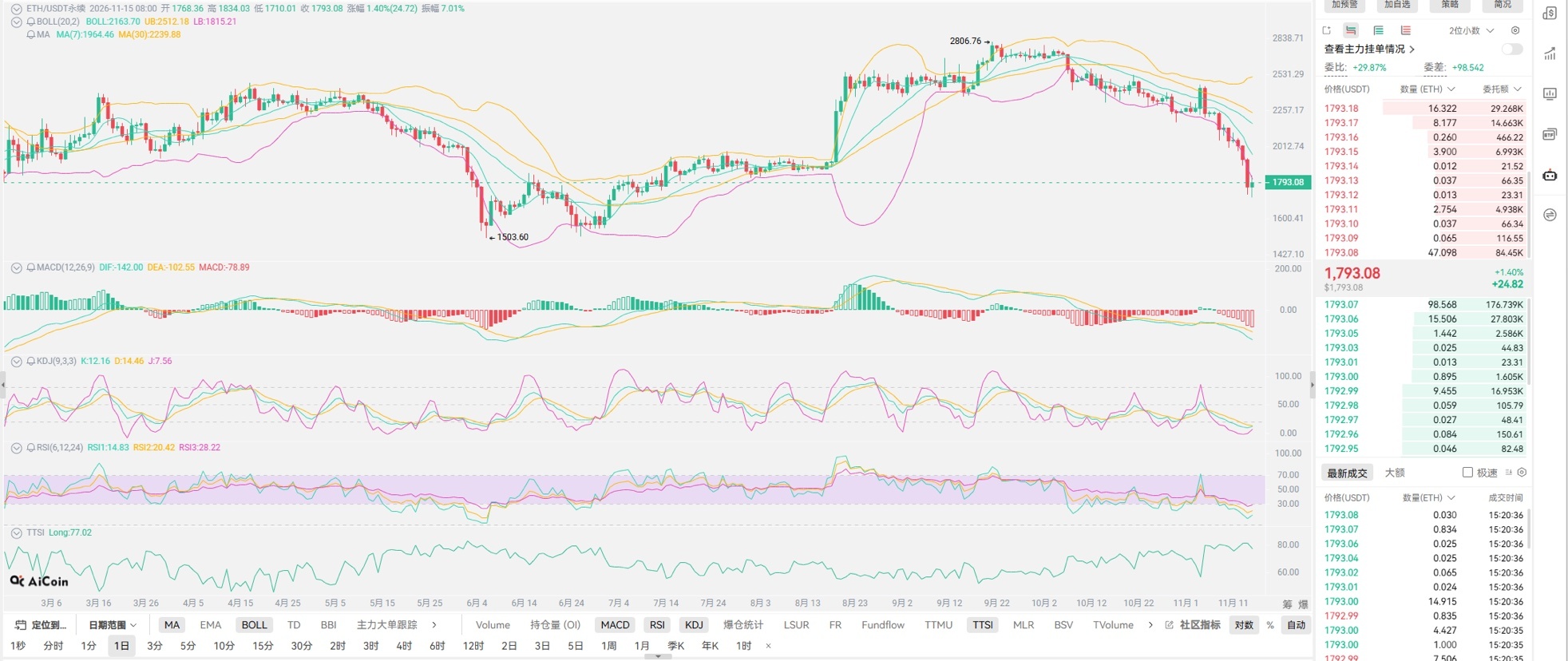
Although Lao Cui spent only half a year learning about it, and only studied software applications, he did indeed give up on this industry after learning more about it. It requires too much capital, and the market is almost monopolized by these huge companies. For ordinary people like us, there are hardly any opportunities to get involved. So the financial crisis will certainly be triggered mainly by AI. The sector has already begun to decline at this stage, so discussing the outcome is no longer very important. Everyone just needs to remember one thing: even if AI crashes, the industry will still exist. AI will not disappear just because the financial market declines; they are two separate markets. The financial market can only affect future capital investment, or a new industry could emerge to absorb some of that capital. For now, neither of these seems possible. That’s life: at this stage, we can’t see any changes, but perhaps opportunities will appear in the next phase. There’s no need to focus entirely on the financial crisis, especially since we’re taking short positions ourselves, so even if it breaks out, we’ll be among those who benefit.
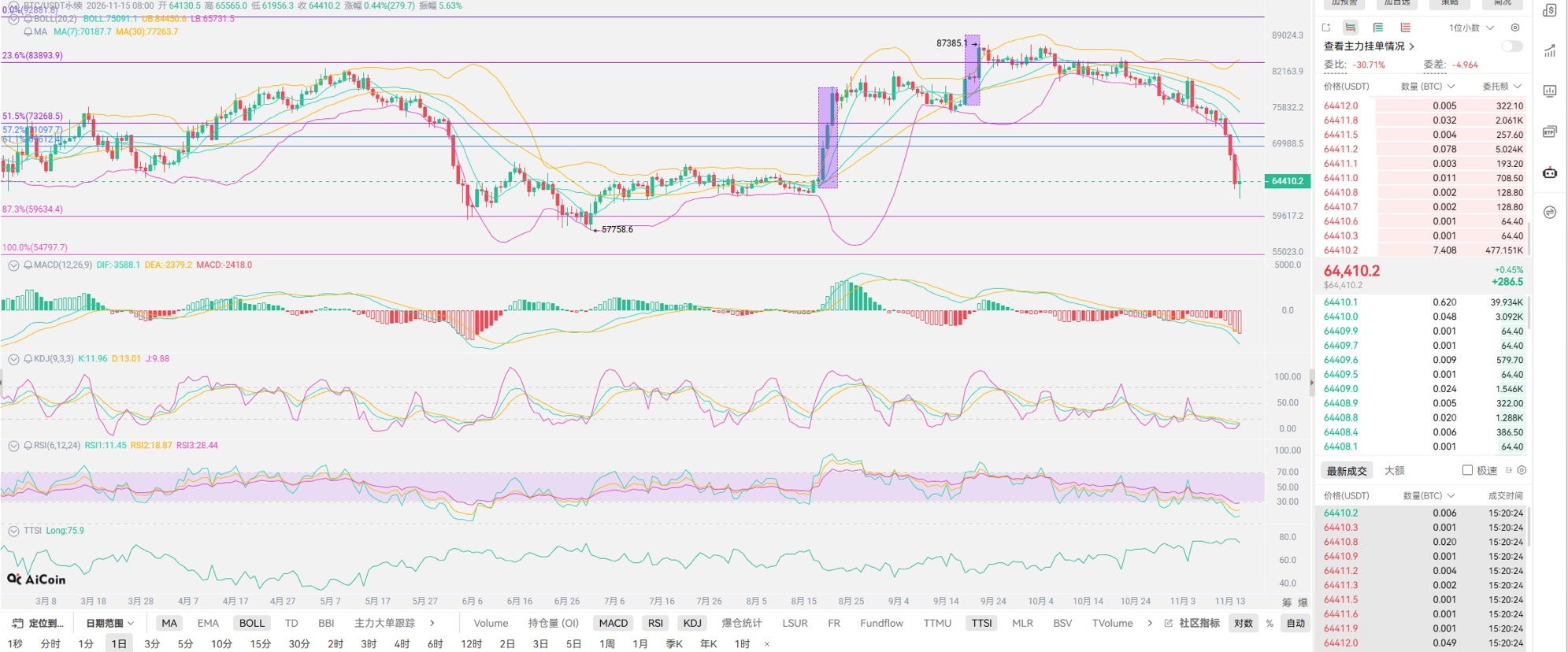
Lao Cui’s summary: Bitcoin has already hit a new low at 61,956, and the market is now thoroughly bearish. At this point, Lao Cui hasn’t seen any analyst still stubbornly insisting otherwise. I won’t go into the bearish side any further; I’ve already said a lot about it before, and the main purpose of this article is to emphasize the downtrend. The 10,000-point plunge I mentioned yesterday included yesterday’s price level, around 67,300 when I published the article. A 10,000-point drop would bring us to the previous cycle’s low. At this point, all I can do is take things one step at a time, and I don’t want to see prices fall any lower either. A reminder to everyone: the market is different now. Capital is still choosing to buy, not sell. Before the relevant legislation is actually enacted and before interest rates are raised, you can take a bearish view without too much concern. But once the market hits a new low, you need to weigh the potential returns from going long versus going short. Even if prices fall further, you should still have a price range in mind. If the price drops below 60,000, how likely is it to reach 30,000–40,000? Even if it does, the potential gain would only be 20,000 points. And when the bulls strike back, Bitcoin will still reach a new high within the next three years. That’s the question: are you looking to trade in the short, medium, or long term? Most users will choose short-term trading. Today is Sunday, and in Lao Cui’s view, next week’s market action isn’t that important either. The bulls’ counterattack will have to wait until late November or early December. If there’s no rebound during that period, then the bulls can call it a year! Aside from that, you can short boldly!