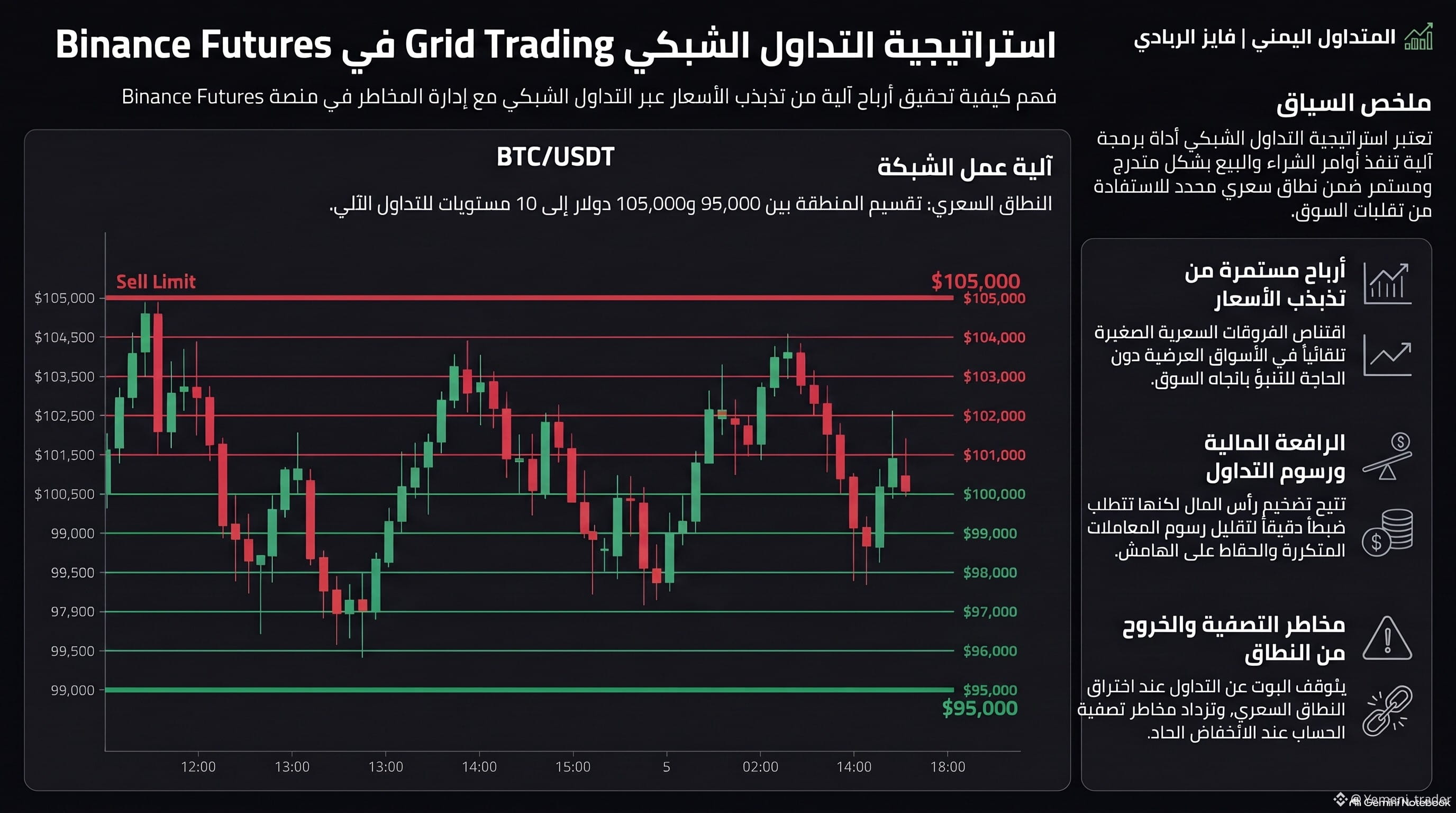
📊 How does the Grid Trading strategy work? A practical example using coin $APT
The Grid Trading strategy works by taking advantage of price fluctuations, placing buy and sell orders at multiple price levels instead of relying on a single market direction.
Let’s take a hypothetical example using APT (Aptos):
Suppose the price of APT is 2.00 USDT, and we want to create a trading grid between:
🔹 Minimum: 1.80 USDT
🔹 Maximum: 2.20 USDT
🔹 Number of grid levels: 8
🔹 Capital: 200 USDT
How does it work?
1️⃣ When the price drops to a buy level, the bot executes a buy order.
2️⃣ When the price rises to the next level, it executes a sell order and earns a profit from the price difference.
3️⃣ The process repeats with every upward and downward price movement within the grid range.
Example: If the bot buys APT at 1.95 and sells at 2.00, the difference is 0.05 USDT per coin, before fees.
⚠️ But where’s the risk?
If APT drops sharply below 1.80, losing positions may accumulate. With Futures Grid, the risk increases due to leverage and the possibility of liquidation.
💡 Bottom line: Grid Trading takes advantage of volatility, but it doesn’t guarantee profits. You should account for fees, unrealized losses, and futures contract risks.
My question for you: Would you prefer to try Grid Trading on $APT
or BTC? 👇
#APT #Aptos #GridTrading #Binance #CryptoTrading