
First they said no money was lost; now they admit $200,000 was transferred out
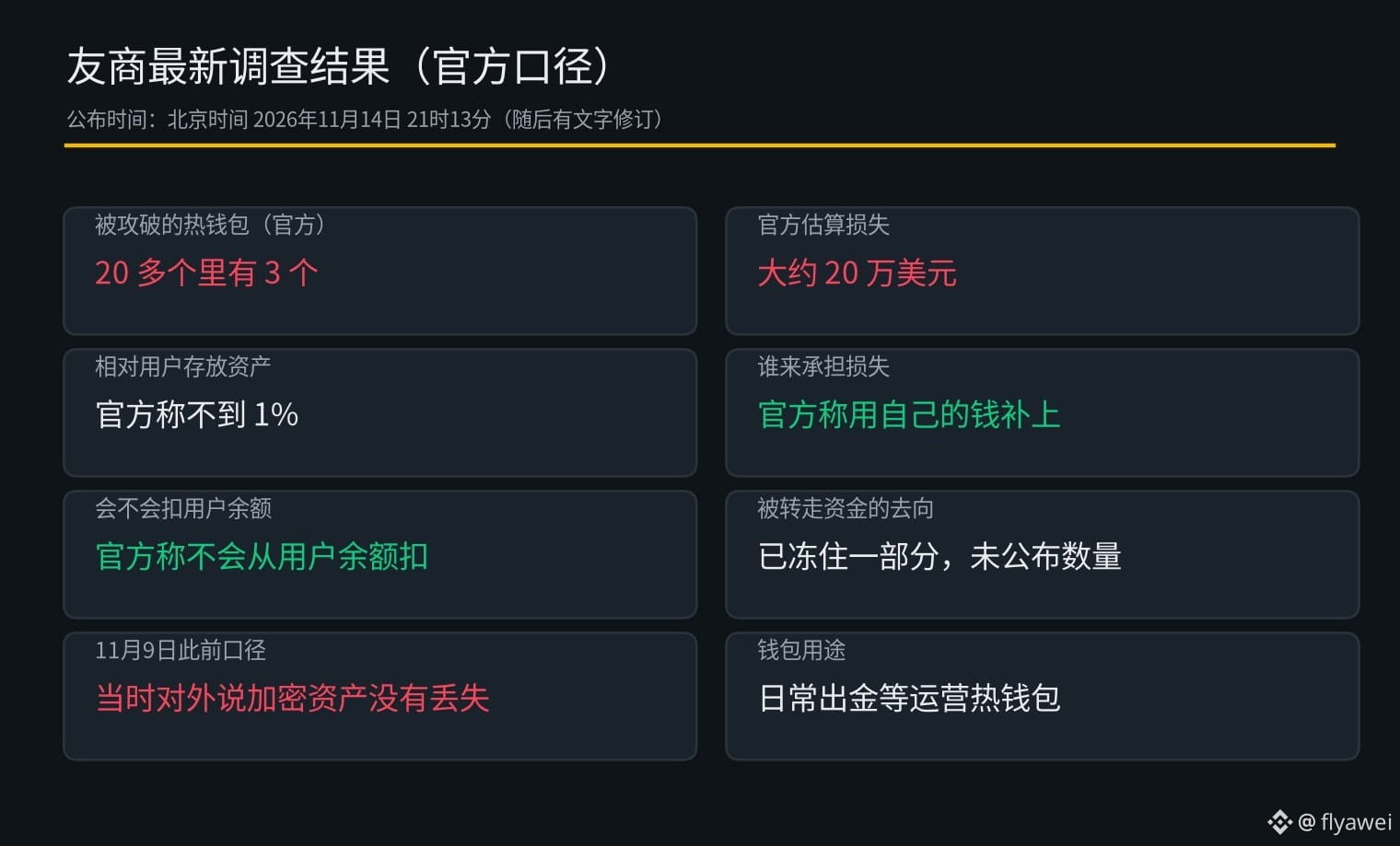
A competing platform published its latest investigation findings at 21:13 Beijing time on November 14. It now admits that 3 of its more than 20 hot wallets used for everyday withdrawals were compromised, and about $200,000 worth of crypto assets was transferred out.
On November 9, it told the public that no crypto assets had been lost. It later discovered that unauthorized transfers had been made from some hot wallets. The company said the loss was less than 1% of the crypto assets users had deposited, and that it would make up the shortfall with its own funds rather than deducting it from users’ balances. Some of the transferred funds have been frozen, but the company has not said how much.
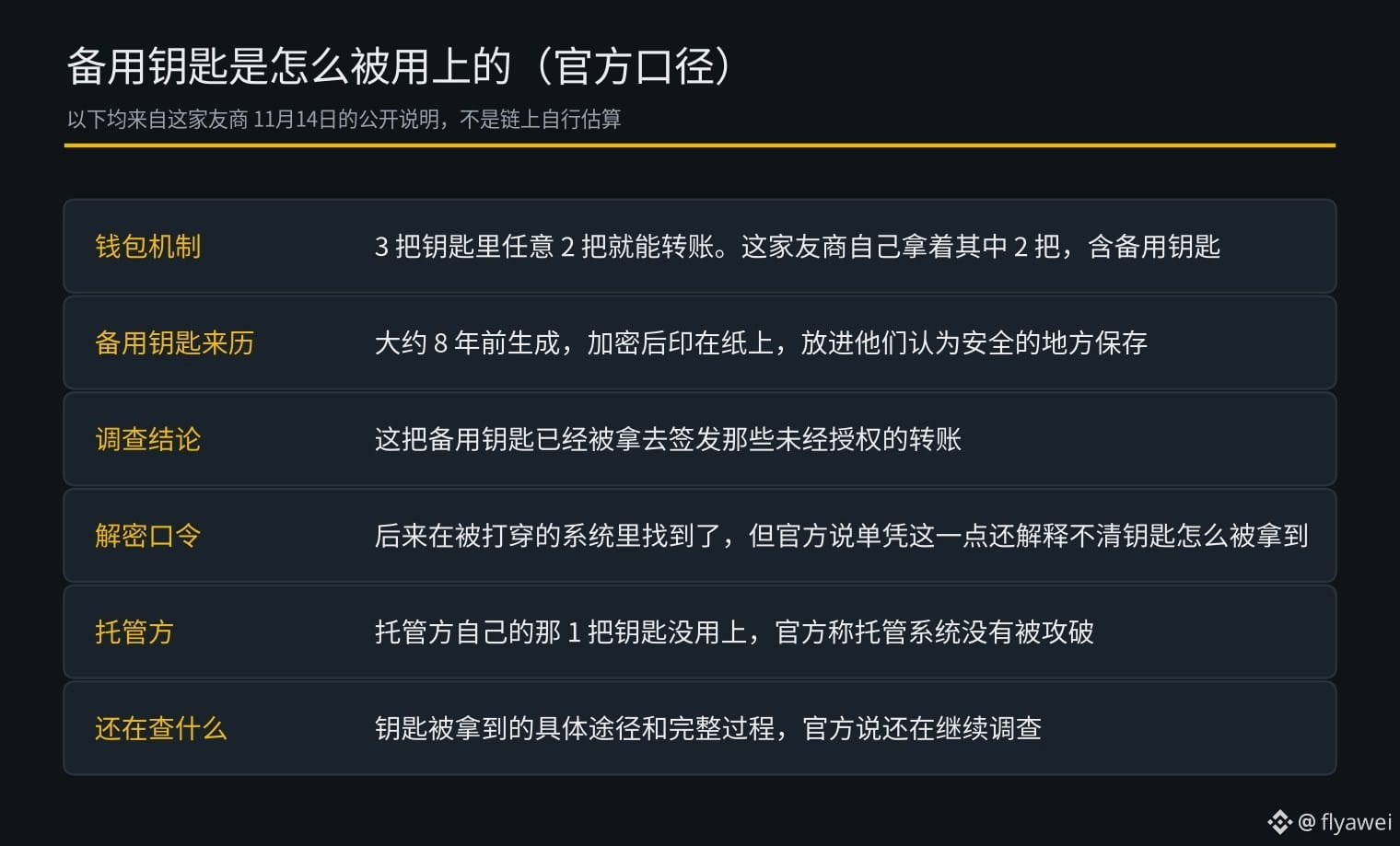
The investigation points to a backup key that the company kept in its own custody. This multisig wallet could authorize transfers with any 2 of its 3 keys. The backup key was generated about 8 years ago, encrypted, and printed on paper for safekeeping. Investigators have confirmed that this key was used to sign the transfers. The decryption password was later found in the compromised system, but the company says that alone does not explain how the key was obtained. The investigation is ongoing. The custodian’s own key was not used, and its custody system was not compromised.
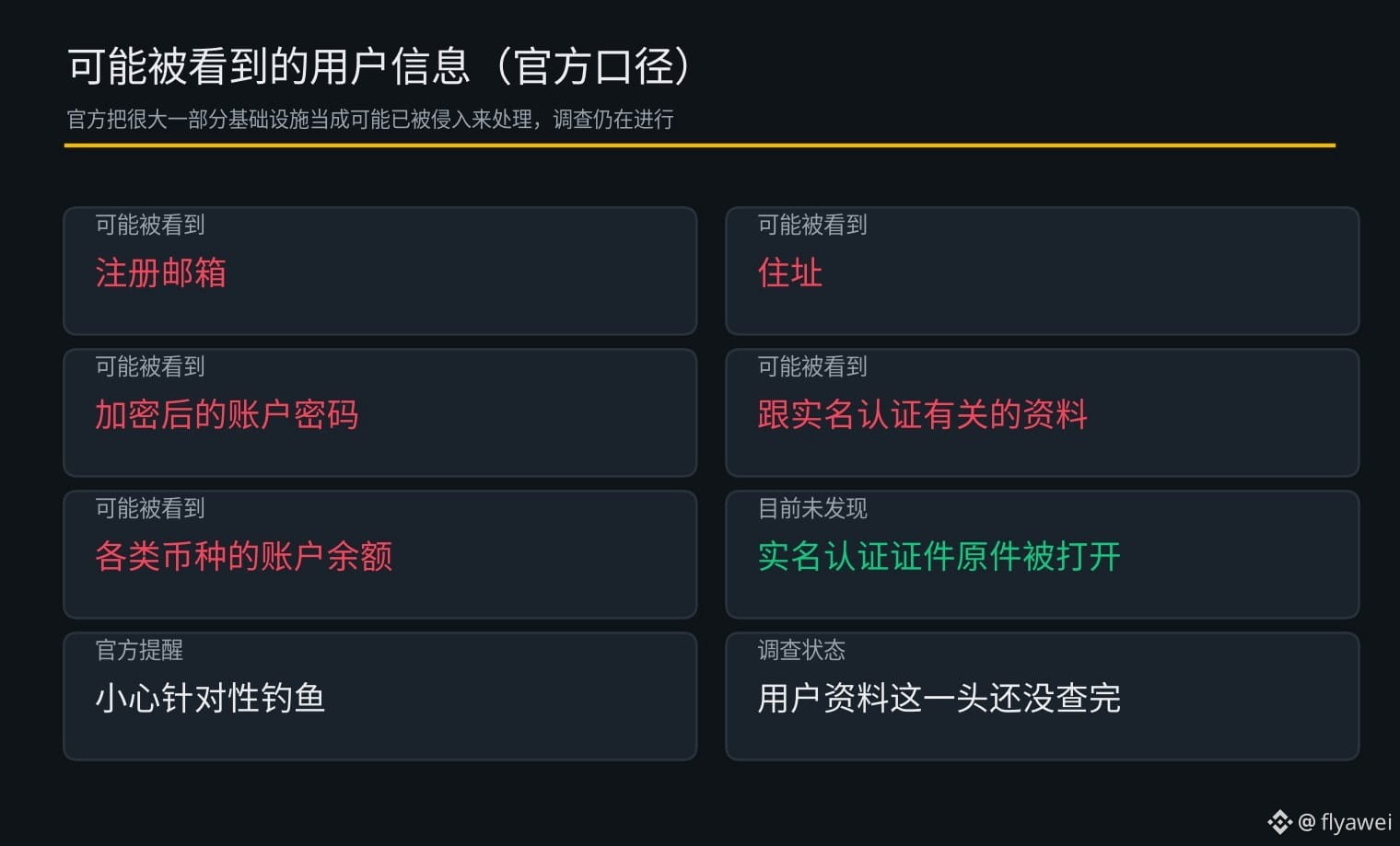
The same statement also says that information potentially exposed includes registration email addresses, home addresses, encrypted account passwords, information related to identity verification, and account balances across various cryptocurrencies. The company says it has found no evidence so far that original identity documents were accessed, and warns users to watch out for targeted phishing attempts.
My take: $200,000 isn’t a huge amount, but that backup key, printed on paper and kept for 8 years, was compromised along with the system. The investigation into user data is still ongoing, so for now, assume the risk remains.
Beginners: do more research and less trading. If you’re buying crypto, stick to $BTC