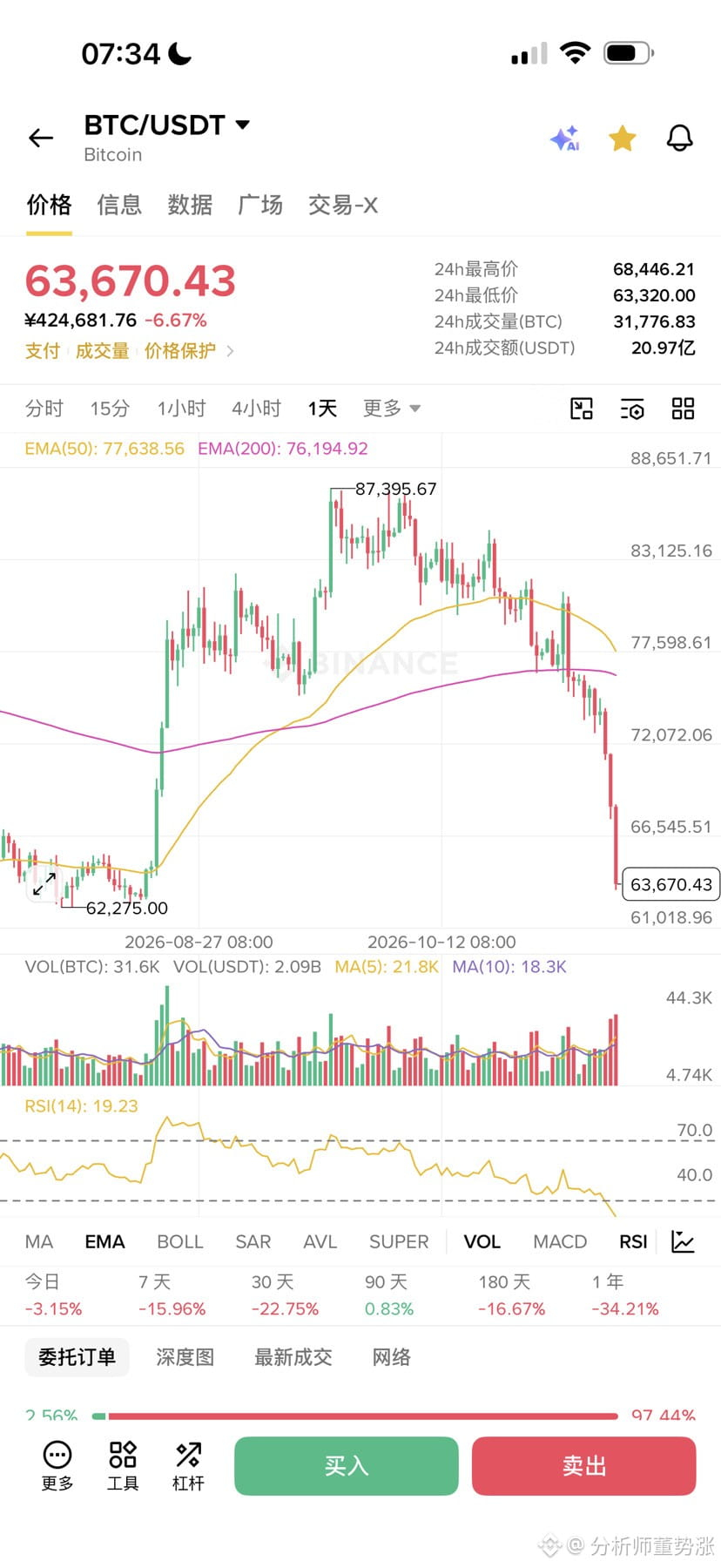
BTC has plunged sharply, at one point falling to around 63,000 and nearly breaking through every key level. Naturally, there are no signs of a bottom yet.
It’s Sunday, and I normally wouldn’t post an update today. But given these market conditions, I have to issue a reminder, because this price action is truly brutal.
I’ve said repeatedly in posts and livestreams that breaking below 75,000 was only the beginning. I thought we might fall to a new low, but I didn’t expect the drop to be so swift and decisive. There was almost no chance to fight back during the whole move. You could say that the way it rose back then is exactly how it’s fallen back down now—just brutally fast. Pretty much everyone who tried to buy the dip during this move got wiped out. I’ve also warned people many times in my livestreams not to place limit orders to buy the dip. A bottom will always show signs: either a large number of traders piling into shorts, bullish divergence, or signs of a base forming. None of those appeared in this market. You place a limit order to buy the dip, thinking you’ll catch the bottom, but the market wants to catch you instead. Seriously, don’t act impulsively. The good thing is that we had no intention of buying the dip during this move. We didn’t catch this big short, but after the price broke below 70,000, I really had no reason to open another short, because I was genuinely worried that a second-wave pullback might fill the gap and then find a bottom. During the entire decline, we only opened one long position near 68,500, took 800 points, and got out. At no point did we consider buying the dip.
Back to the charts: has the price found a bottom yet? For a genuine bottom to form, trading volume needs to rise first, with heavy panic selling. I’ve mentioned this in a previous livestream: every bottom in the past came with a surge in trading volume. We haven’t seen that surge yet, which means the price hasn’t bottomed. Why can a rise in trading volume make a bottom more likely? Because it means retail traders are panic-selling along with the market. If the price stops falling or drops and then recovers during that sell-off, it shows that buyers have stepped in. When the price is falling like this, retail traders don’t dare buy; they’re just scared and won’t buy heavily into the dip. Only when large players step in with substantial buying can the price stop falling. That’s when we’ll consider opening long positions. You can look back at previous major sell-offs: the bottoms always formed when trading volume surged dramatically.