#tonstrategy第三季度净亏损2397万美元 TON Strategy Reports a $23.97 Million Net Loss in Q3—The Staking Yield Myth Is Crumbling!
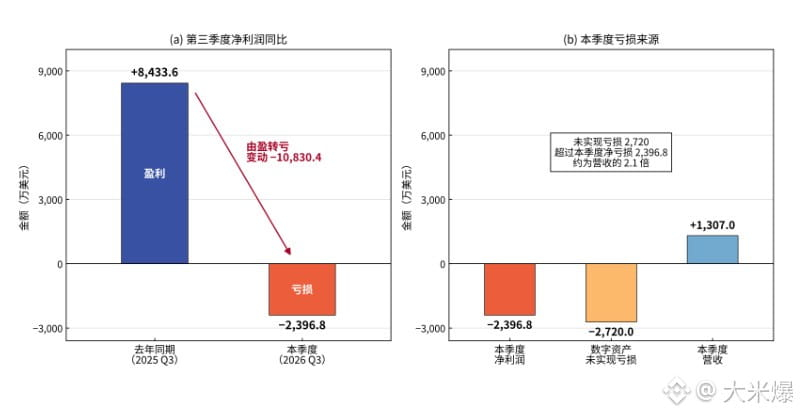
U.S.-listed crypto treasury company TON Strategy announced its financial results for the third quarter of 2026, reporting a net loss of $23.97 million, compared with net income of $84.34 million in the same period last year—a swing from profit to loss.
Although the company generated $13.07 million in revenue in the third quarter and its annualized gross staking yield was about 16%, falling digital asset prices led to approximately $27.2 million in unrealized losses. Even substantial staking yields could not make up for losses caused by asset depreciation.
This exposes a flaw in the business model of crypto treasury companies: they rely on rising token prices to boost profits in a bull market, but lack sufficient hedging capabilities when prices fall. So-called high-yield staking still depends heavily on token price performance.
For TON, Telegram’s vast user base, ecosystem expansion, and network upgrades may support its long-term growth narrative. But ecosystem growth does not mean sustained capital inflows, nor does it guarantee that the token price will rise.
With market liquidity tightening and investors’ risk appetite declining, the business model of simply accumulating tokens and staking them for yield is facing a serious test.
TON’s short-term outlook remains bearish, and high staking yields cannot serve as an effective safety net for its token price. Until genuine incremental capital enters the market, any rebound is more likely to be a temporary recovery.
U.S.-listed crypto treasury company TON Strategy announced its financial results for the third quarter of 2026, reporting a net loss of $23.97 million, compared with net income of $84.34 million in the same period last year—a swing from profit to loss.
Although the company generated $13.07 million in revenue in the third quarter and its annualized gross staking yield was about 16%, falling digital asset prices led to approximately $27.2 million in unrealized losses. Even substantial staking yields could not make up for losses caused by asset depreciation.
This exposes a flaw in the business model of crypto treasury companies: they rely on rising token prices to boost profits in a bull market, but lack sufficient hedging capabilities when prices fall. So-called high-yield staking still depends heavily on token price performance.
For TON, Telegram’s vast user base, ecosystem expansion, and network upgrades may support its long-term growth narrative. But ecosystem growth does not mean sustained capital inflows, nor does it guarantee that the token price will rise.
With market liquidity tightening and investors’ risk appetite declining, the business model of simply accumulating tokens and staking them for yield is facing a serious test.
TON’s short-term outlook remains bearish, and high staking yields cannot serve as an effective safety net for its token price. Until genuine incremental capital enters the market, any rebound is more likely to be a temporary recovery.