
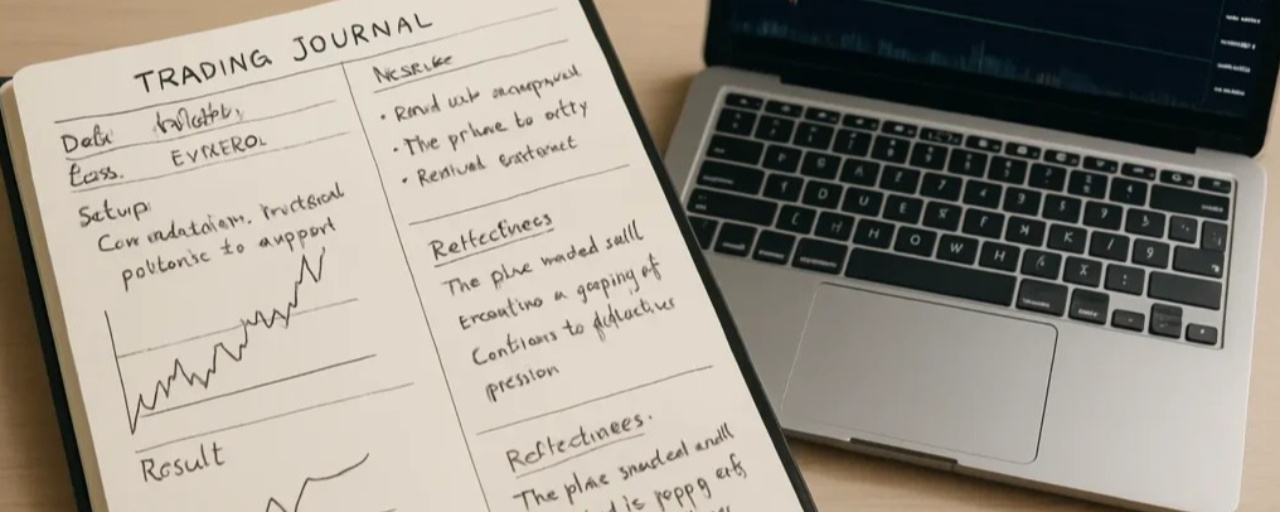

Have you ever thought, “Why do I keep losing in similar situations?” That’s not just a feeling—it’s a pattern, and you’ll only spot it if you keep track. A trading journal is really simple, but it makes a real difference because you can’t lie to yourself anymore.
**How to Create a Journal You’ll Actually Use**
First, prepare a simple table, either in a notebook or a spreadsheet—what matters is that it’s easy to fill in after every trade. Don’t make the format too complicated at first, because complicated journals tend to get used only on the first day, like New Year’s resolutions.
Second, fill in the basic details for every trade: the date, which asset, the entry price, and why you entered. The reason is the most important part. Be honest, for example, "followed a signal," "breakout," or "FOMO when I saw green"—don't edit it to make yourself look smart.
Third, write down your exit plan before you know the outcome. Where is your stop loss, what is your exit target, and what change in conditions would make you exit? This helps you assess whether you stuck to your plan or exited out of panic.
Fourth, once the position is closed, record the outcome and one sentence about what you learned. For example: "entered too early, before confirmation" or "position size was too big, so I panicked." One honest sentence is far more useful than a pretty chart.
Fifth, review your journal at the end of every week. Look for the mistake that comes up most often, then focus on fixing that one next week—not everything at once.
A journal isn't for show; it's to help you stop repeating the same mistakes. Do you already keep a journal, or are you still relying on memory alone?
This content is for educational purposes only, not investment advice. Always DYOR and evaluate your own decisions.
#TradingJournal #LearnCrypto #BeginnerTrading