
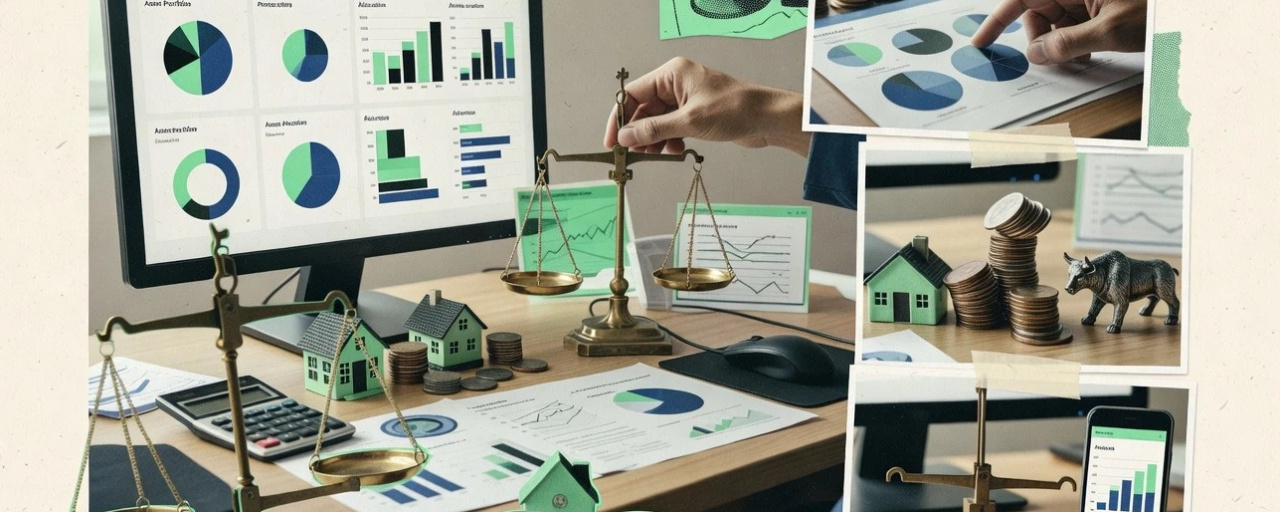

Have you ever started out really determined to keep your portfolio neatly allocated, then checked back a few months later and found that the mix had completely changed on its own—one asset dominating while the other was left with scraps?
You haven’t done anything, but your portfolio has been moving around on its own. That’s normal—and that’s where rebalancing comes in.
**What Is Rebalancing, Simply Put?**
Rebalancing means periodically readjusting your portfolio allocation to bring it back to your original targets. Since each asset’s price moves differently, its weighting changes automatically.
One asset may shoot up and become too big a part of your portfolio, while another lags behind and becomes too small. Rebalancing is like tidying your closet regularly—not waiting until everything spills out.
**A Numbers Example to Make It Clear**
For example, your original target is 50 percent in asset A and 50 percent in asset B, each worth Rp500,000 out of a total of Rp1 million. After some time, let’s say asset A rises to Rp800,000 while asset B stays at Rp500,000. The total is now Rp1.3 million, but the mix is no longer 50-50—it’s about 62-38.
To get back to your target, you can sell some of asset A and move the money into asset B, or direct your next purchases only toward asset B until things are balanced again. The second approach is beginner-friendly because you don’t have to sell or keep paying trading fees.
**Why Does This Matter? It’s Not Just About Keeping Things Neat**
Without rebalancing, your risk profile changes without you realizing it:
- An asset that has risen a lot quietly becomes the deciding factor in your portfolio’s fate
- If that asset then takes a sharp downturn, the impact will hurt much more than you planned for
- You may end up FOMO-buying more of what’s already rising instead of sticking to your plan
Rebalancing makes you reduce what has grown too large and add to what has lagged behind, based on your plan—not euphoria.
**A Realistic Rebalancing Approach for Beginners**
1. Set your target allocation at the start and write it down—don’t just keep it in your head.
2. Choose a regular check-in schedule, such as every three or six months, rather than checking every time prices move a little.
3. Or use a threshold—for example, rebalance only when an allocation has drifted more than ten percent from its target.
4. Calculate the fees and impact of every transaction, so your portfolio looks tidy on a chart but doesn’t spring a leak in costs.
This is where being consistent differs from being reactive. Rebalancing is scheduled consistency, not panic disguised as tidying up.
**Conclusion**
A portfolio left alone can gradually turn into a different portfolio you never planned for. Rebalancing helps you stay in control of your risk.
Are you the type to check your portfolio allocation regularly, or do you only notice when it’s become really lopsided?
*This article is for educational purposes, not investment advice. Always do your own research (DYOR) before buying any asset.*
#Rebalancing #Portfolio #InvestmentStrategy #LearnCrypto
$BTC$ETH$BNB