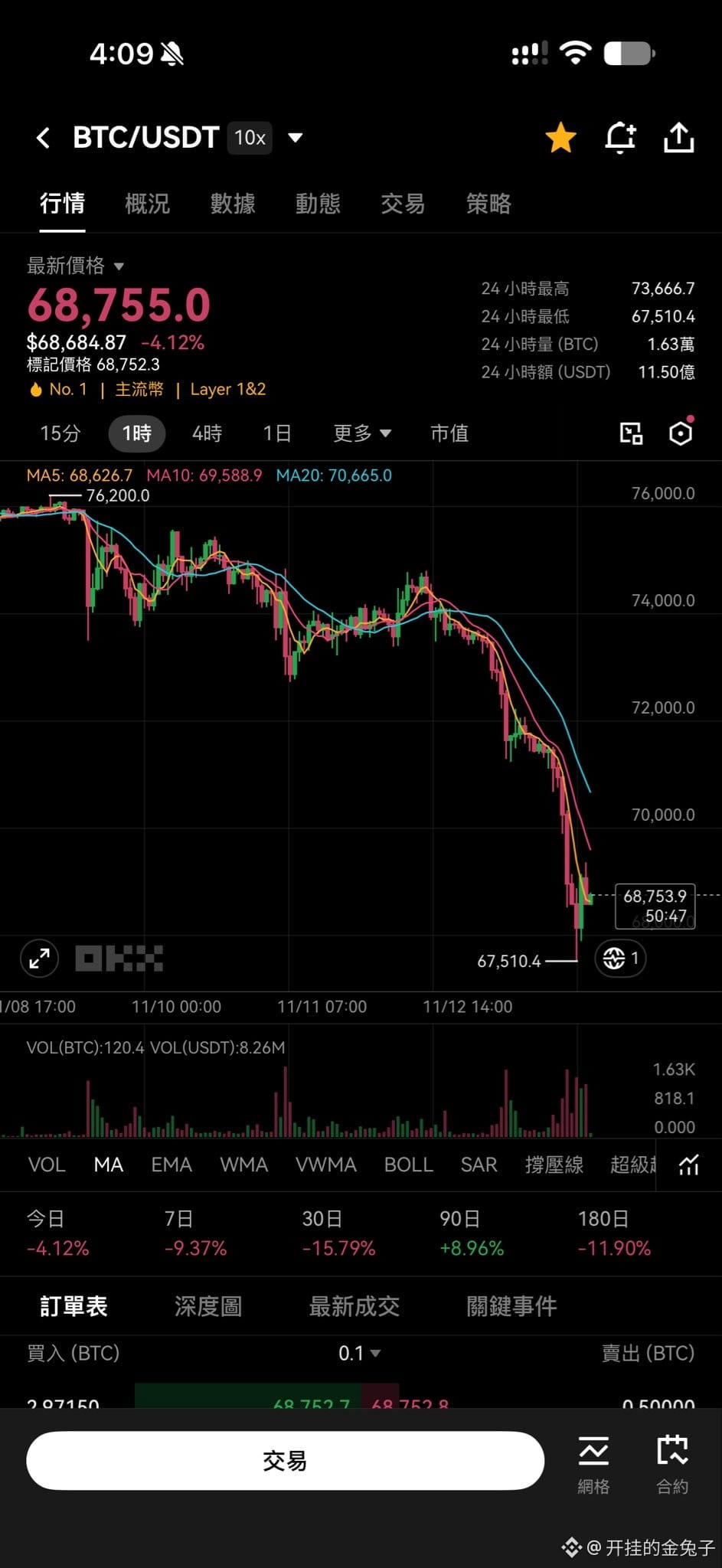

Going public with live trades is a carefully planned hunt by bear-market market makers and exchanges targeting whales and KOLs 🩸
The market has fallen over the past ten days or so, and the decline has been very bleak. I think it’s because we’re still paying the price for the Binance hack.
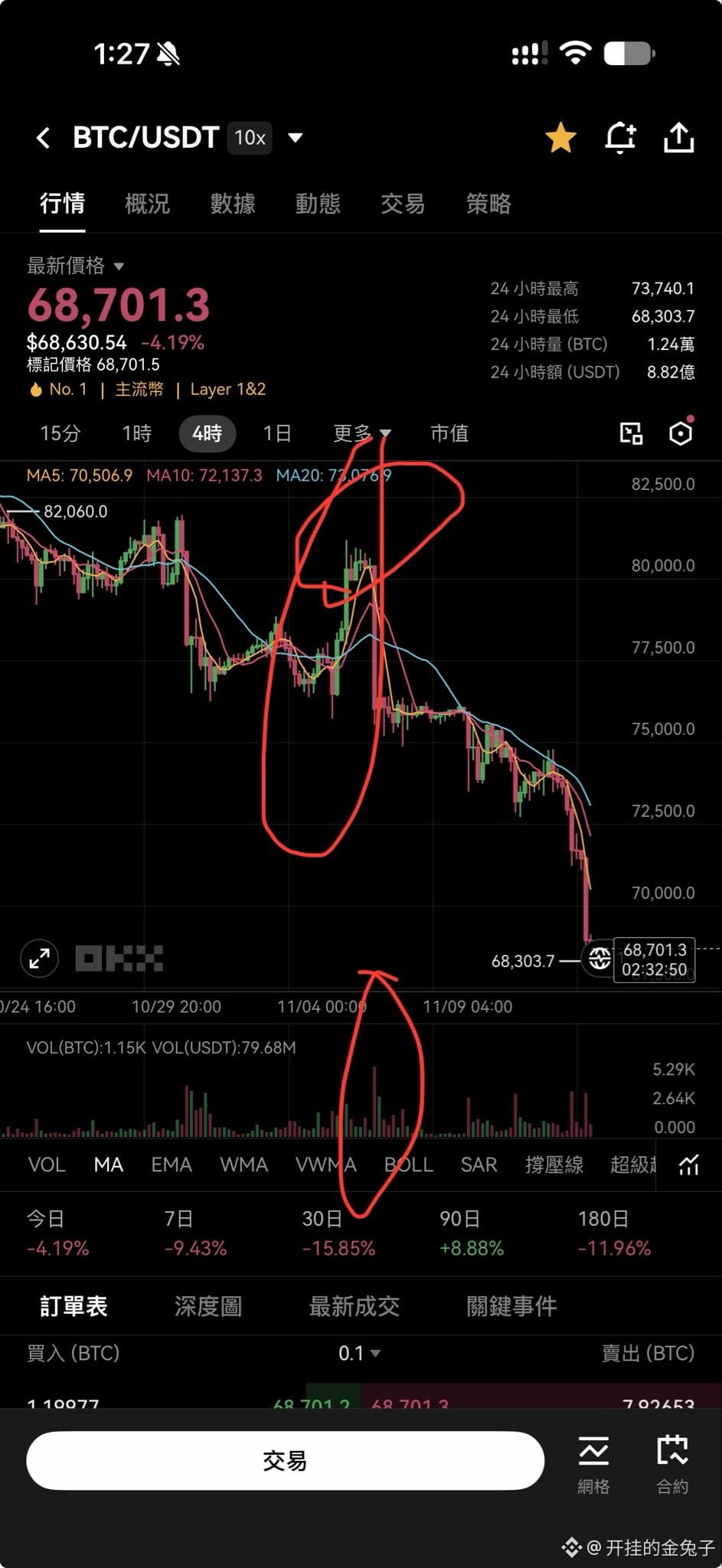
When Binance was hacked, I already had a feeling we’d end up paying for it later. I even shared that on Twitter. But the crypto market barely fell at the time, so I thought we’d already paid the price. Still, I had a nagging sense of unease—the drop was too small. On November 3, Bitcoin surged and staged the misleading rebound shown in Figure 2.
Everyone was utterly despondent.
In the short term, $BTC probably doesn’t have much further to fall. But in the long term, we may still have to keep paying the price.
For market makers, a drop after a rebound is what maximizes their profits—they can keep shaking people out.
I felt it today, too: human factors have an enormous influence on crypto and Bitcoin. When Binance was hacked and U.S. stocks plunged, crypto barely fell. It was really just a disguise put on by crafty market makers.
If crypto had fallen along with U.S. stocks from the start, there wouldn’t have been a problem. But U.S. stocks and gold fell while Bitcoin didn’t; everything else rebounded, while Bitcoin kept falling.
I’ve seen several crypto big shots publicly share their live trades. Their bullish entry points aren’t necessarily wrong, but their positions are worth over $100 million—and with their followers copying their trades, the total is even higher. What market maker or exchange could resist going after positions like that?
Crypto market makers have become much more covert in how they operate.
But the more carefully they plan their hunts, the more they take and the fatter they get. Will the political parties in the U.S. seize the opportunity?
I think everyone has felt the impact of the Jensen Huang incident over the past couple of days.
Among the four traditional occupations—scholars, farmers, artisans, and merchants—it seems that in the U.S., businesspeople don’t have such a low standing after all.
If even things that are legal and compliant but unethical can happen, what about market makers pulling strings behind the scenes?
The above reflects only my personal views and experience and does not constitute investment advice.