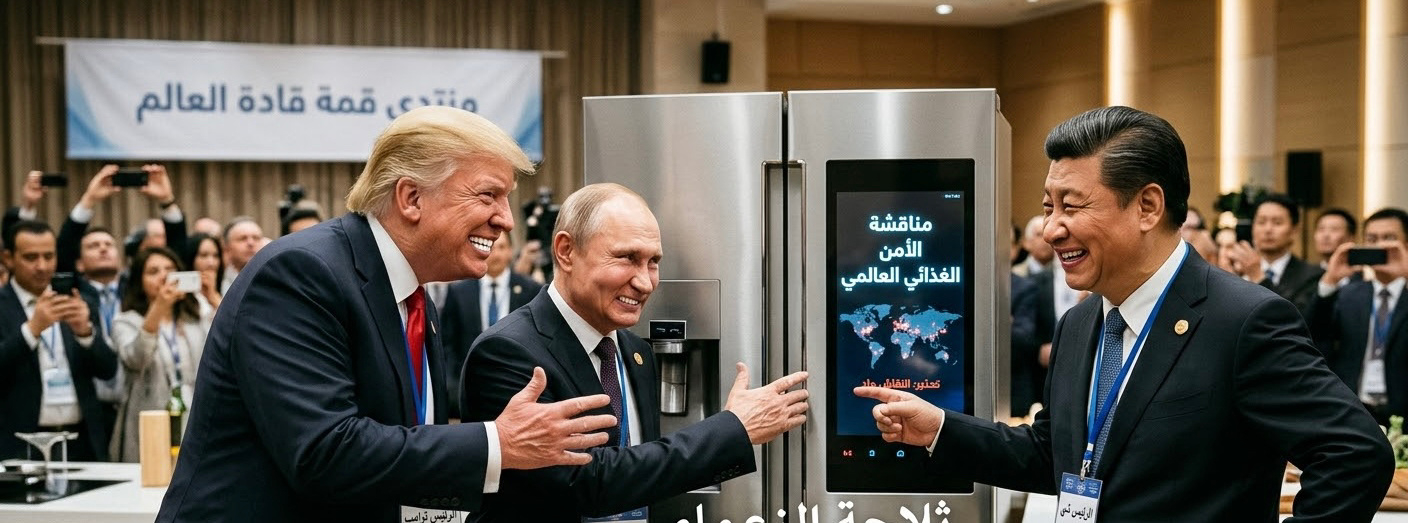
All eyes are on the Chinese city of Shenzhen, one of the world’s leading industrial and technology hubs, as the Asia-Pacific Economic Cooperation (APEC) forum takes place on November 18 and 19. A meeting is expected to bring together U.S. President Donald Trump, Russian President Vladimir Putin, and Chinese President Xi Jinping.
The meeting has prompted differing interpretations of its motives and potential outcomes. Analysts and observers who support the U.S. president’s approach see Trump as conducting foreign policy with the mindset of a businessman seeking major deals to reshape the global economic order before his presidential term ends. They believe that his ability to move beyond domestic disputes with the Democratic Party gives him room to focus on unconventional foreign initiatives, and that the choice of an industrial city as significant as “Shenzhen” reflects this pragmatic vision. By contrast, other diplomats and observers point out that multilateral summits are often shaped by geopolitical complexities and deep divergences of interest, making comprehensive agreements dependent on difficult concessions from all parties.
As for the official agenda, statements from the White House and international media reports point to several major issues being intertwined, with each country taking a different approach to them:
Economy and technology bullet point: The event is linked to the APEC Economic Forum and includes a bilateral meeting between Trump and Xi Jinping to discuss trade balances. According to media reports, a prominent figure in the technology sector, such as Elon Musk, is accompanying the U.S. delegation without taking part in the trilateral meeting, while Washington maintains that controls on exports of sensitive electronic chips remain off the negotiating table.
Middle East and Iran bullet point: U.S. administration sources say Washington intends to raise developments in the Middle East and the Iran issue for discussion, given the strategic and economic ties between Moscow and Beijing and Tehran.
Ukraine crisis bullet point: According to U.S. officials, the issue of the war in Ukraine is being handled through a separate negotiating track between Washington, Moscow, and Kyiv, without direct Chinese participation in that track. This may reflect a divergence between the U.S. position and Moscow’s desire to broaden the scope of the discussion.
Nuclear arms control bullet point: Nuclear arms control stands out as a key item on the agenda, as the previous nuclear treaty between the United States and Russia expired at the start of this year and developments in China’s nuclear arsenal continue.
The outcome of the “Shenzhen” summit remains contingent on the delicate balance among the three powers. While some see it as an opportunity to break the deadlock and open new economic and political avenues, others view it as an initial exploratory round to test the parties’ intentions at an exceptionally complex international juncture.
Interactive
The world’s attention is turning to the Chinese city of “Shenzhen,” a hub of industry and technology, where a historic meeting is expected to bring together:
🇺🇸 Donald Trump
🇷🇺 Vladimir Putin
🇨🇳 Xi Jinping
On the sidelines of the APEC summit on November 18 and 19.
How should this move be interpreted?
From Trump supporters’ perspective: The move is seen as a bold step by a businessman applying the logic of “big deals” to politics and seeking to redraw the global economic map before the end of his term, making use of his presence at the heart of the world’s largest technology hub.
From the perspective of observers and diplomats: The summit is a real test of the balance of interests, as ambitions to reach swift understandings run up against the complexities of international issues and the differing priorities of Washington, Moscow, and Beijing.
Key issues on the agenda (according to official statements and reports):
1. Economy and trade: Bilateral and trilateral discussions on trade balances, with the U.S. stressing that restrictions on sensitive chips remain off the negotiating table.
2. Iran and the Middle East: U.S. efforts to put the issue on the trilateral agenda, given Moscow’s and Beijing’s influence with Tehran.
3. Ukraine: Washington says its negotiations are proceeding on a separate track, apart from the trilateral summit, despite Moscow’s preference to discuss the issue within a broader framework.
4. Nuclear issues: Discussions on the future of arms control following the expiration of the nuclear treaty between Washington and Moscow at the start of the year.
In your view, will the “Shenzhen” summit pave the way for economic and political understandings that change the rules of the game, or will it simply open channels for preliminary dialogue?