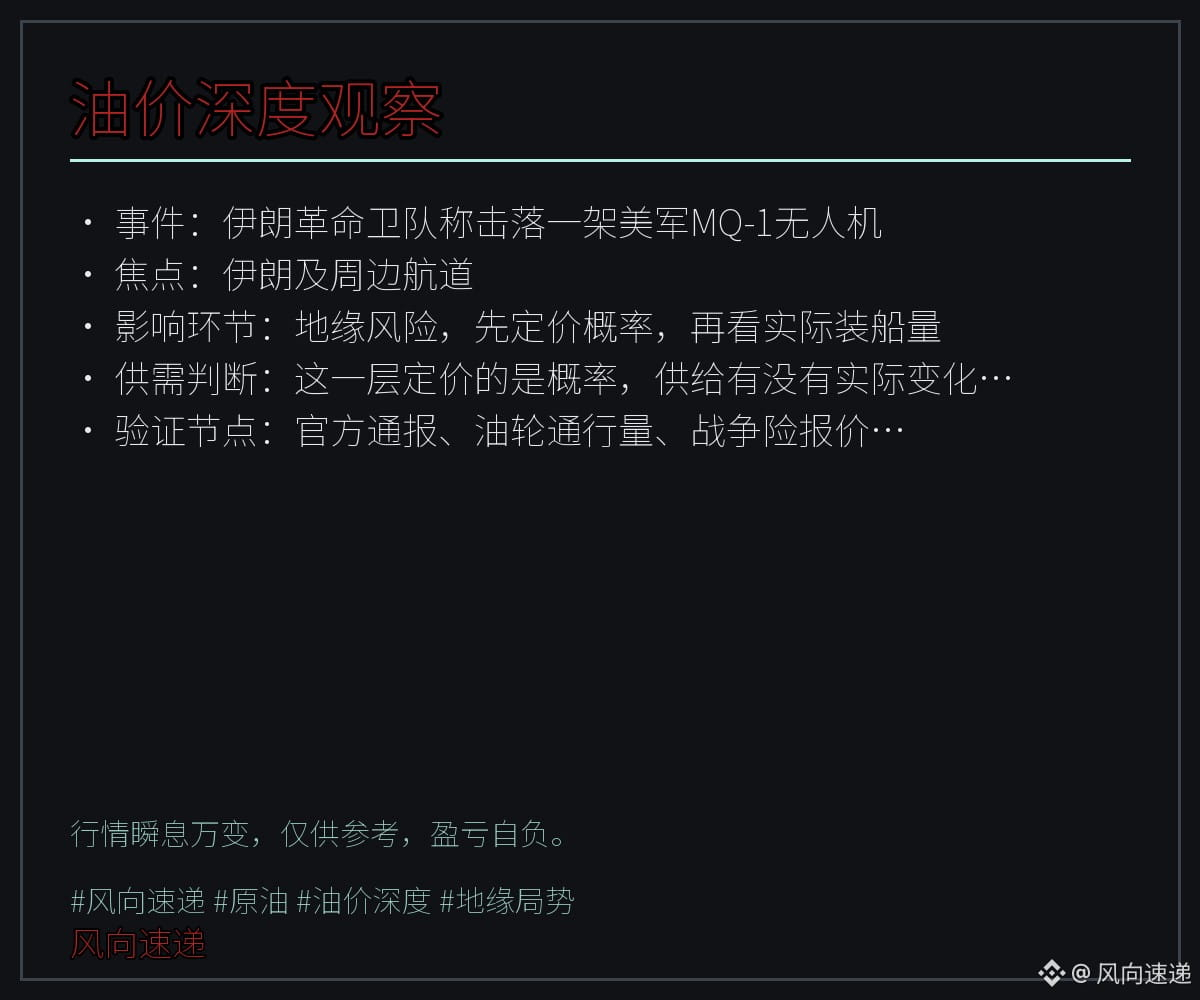
Oil Market Deep Dive
【Key Event】
Iran’s Revolutionary Guard says it shot down a U.S. military MQ-1 drone (within the past hour)
【What’s Influencing Oil Prices】
Iran has launched attacks on energy infrastructure. Attention is focused on Iran and nearby shipping lanes. News of this kind changes the market’s estimate of the probability of supply disruptions, but does not necessarily correspond to actual production losses.
【Transmission Mechanism】
Tensions first push up the geopolitical risk premium, prompting adjustments to tanker insurance, voyage plans, and buyers’ willingness to build inventories.
Only when events affect loading, transit, or the facilities themselves does the risk premium translate into a verifiable shortfall in the supply-and-demand balance.
【Supply, Demand, and Pricing】
At this stage, prices reflect probabilities. Whether supply has actually changed will depend on subsequent loading volumes and facility operating data.
WTI is currently trading around $88.56, with a 24-hour change of +0.35%. Price movements are limited, and the market’s response is so far moderate. Further data will be needed to confirm how much of this news is priced in. Premiums driven by conflict-related news are typically concentrated in front-month contracts and options-implied volatility, and can unwind quickly when sentiment shifts.
【What to Watch Next】
Watch for official statements, tanker traffic, war-risk insurance quotes, and any changes to oil producers’ loading schedules.
【What Would Invalidate This Thesis】
If tensions ease and no infrastructure or shipping is damaged, the risk premium often dissipates quickly.
Markets can change in an instant. For reference only; trade at your own risk.
#风向速递 #原油 #油价深度 #GeopoliticalSituation