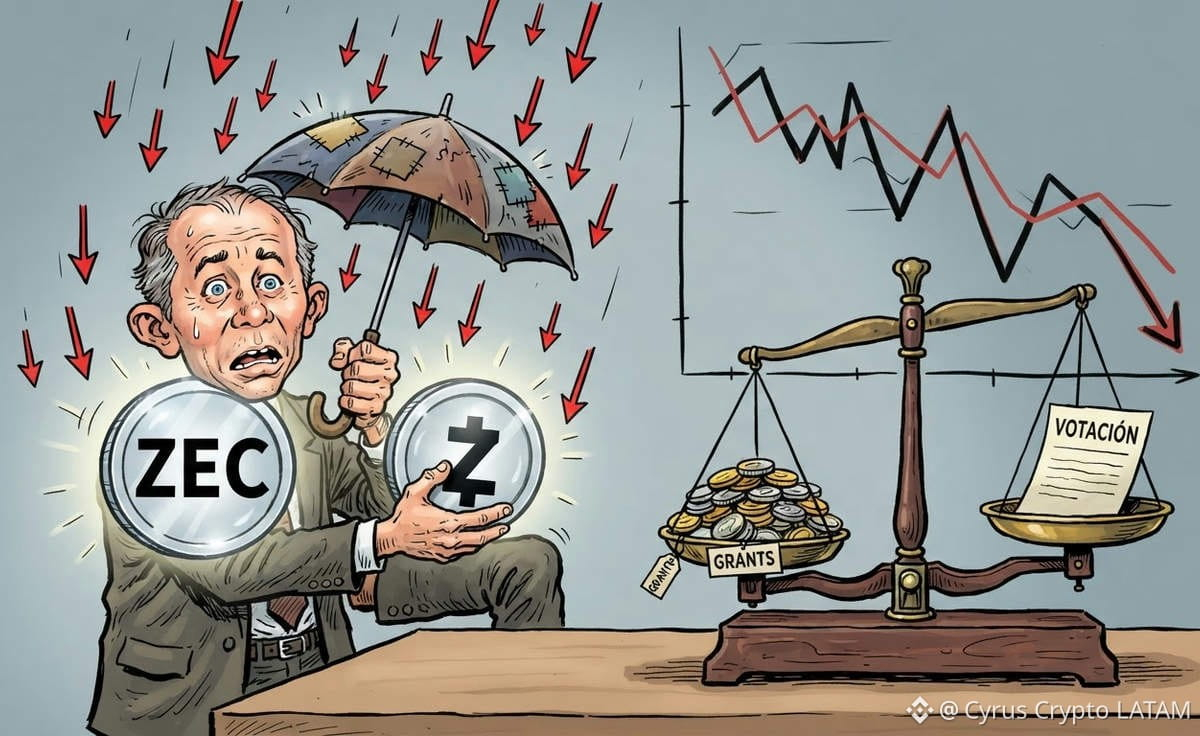
$ZEC cae below its key averages and faces a technical test on Nov 14
#zec trades at USD $902.13, with a reported weekly decline of 28.09% compared with its price seven days ago and weak technical signals, although it retains positive returns over longer time frames. This analysis examines the levels that could define the next phase, the market-wide selling context, and Zcash-specific risks.
The confirmed movement in the data is a daily change of -0.53%, while the reported return compared with the price seven days ago is -28.09%. The available information does not identify a confirmed catalyst for the weekly decline or the day's movement.
#zcash aims to offer digital payments with privacy features through cryptographic proofs that allow transactions to be verified without publicly revealing all their details. This potential utility distinguishes ZEC from assets focused primarily on smart contracts or transparent payments, but its economic value depends on sustained use, market access, and effective demand for these features.
Recommendation: HOLD. The methodology weighs five technical signals: trend relative to moving averages, position relative to VWAP, MACD, RSI, and stochastic. Four favor caution or indicate weakness—price below the main averages, price below VWAP, bearish MACD, and depressed oscillators—while proximity to an oversold zone offers a possible contrarian signal, but not a confirmed reversal.
For the short term, consider an exploratory entry only after recovering USD $935.37–USD $941.82; as an operational stop-loss, consider exiting below USD $896.43, adjusted to each trader's position size and volatility. Partial profit-taking could be considered near USD $946.75 and reassessed before extending the target toward the 7-day SMA at USD $1,062.98; both are reference levels derived from existing data, not guaranteed forecasts.