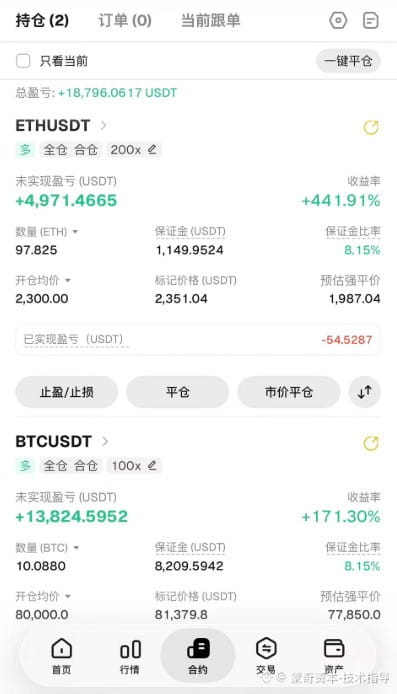
For small accounts in crypto, the real key to growing your funds is mastering these three skills.
I once met a trader who started with just 3,000 USDT. He never expected one or two trades to change his life. Instead, he stayed disciplined, controlled his pace, and built his account steadily. After six months, it had grown to 12,000 USDT. When the market later performed well, it peaked at nearly 20,000 USDT.
Looking back at his trades, what’s truly worth learning isn’t the profit figure, but the money management and discipline behind it.
First: Allocate your funds wisely and don’t leave yourself with no way back.
You can divide 3,000 USDT into three parts:
1,000 USDT for short-term trades, used only for opportunities with a clear rationale.
1,000 USDT for trend and swing trades, patiently waiting for the right entry point.
1,000 USDT kept in reserve, not to be put into the market lightly.
Never put all your chips on a single prediction. The most important thing in trading is preserving your ability to act—not chasing a momentary thrill.
Second: Learn to filter opportunities instead of trading constantly.
The market moves every day, but not every move is worth trading.
Try to trade less during choppy periods, and wait until the direction and structure become clearer before considering an entry. Before every trade, define your stop-loss, potential reward, and risk-to-reward ratio. If the setup doesn’t meet your criteria, walk away.
Only trade markets you understand. Take profits in stages when your targets are reached, and don’t let greed drive you to hand back profits you’ve already made.
Third: Establish trading rules and let execution—not emotion—guide you.
Set your take-profit and stop-loss levels in advance for every trade. Don’t rush to win back losses, and don’t casually increase your position size just because you’ve had a winning streak.
If you make several bad calls in a row, pause trading and review your strategy. When the market isn’t clear, staying on the sidelines is far more valuable than trading blindly.
Ultimately, steadily growing a small account isn’t about who trades more often. It’s about who can stick to simple rules over the long term.
Get these three things right—capital allocation, opportunity selection, and risk management—and you’ll lay the foundation for sustainable account growth.
Don’t keep dreaming of turning your life around overnight. First, learn how not to get knocked out of the market. Trading is a long road; going slowly may help you go further.