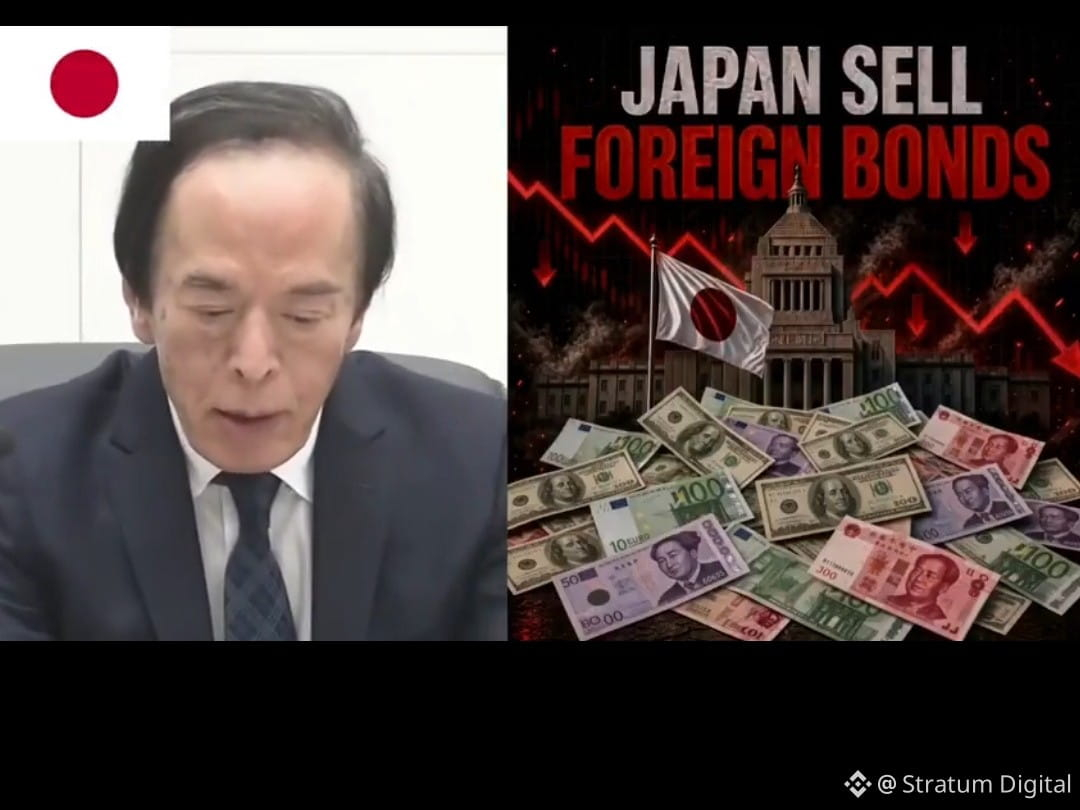
🚨 Japan is triggering the biggest financial nightmare predicted by Scott Bessent
A highly dangerous statement has emerged from Japan.
Bank of Japan Governor Kazuo Ueda has officially warned that rising inflation can no longer be tolerated, and said that an interest rate hike is unavoidable.
Finance Minister Katayama said, "If necessary, we will act without hesitation, and if necessary, we will also take currency intervention measures without hesitation."
This is a clear signal from Japan that U.S. intervention has ended.
Why?
Japan is ending the so-called "free money" era and preparing to dismantle the destructive carry trade. The Bank of Japan Governor and the Finance Minister are showing bold action, and Governor Katayama even apologized to people in Western countries for the measures the Bank of Japan had prepared.
And suddenly... the U.S. Treasury Secretary intervened directly and took over the Bank of Japan's operations. He prevented Japan from selling $1.4 trillion worth of U.S. bonds and instead urged the Federal Reserve to expand the FIMA facility, lending U.S. dollars to Japan so it could sell U.S. bonds and push the yen lower.
Scott Bessent sold dollars and euros to weaken the yen, calling himself a "market maker" and provoking traders to short the yen.
Japan is even willing to sacrifice its domestic stock market. The Bank of Japan announced it would accelerate ETF liquidations from 330 billion yen per year to 860 billion yen, an increase of 161%.
Japan holds a staggering $1.4 trillion worth of U.S. bonds.
So why, in this plan, are U.S. bonds unaffected while Japanese stocks are being sold?
Selling U.S. bonds could put pressure on the U.S. bond market.
But it all ended in failure. The yen fell back to its pre-intervention level and now stands at 160 yen.
$SHELL