Technical principle | How can a group of mutually distrustful nodes agree on the same ledger?
Classic BFT protocols require the total number of nodes to be at least three times the number of malicious nodes, plus one. In other words, malicious nodes must make up less than one-third of the total.
The “two-thirds” threshold ensures that any two valid votes share at least some honest nodes, so they can’t confirm two conflicting results at the same time.
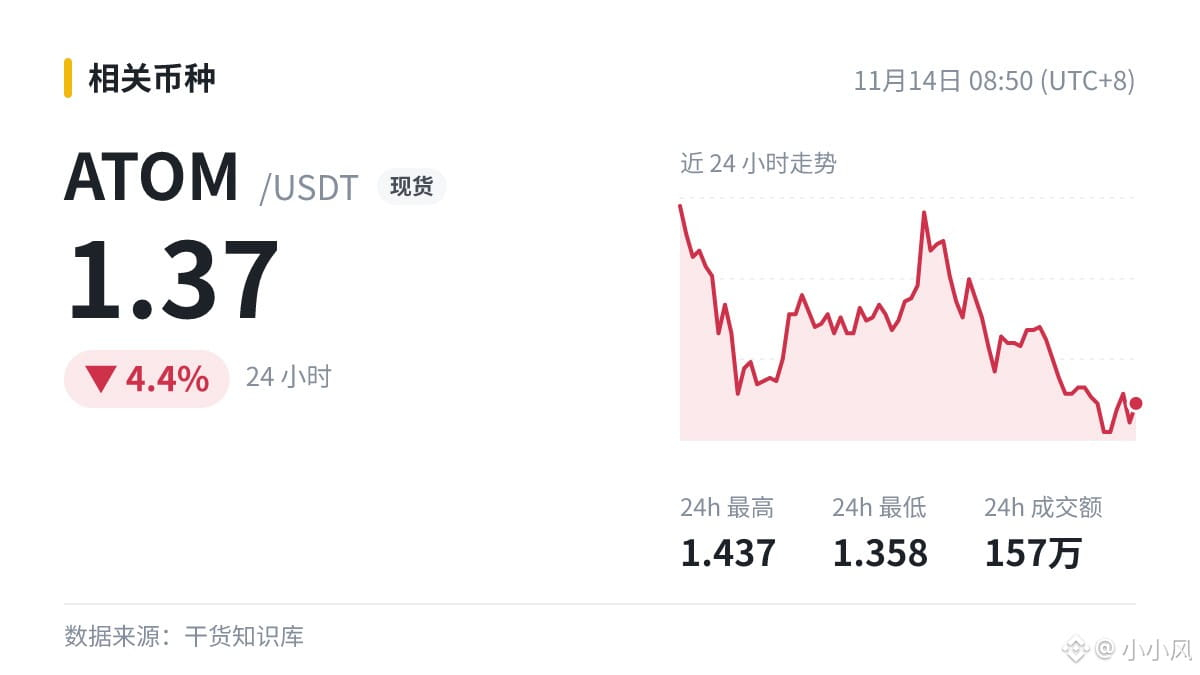
$ATOM is the native coin of Cosmos Hub, a blockchain that uses a Byzantine fault-tolerant consensus mechanism.
Only invest what you can afford, and leave yourself some breathing room.