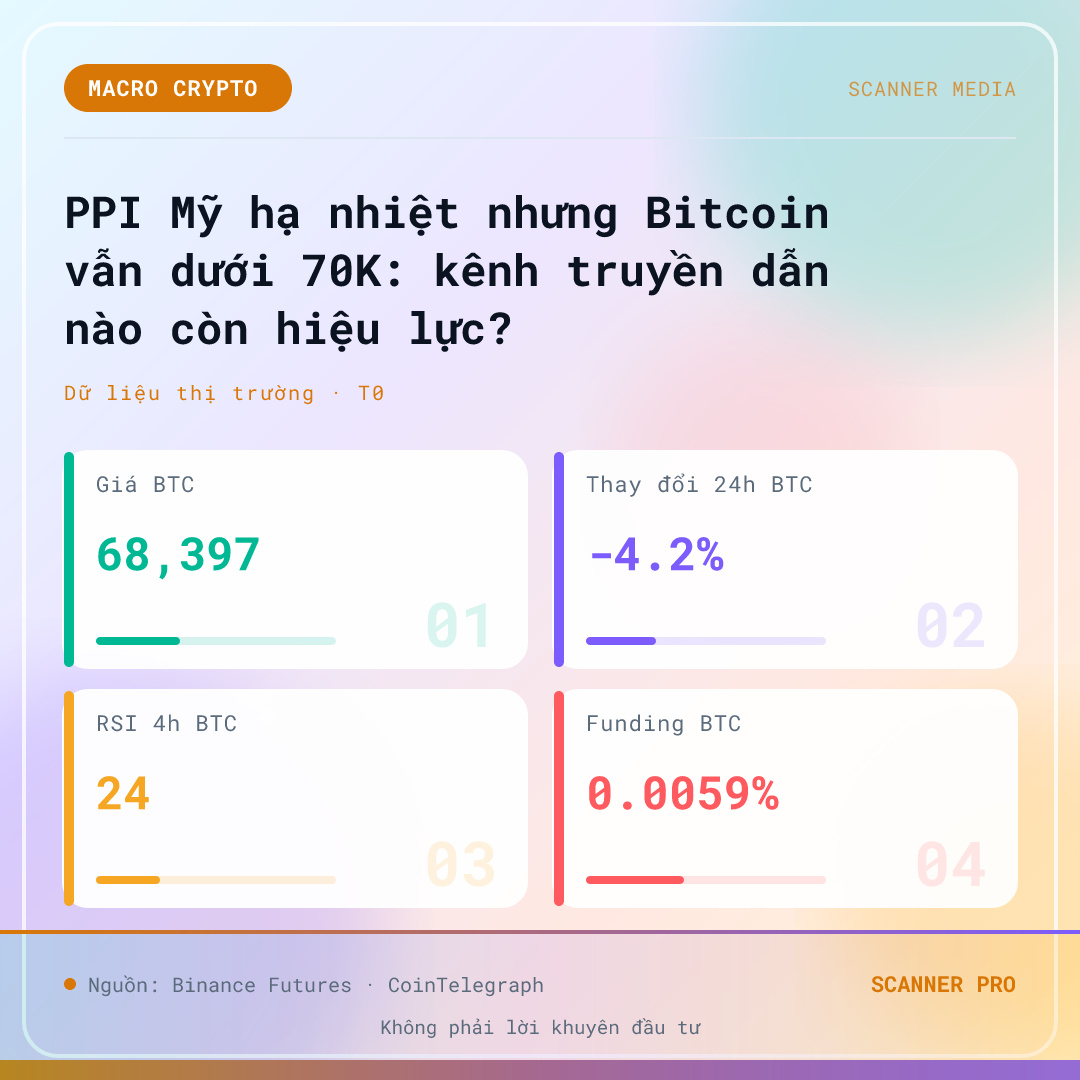
U.S. PPI cools, but Bitcoin remains below $70K: Which transmission channels are still effective?
CoinTelegraph reported on Nov. 13 (UTC) that Bitcoin held below $70,000 while stocks fell, despite cooler U.S. PPI data. The analysis focuses on the channels that could connect this macro event to crypto, and the limits of such inferences.
The macro event and market reaction
CoinTelegraph (Nov. 13, UTC) noted that Bitcoin held below $70,000 and stocks fell despite cooler U.S. PPI data. This is an account of the event and does not include specific PPI figures from the source. BTC’s 4-hour RSI was 24, its 1-hour RSI was 34, funding was 0.0059, and 24-hour volume was around 19.47 billion USDT. The notable point: the price reaction did not favor risk assets, even though the macro news was seen as positive.
Three possible transmission channels
The first channel is interest-rate expectations: cooler PPI is usually interpreted as a sign of easing price pressures, which can affect monetary policy and global liquidity expectations before eventually spilling over into crypto. The second channel is risk appetite: when stocks fall, investors tend to reduce their positions in highly volatile assets, and crypto is often sold off alongside them. The third channel is internal flows and leverage…
Opposing scenario: If capital does not flow into crypto, or if the PPI news had already been priced in, the macro transmission channel is no longer effective; crypto volatility would then mainly reflect internal positioning structures, with the trend_down condition still prevailing.
Sources: CoinTelegraph (23:39 Nov. 13) · Binance Futures (07:10 Nov. 14)
This technical analysis is for educational purposes only and is not investment advice. Cryptocurrency trading carries high risk, and you could lose all your capital. Do your own research and take responsibility for your decisions.
#Binance #Crypto #Futures