By: @AjedrezBlitz
In previous installments, we mastered the rules of the board (Manual #1) and learned how to read liquidity to buy real assets in SPOT (Manual #2). Today, we’re covering the golden rule of every Grandmaster: capturing pieces is pointless if you leave your King exposed in the open.
Open your journal and let’s secure your wealth ☕👇
1. 🏦 Centralized Exchanges (CEXs): The Battlefield
Platforms like Binance are the high-speed chessboard where liquidity happens. That’s where you enter, execute your SPOT limit orders, and take advantage of market pullbacks.
Their function: They’re ideal for your working capital and tactical operations.
The technical rule: While your coins are on an exchange, you have a right to withdraw them, but the platform holds the private keys.
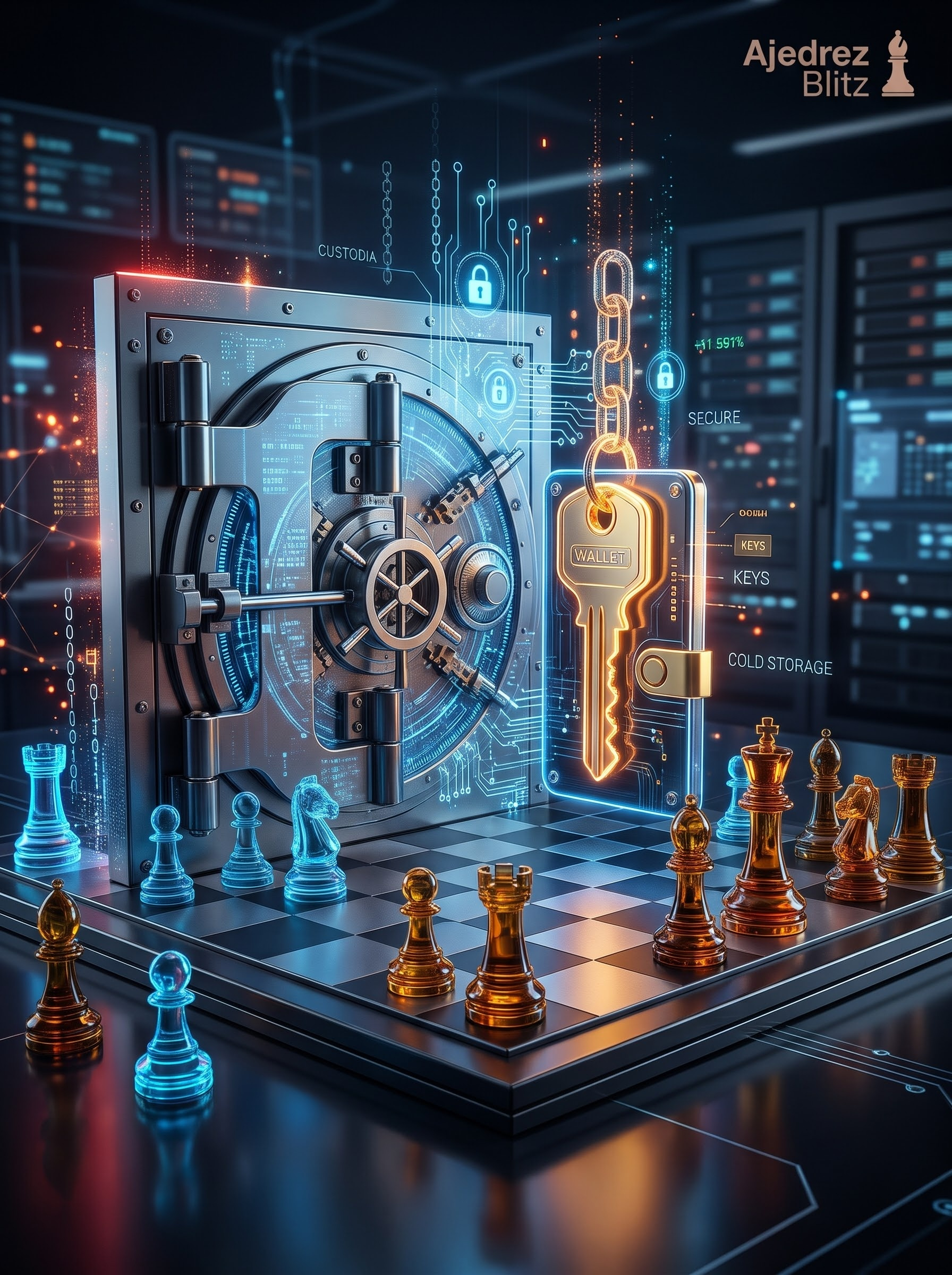
2. 🔐 Cold Wallets (Cold Storage): The Grandmaster’s Vault
When you accumulate assets with a long-term outlook (such as $BTC , $ETH or strategic infrastructure positions), moving them offline eliminates any counterparty risk.
What are they? Physical devices disconnected from the internet (hardware wallets) that store your private keys in isolation.
Absolute sovereignty: This is where the ecosystem’s golden rule applies: "Not your keys, not your coins." No one can freeze, lend, or move your assets without your physical signature on the device.
3. ⚖️ The Hybrid Strategy (Institutional Balance)
A disciplined operator doesn’t go to extremes; they divide their board with precision:
On the Exchange (SPOT): Keep your liquidity in stablecoins, ready to execute staggered purchases when the Fear Index falls into opportunity zones, along with your tactical rotation assets.
In a Cold Wallet: Safeguard your long-term accumulation core, shielded from the market’s daily noise.
🧠 The Grandmaster’s Principle:
In chess, the King’s safety comes before any attack. In the crypto market, self-custody and risk management come before any pursuit of returns. Protect your pieces like a professional.
💬 Boardroom Question:
In your current SPOT accumulation strategy, do you keep your entire portfolio on the exchange for operational convenience, or have you already moved your long-term core into cold storage? Share your experience below 👇