#比特币跌破200周均线 Bitcoin falls below long-term support as oversold signals emerge—how far is BTC from a rebound?
Bitcoin has fallen for several consecutive days, briefly touching $67,500 intraday on November 13 and slipping below the 200-week moving average. The market has once again reached a key technical level.
Notably, this decline has not only pushed BTC below the $70,000 mark, but also brought several technical indicators into territory worth watching.
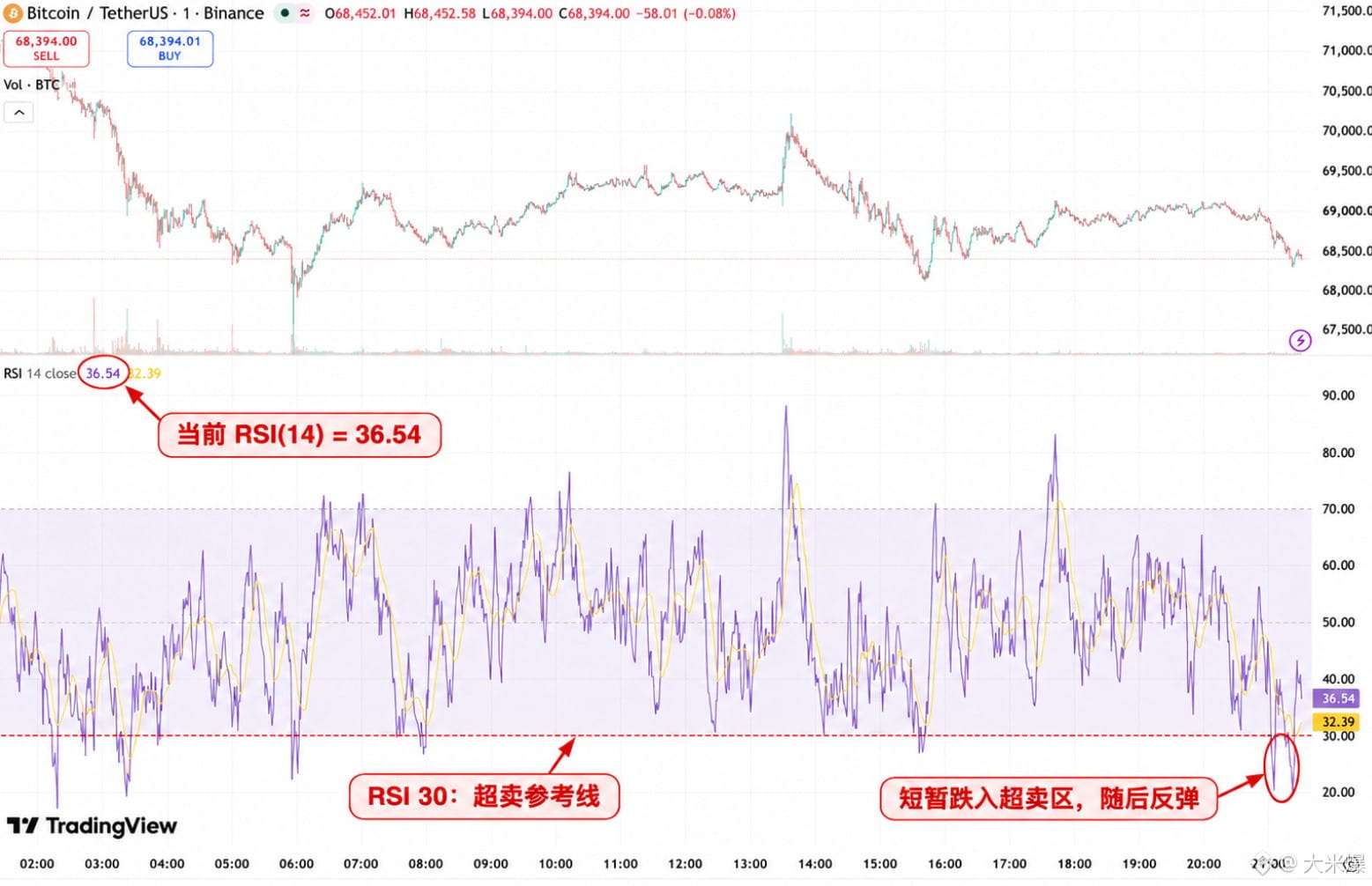
First, short-term oversold signals are strengthening.
Data shows that Bitcoin’s daily RSI briefly fell to around 28, below 30—the level generally regarded as the oversold threshold. This indicates strong selling pressure recently, but could also create conditions for a short-term technical rebound.
However, being oversold does not mean the price has bottomed. During a sustained downturn, the RSI can remain at low levels for an extended period.
Second, long-term support is being tested.
The 200-week moving average is currently around $68,000. In past market cycles, investors have used this indicator to assess long-term price trends.
If BTC can regain a foothold above this level, market sentiment may recover to some extent. But if weekly closes remain below the moving average, the risk of further downside should not be ignored.
Even more important are changes in capital flows.
U.S. spot Bitcoin ETFs recorded cumulative net outflows of about $1.44 billion over five consecutive trading days, indicating that institutional demand remains weak.
With capital continuing to flow out, even if technical indicators show oversold conditions, any rebound may lack staying power.
So what should BTC watchers focus on next?
In the short term, the key things to watch are whether the area around $68,000 can provide effective support and whether the price can break back above $70,000.
If the price stabilizes and outflows slow, the market could see a temporary rebound. Conversely, if the long-term moving average fails to hold, the risk of another leg down remains.
What the market really needs right now is not just technically oversold conditions, but a substantial improvement in buying pressure and capital flows.