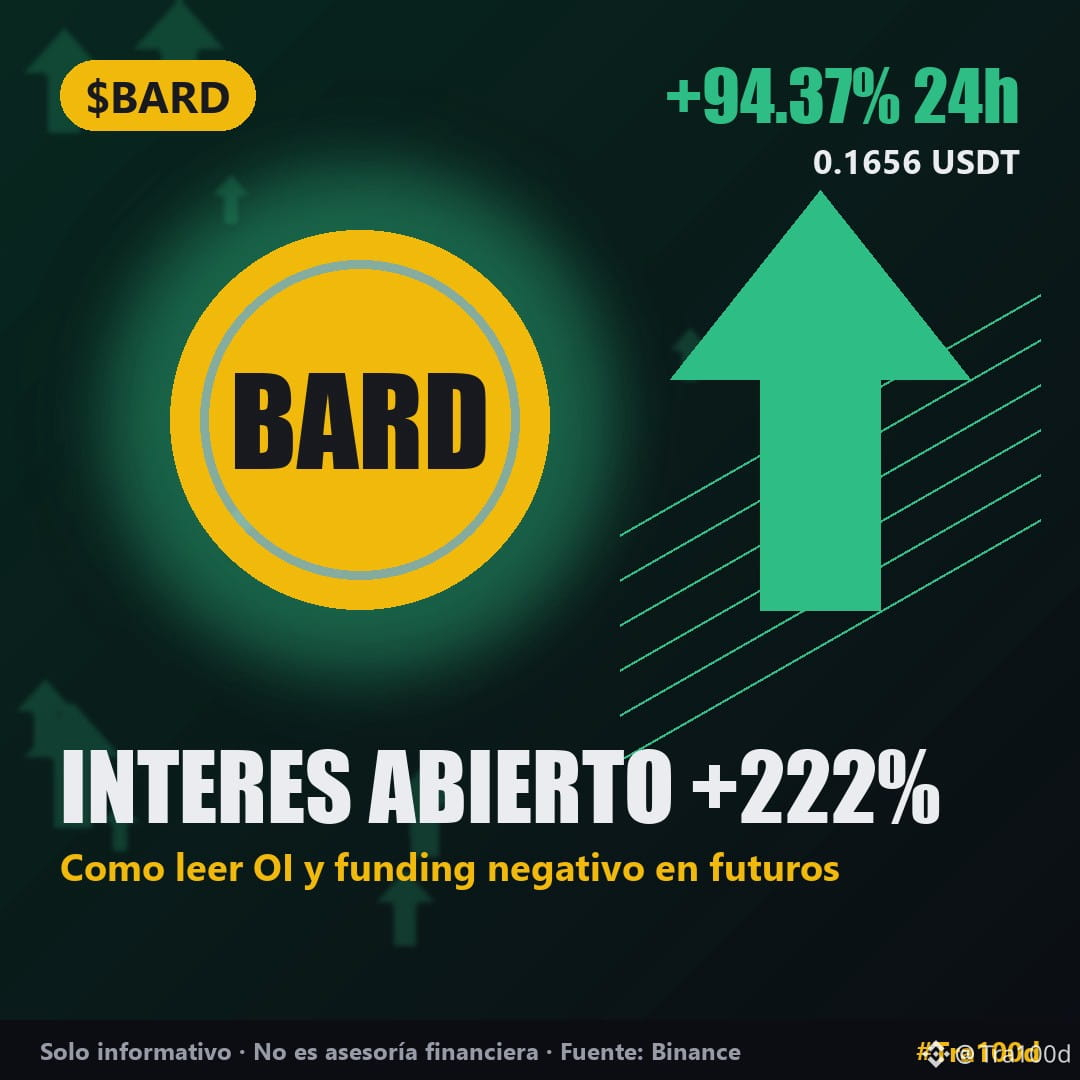
🧠 Why can a coin rise +94% while most futures traders are betting on a decline? The answer lies in combining two metrics: Open Interest (OI) and Funding Rate.
📘 The concept:
• Open Interest measures how many futures contracts remain open (whether leveraged money is flowing in or out).
• The Funding Rate shows which side is dominant: if it’s very negative, shorts are paying longs a fee to keep their positions open.
• When the price rises sharply, OI surges, and funding plunges into negative territory, many shorts get trapped. When they close their positions (by buying back), they push the price even higher: this is a short squeeze.
📊 Example using today’s Binance data:
• $BARD : up +94.4%, its open interest surges +222.1%, and its funding drops to −1.89% (with a 4-hour RSI of 82.4 and a daily ATR of 9.5%).
• $GRAM : down −7.4%, and its open interest falls −16.4% (positions closing after yesterday’s rise).
• $BTC : down −5.0%, with nearly flat open interest (+0.8%) and slightly negative funding (−0.0013%).
❌ Common mistake: opening a short just because a coin has “already risen too much,” without checking the funding rate. If funding is at −1.89%, you’re not only paying a very high fee every few hours, but also risking liquidation in another upward sweep.
📝 In one line: the price tells you what’s happening, but open interest and funding show you who’s trapped in the trade.
Do you check open interest and funding before trading futures? 👇
#EducacionCripto #Futuros #AnalisisTecnico #Cripto #Tra100d
⚠️ For informational and educational purposes only; this is not financial advice. Cryptocurrencies are volatile: do your own research and trade with caution.