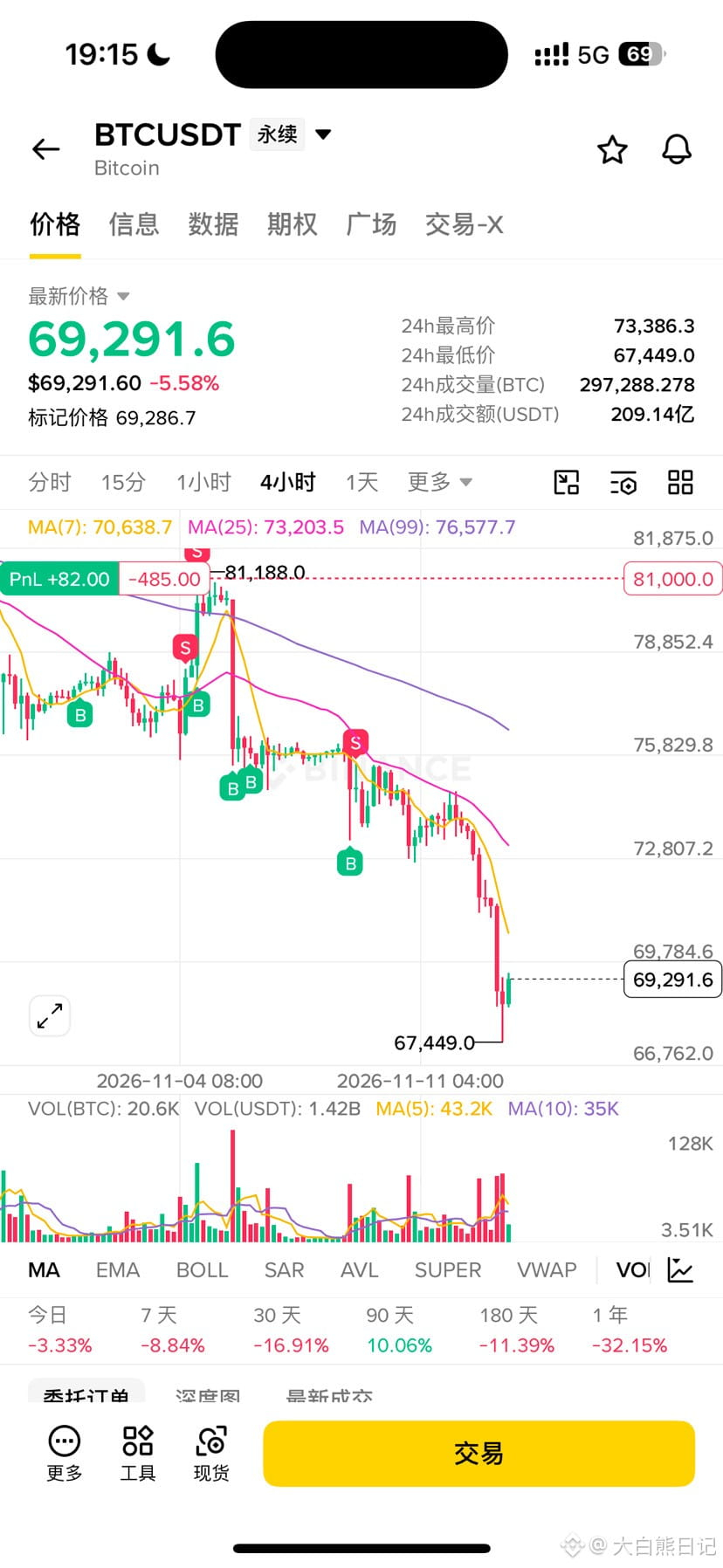
Looking back at Bitcoin’s performance after the past few U.S. midterm elections, the decline this time hasn’t been particularly steep so far.
After the 2014 and 2018 midterm elections, Bitcoin experienced deep corrections of nearly 50%. After the 2022 election, its maximum drawdown was also close to 15%.
This time, from Election Day on November 3 to now, the decline has yet to reach 2022 levels.
History often rhymes, but that doesn’t mean every cycle will follow the same script.
In my view, the most important thing now isn’t guessing where the bottom is, but watching for when capital really starts to flow back in.
As long as ETFs continue to see net outflows and spot buying doesn’t improve meaningfully, I won’t change my view just because of a one- or two-day rebound.
A correction of this magnitude has never been fully repaired in just a day or two. One rebound doesn’t mean the trend has reversed.
Until capital comes back, it’s better to wait a little longer than to rush to prove how right I was.