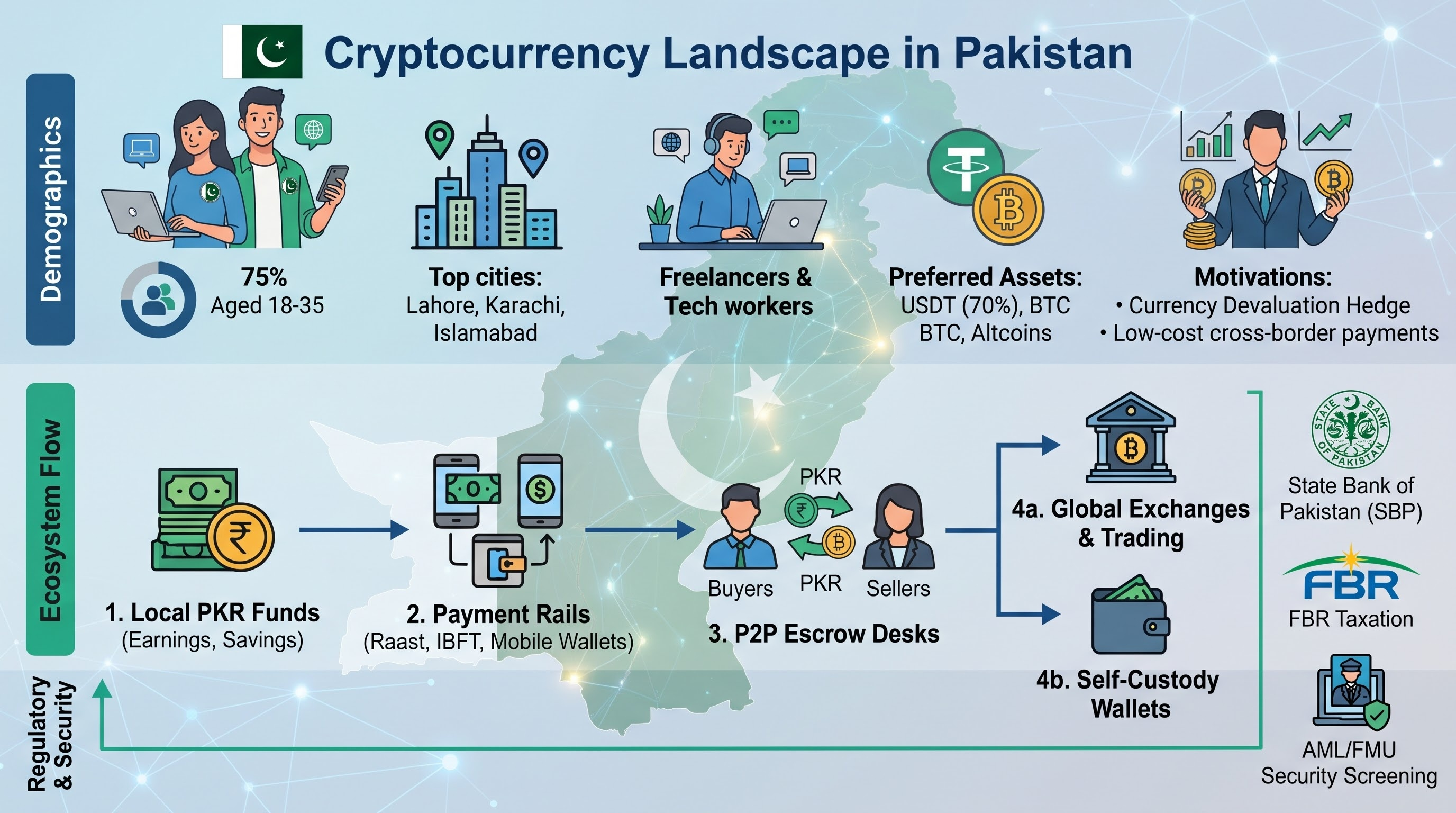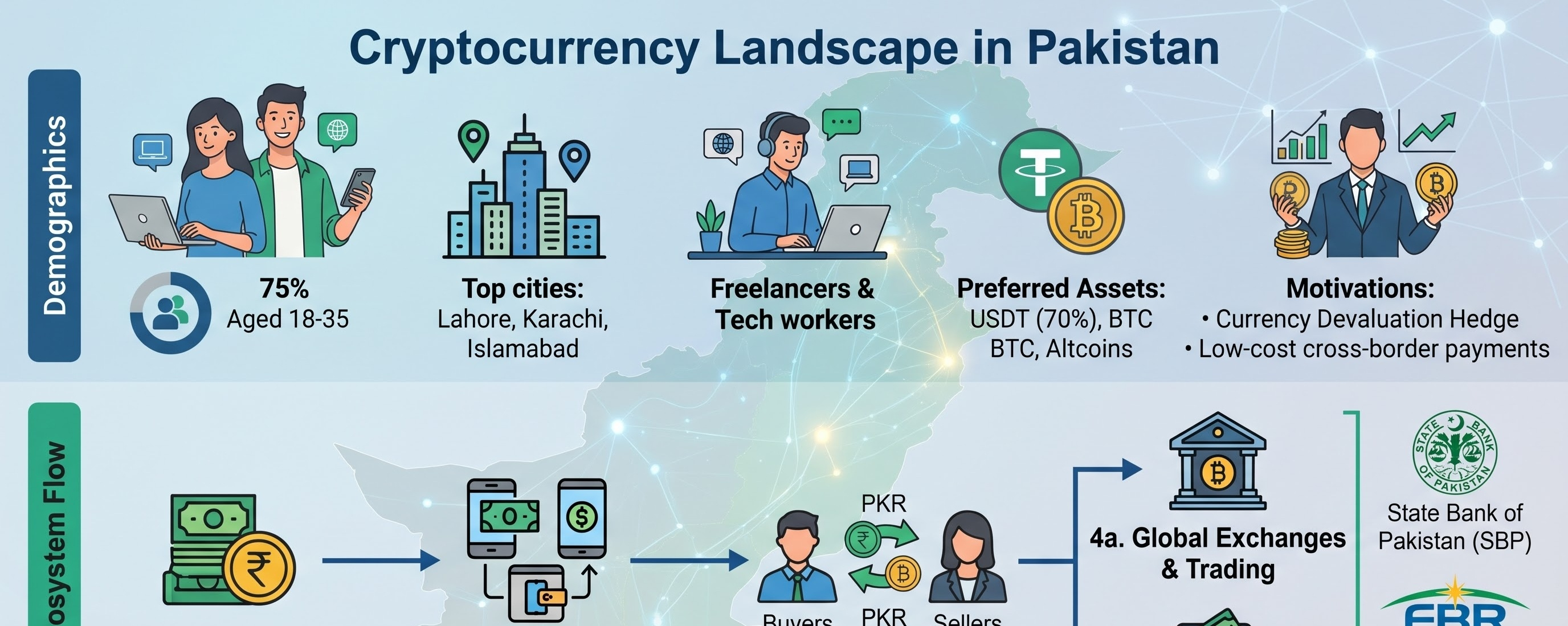

Pakistan has emerged as one of the fastest-growing cryptocurrency markets globally, driven by a young, tech-literate population and significant freelance activity. The relationship between digital assets and the country's financial architecture, however, remains a complex balance between grassroots adoption, regulatory caution, and economic policy.
1. The Catalysts Behind Adoption
Despite institutional hesitance over the years, retail adoption in Pakistan consistently ranks among the highest in emerging economies. Several key factors drive this momentum:
Hedge Against Inflation: Persistent currency depreciation and double-digit inflation have driven individuals to seek decentralized stores of value like Bitcoin (BTC) and USD-pegged stablecoins (USDT, USDC) to preserve purchasing power.
Freelance Remittances & Cross-Border Payments: With millions working in software development, design, and digital marketing, conventional remittance rails (wire transfers, standard banking) frequently involve high intermediary fees, unfavorable FX spreads, and processing delays. Stablecoins provide near-instant settlement.
Financial Speculation & Market Access: A tech-savvy demographic increasingly turns to spot and derivatives trading on international platforms, seeking capital growth opportunities outside traditional equities and domestic real estate.
2. Regulatory Landscape: From Grey Zone to Structured Oversight
The regulatory framework in Pakistan has evolved significantly across three distinct phases:
While cryptocurrencies are not legal tender (they cannot be mandated as payment for goods and services in retail trade), holding and trading digital assets has transitioned away from blanket bans toward structured, conditional oversight. Central bank directives allow banking relationships primarily for licensed Virtual Asset Service Providers (VASPs), while barring domestic banks from risking customer deposits in digital tokens.
3. Operational Realities & Market Infrastructure
Because direct fiat card integration has historically faced barriers, the Pakistani retail market relies heavily on distinct trading mechanisms:
Peer-to-Peer (P2P) Dominance: Global exchanges host extensive P2P markets where local buyers and sellers transact directly using domestic banking transfers and local digital wallets (such as Raast, microfinance accounts, and conventional IBFT).
Self-Custody vs. Centralized Exchanges: Experienced market participants predominantly maintain long-term reserves in non-custodial software or hardware wallets, utilizing centralized exchanges solely for short-term liquidity and execution.
Scam Vulnerability & High-Yield Fraud: A lack of standardized financial literacy has left segments of retail participants vulnerable to fraudulent multi-level marketing (MLM) schemes disguised as "crypto cloud mining" or automated algorithmic trading bots.
4. Taxation and Wealth Declaration
In line with Federal Board of Revenue (FBR) oversight, income derived from digital assets falls under general taxation principles:
Capital Gains vs. Business Income: Casual disposals are subject to capital gains assessment, whereas frequent spot or futures trading is typically treated as commercial business turnover.
Wealth Reconciliation (Section 111): Unreconciled rupee inflows originating from unregistered P2P transactions create tax audit risks if funds cannot be cross-referenced with declared foreign remittances or legitimate income streams.
5. Strategic Outlook
For Pakistan, digital assets represent a double-edged sword. On one hand, unregulated capital flight and exchange volatility challenge macroeconomic stability. On the other hand, embracing regulated blockchain infrastructure, Web3 development hubs, and compliant digital asset rails presents a pathway to capture billions in foreign liquidity, improve remittance efficiency, and formalize an active digital economy.