


Panic over the founder’s departure last night swept through U.S. stocks. When the market opened at 22:30, Nvidia briefly fell 14.35% intraday, hitting a low of $148.8.
What the market is punishing isn’t the earnings report, but a simple fact: only today has this $5 trillion giant realized it has neither a captain’s cabin nor a backup captain.
First, the verdict: in the short term, it hurts sentiment; in the medium term, it hurts strategy; only time will tell in the long term.
In the short term, Nvidia’s business won’t collapse. The CUDA ecosystem, Blackwell/Rubin orders, and customer loyalty are all assets Jensen Huang built up over 33 years. They won’t evaporate because of a resignation letter. Volatility, a shakeout, and valuation cuts are inevitable, but the business fundamentals won’t break overnight.
But in the medium term, I'm cautious. Much of Nvidia's success today rests on a delicate structure: Jensen Huang's personal vision, the trust he has built with customers, and financing support worth hundreds of billions for major customers like OpenAI. These are all forms of trust between people.
When Jensen Huang leaves, will customers renegotiate their terms? Will competitors seize the opportunity to poach deals? A leader like Kress, who came up through the CFO ranks, will most likely steer the company toward “playing it safe”—good for the finances, perhaps, but not necessarily for a company that needs to go all-in on the next decade-long cycle.
The real test will come in 3–5 years: Can Nvidia bet on the right next-generation architecture? Can it replicate its data-center playbook in physical AI and robotics? Few people in history have consistently won strategic gambles on this scale.
What truly saddens me isn't the company—it's the person.
Jensen Huang's biggest mistake wasn't the rumors or the investigation. It was this: he never protected himself.
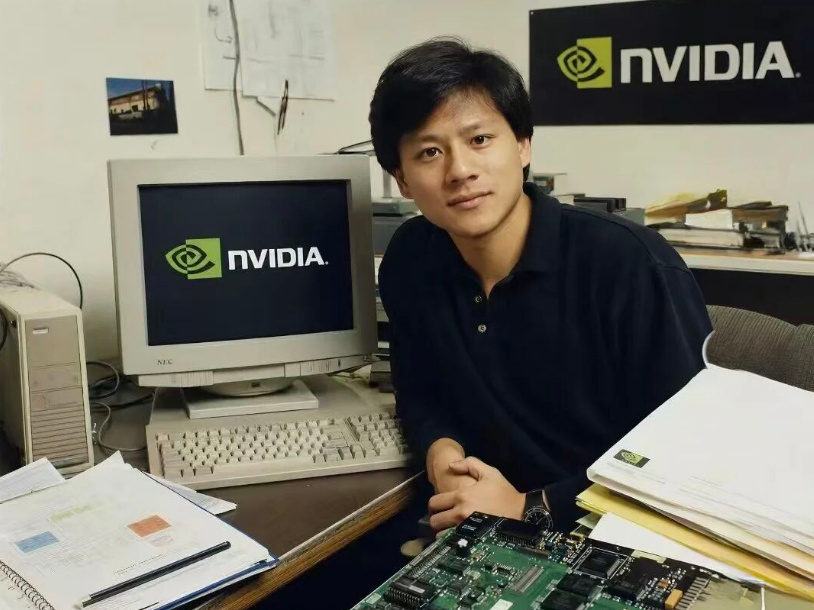
He founded Nvidia at 30 and worked nonstop for 33 years, yet owns only about 3.98% of the company. There are no dual-class shares, no super-voting rights, and no “loyalists” on the board to speak up for him. Over 33 years, he took the company from a small startup in San Jose to the heart of the AI era, yet never turned control into institutional power.
In other words, he built the strongest moat in the AI world, but his own seat was outside the castle gates.
Just look at Elon Musk: 10-to-1 voting rights at SpaceX, about 20% ownership of Tesla, and a board made up of his brother and friends. Forget rumors—even if he were tied up in lawsuits, as long as he didn't want to leave, no one could force him out. This isn't a question of morality; it's a question of legal structure.
One misconception needs correcting here: saying “white founders can get away with anything” shows a misunderstanding of how American capital markets work. The SEC and the Department of Justice have always held founders to the same standards—compliance investigations, shareholder lawsuits, and the fate of Theranos make that clear. The difference has never been skin color, but structure: if you design voting rights, board seats, and equity stakes to be “unassailable,” then when the storm comes, you'll come away with only a few scratches; if you stake everything on “the board's trust,” then when the storm comes, it's a matter of life or death.
Jensen Huang isn't ignorant of business; he doesn't understand the status the law has given him: a professional executive can be fired, even if you're the founder, even if you've taken the company to historic heights.
In closing
At 30, he sketched out Nvidia's first design in a small room next to a Denny's. At 63, he handed over the keys, taking with him only a remorseful “I'm an asshole.”
For someone who spent half his life burning himself out on AI, the cruelest thing isn't losing the CEO title—it's holding 3.98% of the company, worth tens of billions of dollars, and still being unable to hold on to his own seat.
A heartfelt piece of advice for all entrepreneurs: products can be improved through iteration; control can only be secured through design. The sooner you put your equity structure, voting rights, and board arrangements into legal documents, the sooner you insure your future.
Jensen Huang is a genius; he doesn't need to leave his position to prove it. But the lesson he leaves behind as he walks away may be worth more than CUDA.