When it comes to post-quantum security, institutional custody providers aren’t worried about slogans—they’re worried about signing being so slow it can’t be used day to day.
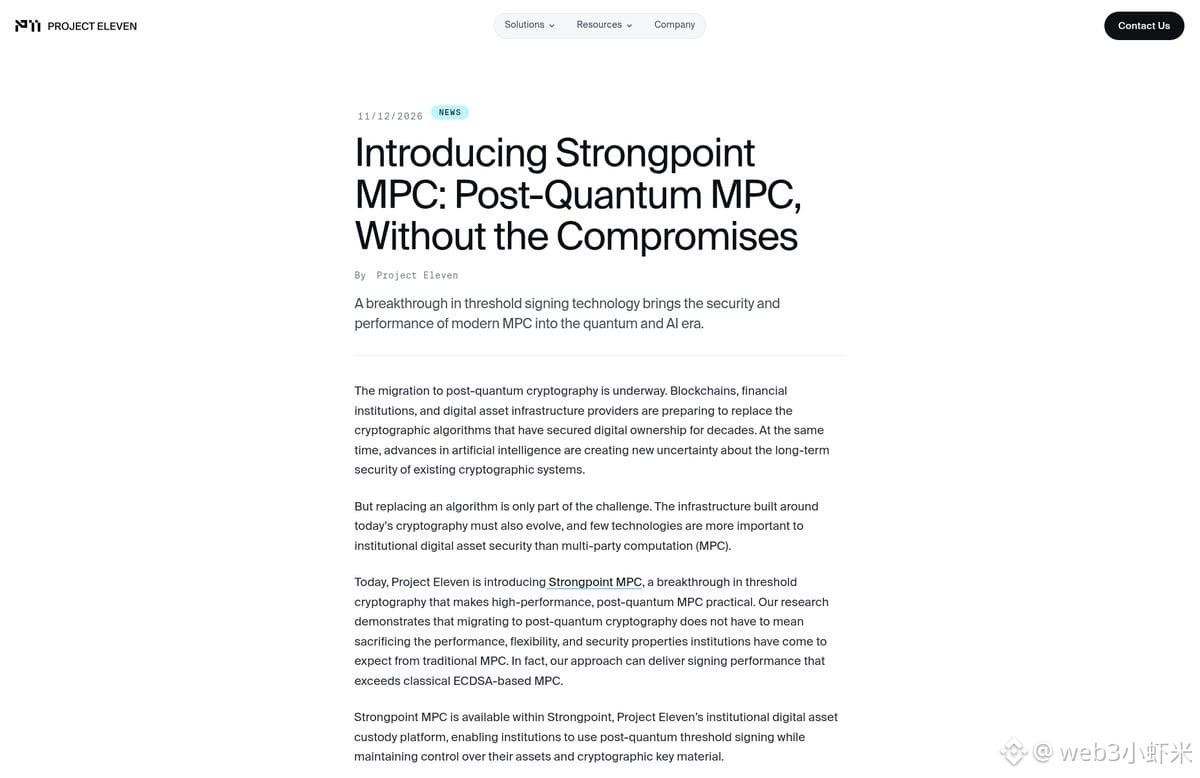
Project Eleven has just launched Strongpoint MPC, which it says turns hash-based signatures into a multiparty threshold scheme. The company says complete signatures can be generated in under one second, with keys jointly generated by multiple parties rather than relying on a single trusted third party. It will initially support a new signing scheme for Ethereum.
The product is now part of its institutional custody platform, Strongpoint. The company also says its performance can even surpass that of traditional ECDSA MPC.
These are the company’s own product claims and figures; I haven’t seen independent verification yet. But the direction is clear: custody, stablecoin key management, cross-chain systems, and validator nodes may all have to deal with the shift to post-quantum security.
$ETH #抗量子 #MPC