#加密美股齐跌,下轮反弹的驱动力在哪?
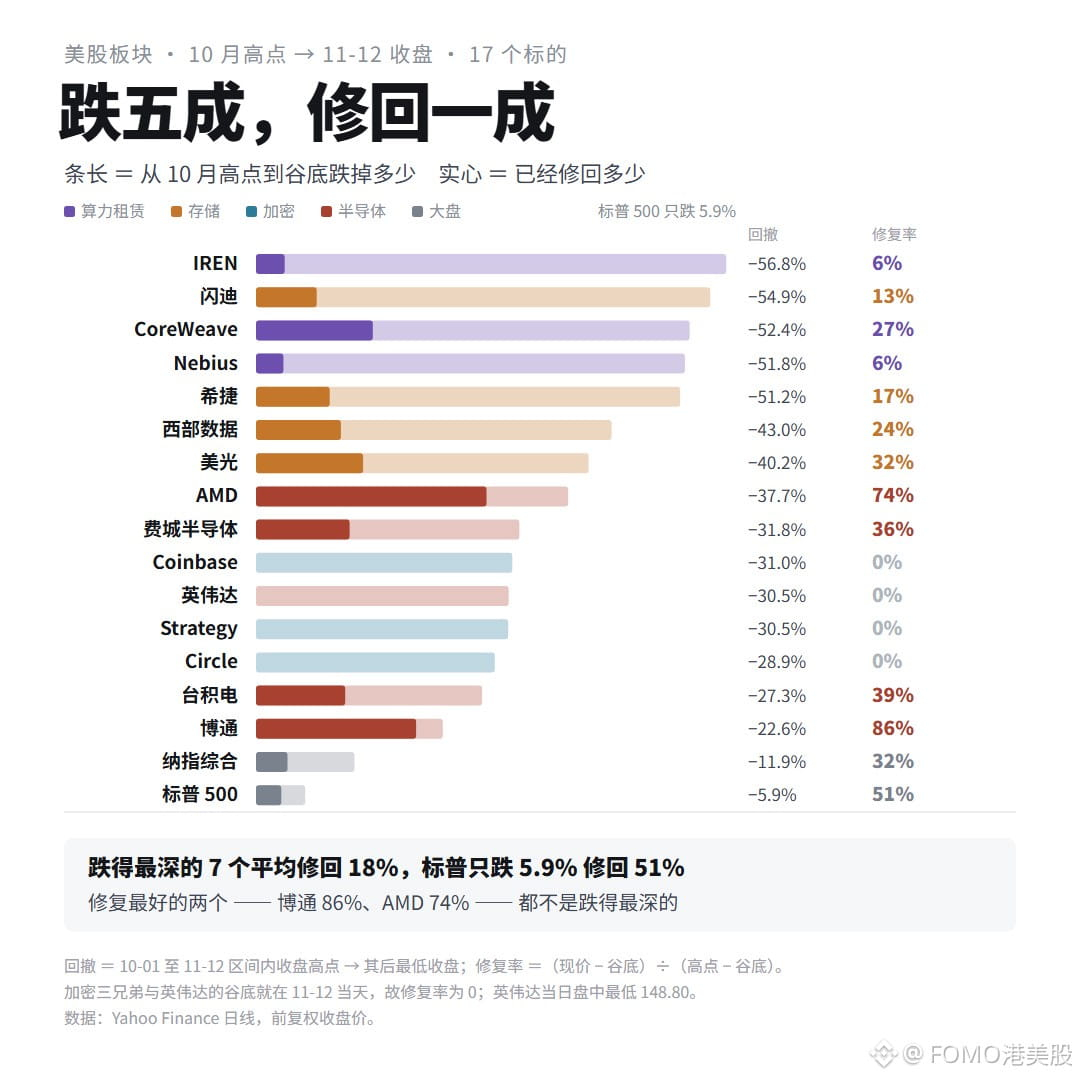
The S&P 500 is down just 5.9% from its October high, compared with 31.8% for the Philadelphia Semiconductor Index, 40% to 55% for memory stocks, and 51% to 57% for compute rental. The worst-performing group and the steadiest are nearly ten times apart.
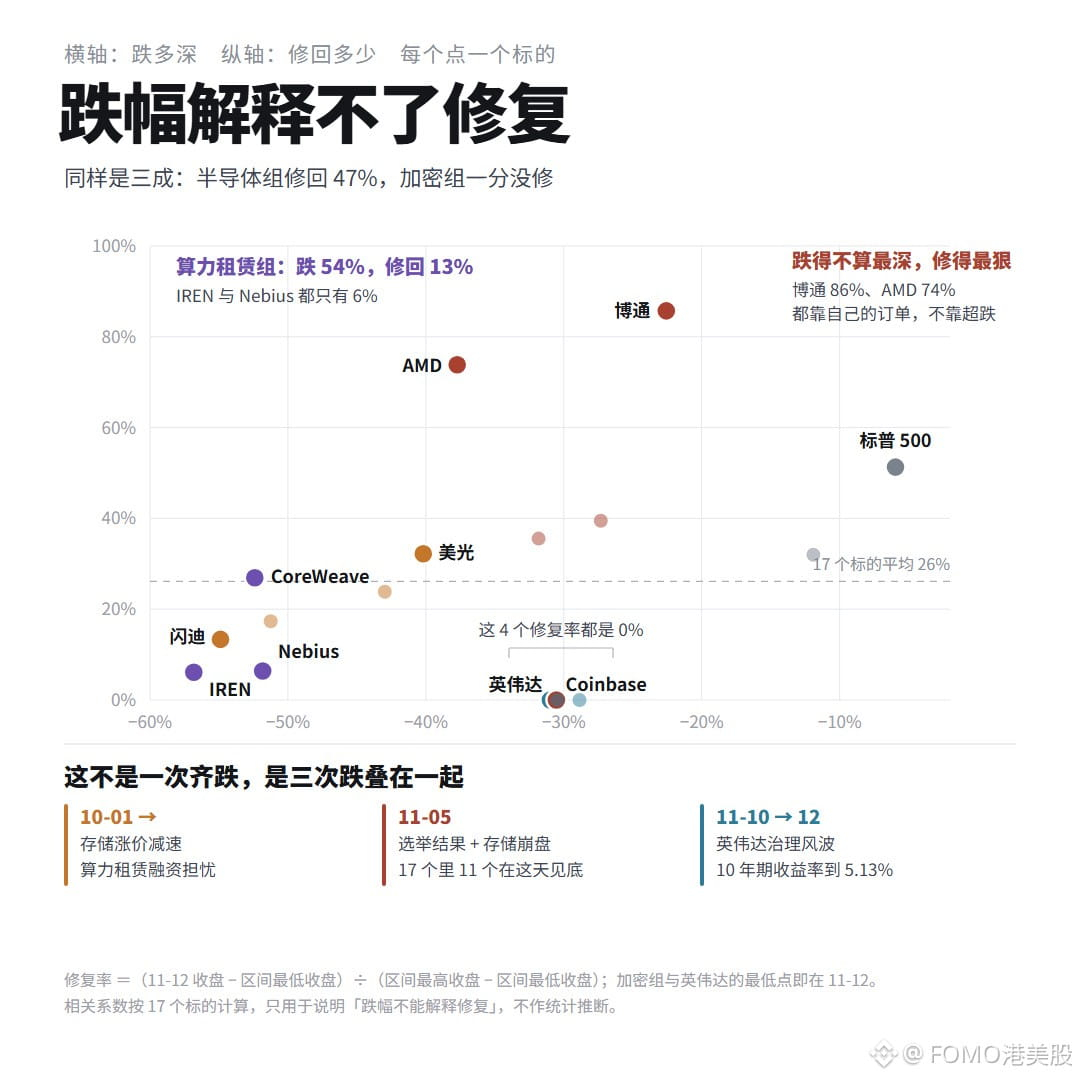
The decline came in three waves. In early October, memory price increases slowed. On 11-05, election results coincided with a memory-stock crash; 11 of the 17 hit bottom that day. After 11-10 came Nvidia’s CEO change, while the 10-year Treasury yield surged to 5.13%. Wave after wave, they were battered lower.
Being oversold doesn’t mean a rebound is coming.
The seven hardest-hit stocks have recovered only 18% on average, while the S&P 500 has recovered 51%. The semiconductor group fell 30.0% and recovered 47%; the crypto group fell 30.1% and recovered 0%. Their declines differed by just 0.1 percentage point, but their recoveries differed by 47 points. AMD $AMDB has recovered 74%, and Broadcom 86%, on the strength of their own orders. Memory stocks can’t get moving: DRAM contract prices rose 58% to 63% in Q2, slowed to 13% to 18% in Q3, and are down to just 10% to 15% in Q4.
There’s only one driver: the reason for the decline has to disappear. Bitcoin $BTC fell from 87,396 to 68,322, and the three crypto names are still at 0. Nvidia $NVDAB reports earnings on 11-17; it will be the first to provide an answer.
#AI算力 #比特币