$ASTER: Balancing Patience and Precision in Volume‑Driven Moves
When $ASTER shows an hourly direction down and volume sits above baseline, the mind receives a clear signal but also a flood of alerts. Does the immediate impulse to act outweigh the benefit of a brief pause? A simple thought experiment can clarify the trade‑off.
Imagine two traders watching the same candle. Trader A jumps in as soon as the down move appears, accepting the first entry price but risking a less favorable fill if the market briefly rebounds. Trader B waits for a second candle that confirms the trend, sacrificing the earliest price but gaining a clearer picture of momentum. The core tension is entry quality versus chasing: early entry may capture a larger move, yet it often comes with higher uncertainty about the true direction.
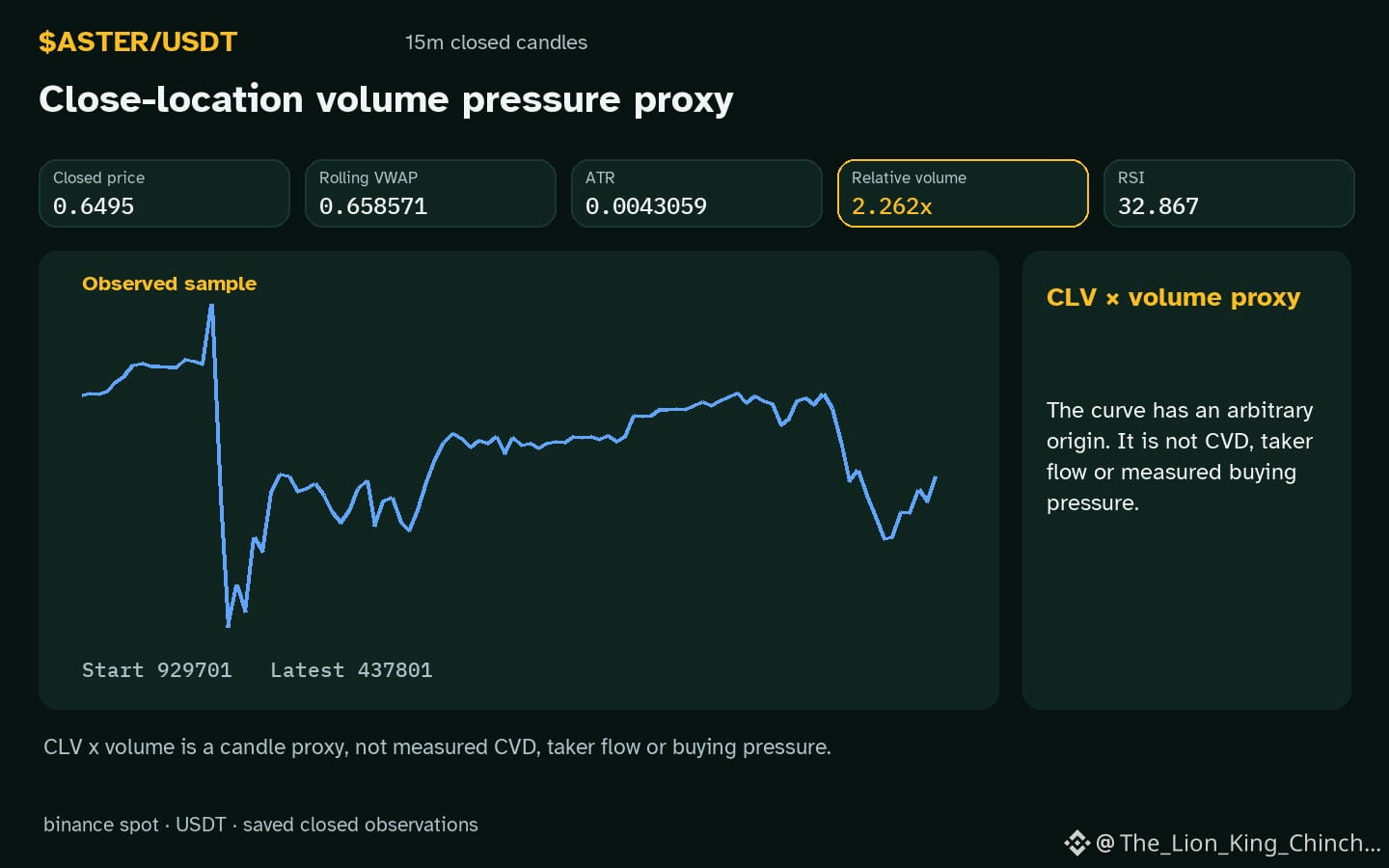
In the current observation the price remains inside the recorded range, suggesting that the down pressure has not yet broken local support 0.6451. If the next hourly candle closes lower with the same elevated relative volume 2.26x, the early entry hypothesis gains weight. Conversely, a candle that stalls or reverses would invalidate the chase and support waiting for confirmation.
A practical rule to test is to set a one‑minute mental buffer after the first down signal before checking any external feed. This pause creates a buffer zone where the trader can assess whether the volume spike sustains or fades, reducing the chance of reacting to noise. The rule’s validity will be challenged if, after the buffer, the next candle still moves sharply down despite a lower relative volume, indicating that the early entry was justified. Future closed‑candle data showing a sustained down move with high volume would weaken the waiting approach, while a reversal would reinforce it.
Probabilistic market research, not a recommendation or guaranteed return.
#ASTER #RiskManagement