


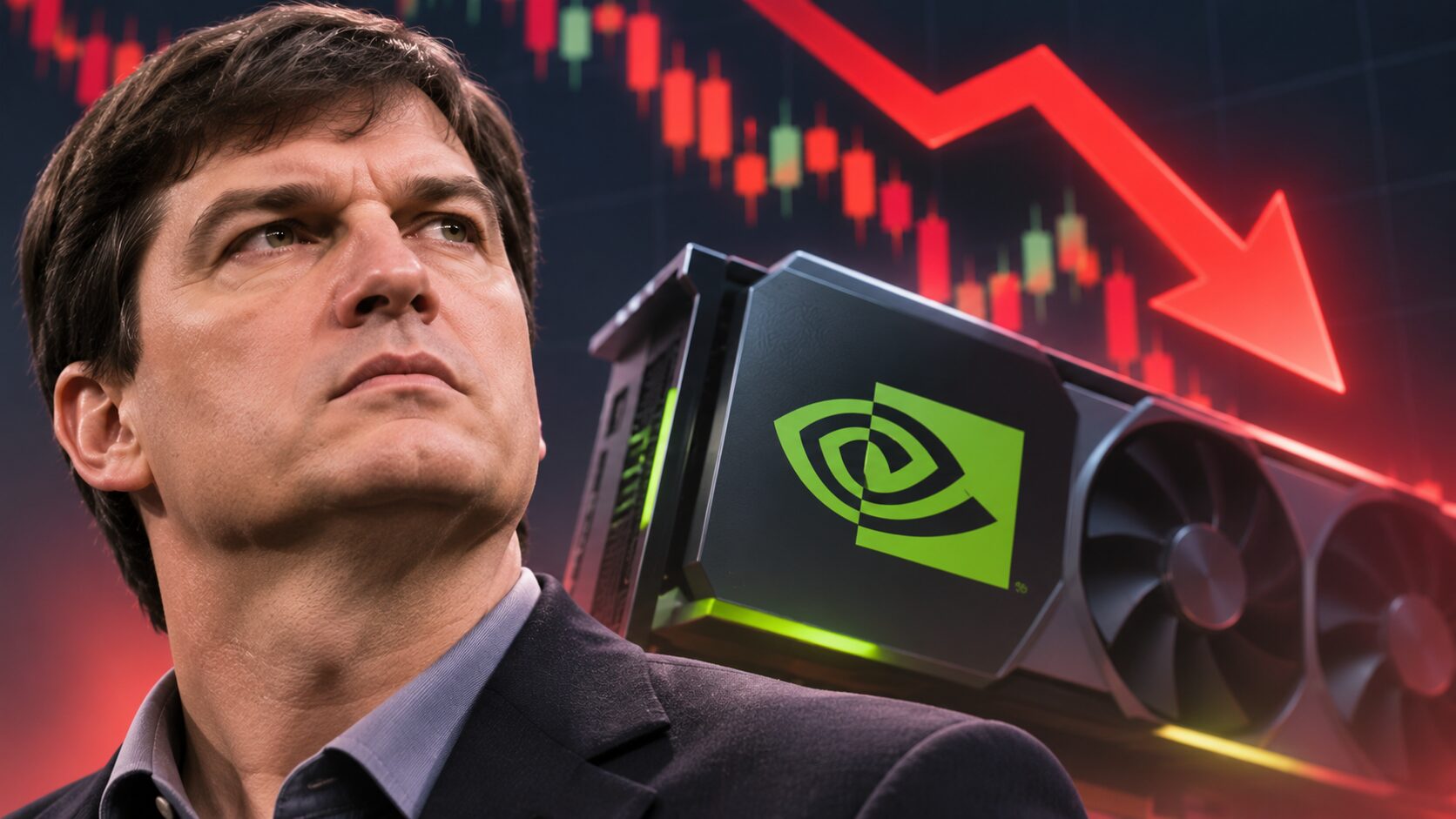
Michael Burry, the renowned investor whose story inspired the film The Big Short, has once again issued a bearish warning about Nvidia!
With Nvidia founder Jensen Huang officially stepping down as CEO on November 12, Burry publicly urged bullish Nvidia investors to seize the opportunity to exit. He believes Huang’s departure could weaken the company’s influence over customers, bringing delayed orders, contract renegotiations, and competitive pressure to the fore.
Nvidia shares closed down 4.34% at $166.19, more than 30% below their October record high. However, Advanced Micro Devices (AMD) and Broadcom rose 5.86% and 5.54%, respectively, signaling that the market is reassessing the competitive landscape of the AI chip industry.
Jensen Huang officially steps down as Nvidia faces its biggest leadership transition in 33 years
According to Nvidia’s official announcement on November 12, Jensen Huang has resigned as president, CEO, and director, effective immediately. The company has appointed CFO Colette Kress as interim CEO and Harvey C. Jones as chairman, while beginning the search for a permanent CEO.
The personnel change comes as Nvidia’s board investigates Jensen Huang’s personal relationships and related national security concerns.
On November 8, Nvidia’s board said it had retained outside legal counsel to investigate the reports, but that there was no reason at the time to believe U.S. national security or company confidential information had been compromised.
In his latest statement, Chairman Harvey Jones stressed: “The board has full confidence in Colette and the leadership team, and expects the company’s operations, customer commitments, and product roadmap to continue without interruption.”
However, for the market, Jensen Huang’s long-standing leadership over Nvidia’s products, customer relationships, and AI ecosystem investments means his sudden departure raises questions about whether the company can maintain its existing execution efficiency.
Burry: “The boss has fallen”; warns investors to take the opportunity to sell
In an article published by Michael Burry titled (The Don Goes Down: What Jensen’s Fall Means), he opened bluntly: “The boss has fallen.”
Burry believes Jensen Huang is not only Nvidia’s technology leader, but also a figure with significant influence over the company’s complex network of sales, investments, and customer financing. He notes that Huang previously managed a large number of executives directly and that many important decisions were highly centralized around him. As a result, even with CFO Colette Kress taking over, the company’s existing operating model may not carry on seamlessly.
Burry said bluntly in his article: “Key-person risk at Nvidia has always been a concern.”
He also warned investors who remain bullish on Nvidia, saying the market may offer another chance to exit around the release of the next earnings report, and urged them: “Get out, get out now.”
However, this is Burry’s personal bearish view and does not mean that Nvidia has already suffered significant customer losses or a decline in revenue.
Could customers delay purchases? Burry questions AI financing and chip sales models
Burry’s biggest concern about Nvidia is not just the CEO’s departure, but the business model the company has used in recent years to drive investment in AI infrastructure.
Burry believes Nvidia not only sells GPUs to cloud service providers, but also helps build an AI infrastructure ecosystem around its chips through equity investments, third-party financing, and business partnerships. He questions whether some customers may have committed to purchasing large volumes of GPUs before their data centers were complete, making the supply chain, financing, and future revenue highly interdependent.
Burry believes that following Jensen Huang’s departure, some customers may find it easier to delay purchases, demand renegotiations, or even seek alternatives from AMD, Broadcom, or other suppliers. He predicts that even if Nvidia’s business does not disappear, its revenue growth may slow and its margins may come under pressure.
However, these remain projections of future risks, not financial outcomes that have already occurred. Nvidia’s actual contracts with customers, purchasing plans, and the progress of data center investments still need to be confirmed through the company’s financial reports and subsequent disclosures.
DOJ antitrust investigation and national security concerns add another layer of uncertainty
In addition to the leadership transition, Nvidia also faces regulatory risks.
Burry points out that the U.S. Department of Justice previously launched an antitrust review of some of Nvidia’s business practices, involving issues such as market dominance, chip bundling, product pricing, and restrictions on customer choice.
He believes that if regulators further investigate chip purchases, investments, and financing relationships in the AI industry, Nvidia may need to adjust its existing business arrangements.
Meanwhile, Jensen Huang’s personal relationships have also raised concerns about potential conflicts of interest and chip export controls. Nvidia’s board has launched an independent investigation, but the related national security allegations have not been definitively substantiated. The U.S. Department of Justice’s antitrust review also does not mean Nvidia has been found to have broken the law. These risks should be viewed as uncertainties that could affect the company’s future operations and regulatory costs, rather than as confirmed financial losses.
Nvidia falls 4.34% as AMD and Broadcom surge against the trend: Is AI capital starting to shift?
According to U.S. market closing prices on November 12, Nvidia shares fell 4.34% to $166.19, hitting an intraday low of $148.80, down about 31.7% from their October high.
However, on the same day, AMD rose 5.86%, Broadcom gained 5.54%, and Google parent Alphabet also rose about 1.79%. By contrast, AI data center-related company CoreWeave fell about 6.9%, while Nebius plunged about 16.8%.
This suggests investors are distinguishing between the risks facing different AI companies. Some chip competitors may benefit from uncertainty surrounding Nvidia, but companies that rely heavily on data center financing and expansion may still face market pressure.
Nvidia is scheduled to report its third-quarter fiscal 2027 results for the period ending October 25 on November 17. This will be the first major earnings call since Jensen Huang’s departure.
Burry does not believe Nvidia’s upcoming quarterly results will necessarily be weak. In fact, he expects the related revenue to have already been accounted for, and the earnings report may still be strong. He is more focused on order outlooks in the coming quarters, customer financing terms, AI capital spending, and changes in gross margins.
For investors, the challenges Nvidia faces this time go beyond a single executive departure. The question is whether the company can continue to maintain its AI chip advantage, customer relationships, and rapid-growth model after losing its founder’s direct leadership.
With competitors’ share prices rising against the trend and regulatory uncertainty increasing, the market will place greater emphasis on Nvidia’s actual orders, cash flow, and future revenue guidance, rather than simply its long-term optimism about the AI industry.
"(The Big Short) Michael Burry Calls for Selling Nvidia! Jensen Huang Resigns as CEO, Shares Fall More Than 30%: AI Chip Champion Faces Three Major Tests" was first published on (BlockTempo).