

Authors: Cosmo Jiang, Erik Hopyan (Pantera Capital)
Translated by: Deep Tide TechFlow
Deep Tide’s introduction: As liquidity tightens in the crypto primary market, leading crypto VCs are clearly turning their attention to AI and robotics.
Pantera Capital is one of the earliest and best-known institutional investors in crypto and blockchain in the United States. Founded in 2003, it launched the first institutional Bitcoin fund in the U.S. in 2013. It has long focused on digital assets and blockchain, and has since gradually expanded into broader technological frontiers such as AI and robotics.
Recently, the fund’s partners Cosmo Jiang and investor Cody Poh made a special trip to Shenzhen to conduct on-the-ground research into China’s robotics industry. They surveyed every link in the value chain, from humanoid robot manufacturers and model teams to dexterous hand makers and data collection equipment suppliers, and published a lengthy article summarizing their findings.
Their core findings can be summed up very simply: China leads in hardware, the US leads in software, and in between, data quality matters far more than quantity.
What’s even more interesting is their VC-perspective analysis and comparison of the Chinese and US capital ecosystems:
Chinese venture capital generally expects startups to generate revenue within 2–3 years and may even push them to go public. Combined with relatively weak IP protection, this forces founders to prioritize “quick money” businesses such as hardware sales and outsourced data collection, rather than making major investments in long-term foundational software development.
Moreover, labor costs in China are low, and humanoid robots are currently used mainly for reception or performances in showrooms, such as dancing and kung fu demonstrations. In the US, high labor costs and a shortage of blue-collar workers create real commercial demand for automation in industry and logistics.
We have translated the full text below.
At 2 a.m., after a six-hour delay in Singapore, our Cathay Pacific flight finally landed in Hong Kong. After less than three hours of sleep, we got into a car bound for Shenzhen. This is China’s hardware capital and home to tech giants such as Huawei, BYD, and DJI.
“Genchi Genbutsu”: Go and see for yourself. We had previously visited numerous robotics companies in the US and selected several for investment. Based on those experiences, we knew how vital China is to the global robotics supply chain. But could we really see the truth from afar?
Robotics has been a major focus of our research for the past two years. Breakthroughs in embodied AI have created a step-function change in the industry’s potential. Models can now perceive the physical world visually, reason and plan, and then act—while the hardware needed to run these models is becoming increasingly powerful and affordable.
In the most optimistic scenario, robots will transform a far broader share of the global physical-labor market. There are currently 2.2 billion manual workers worldwide, with a combined annual wage bill exceeding $20 trillion. Even if robots capture just 1% of this market, the resulting revenue would rival that of today’s largest technology companies.
China is indispensable to the embodied-AI industry. Global equipment manufacturers depend heavily on Chinese supply chains, and Chinese manufacturers accounted for more than 90% of global humanoid robot production in 2025. Meanwhile, recent restrictions imposed by the US Federal Communications Commission (FCC) on advanced foreign-made robotic equipment highlight how geopolitics is increasingly reshaping the industry.
As fundamental investors, we need to understand and navigate this rapidly changing macro landscape. The best way to do so is to get to the front lines and see the state of the industry for ourselves.
And so our trip to Shenzhen began. Here, we got a firsthand look at China’s rapidly evolving robotics ecosystem. We visited companies across the entire robotics supply chain, from vertically integrated humanoid robot manufacturers and frontier-model developers to data-collection equipment suppliers and specialists in dexterous hands.
During the trip, we had in-depth conversations with startup founders and executives overseeing sales, manufacturing, and research, as well as candid discussions with recent university graduates just starting their careers. Our goal was clear: to understand China’s true position in the global robotics race, where its core competitive advantages lie, and, most importantly, what gaps and opportunities in today’s market might be worth investing in.
Hardware: China Leads the Manufacturing Race
One thing was beyond dispute throughout our trip: China is clearly ahead in the robotics hardware race, backed by unmatched manufacturing scale and supply-chain integration. This advantage is especially pronounced in Shenzhen, the beating heart of China’s manufacturing engine.
Decades as a global manufacturing hub have created a deeply entrenched ecosystem here: readily available raw materials, highly cost-effective logistics networks, mature mass-production lines, and a vast workforce skilled in precision manufacturing. This forms a structural moat that other emerging manufacturing centers will find extremely difficult to replicate.
This supply-chain advantage translates not only into exceptional cost competitiveness, but also into astonishing speed of innovation and iteration. In Shenzhen, a humanoid-robotics startup can come up with an idea in the morning, notify an upstream supplier, and have the newly customized components delivered to its office by noon.
This exceptional responsiveness allows Chinese manufacturers to supply higher-quality cutting-edge hardware at lower prices. The old stereotype that China can only make low-quality knockoffs or generic products is long out of date.
As frontier-model labs expand their training efforts, their demand for customized data-collection equipment is surging. China has a unique advantage in manufacturing this kind of equipment affordably and at scale.
Some leading US robotics companies we spoke with proudly claimed that every core component was developed and manufactured in-house. But when you talk to local suppliers in Shenzhen, they will tell you by name which of the US Mag 7 companies or billion-dollar Silicon Valley unicorns they are steadily supplying. This applies to everything from critical components such as dexterous hands and actuators to wide-angle cameras and headsets used for data collection.
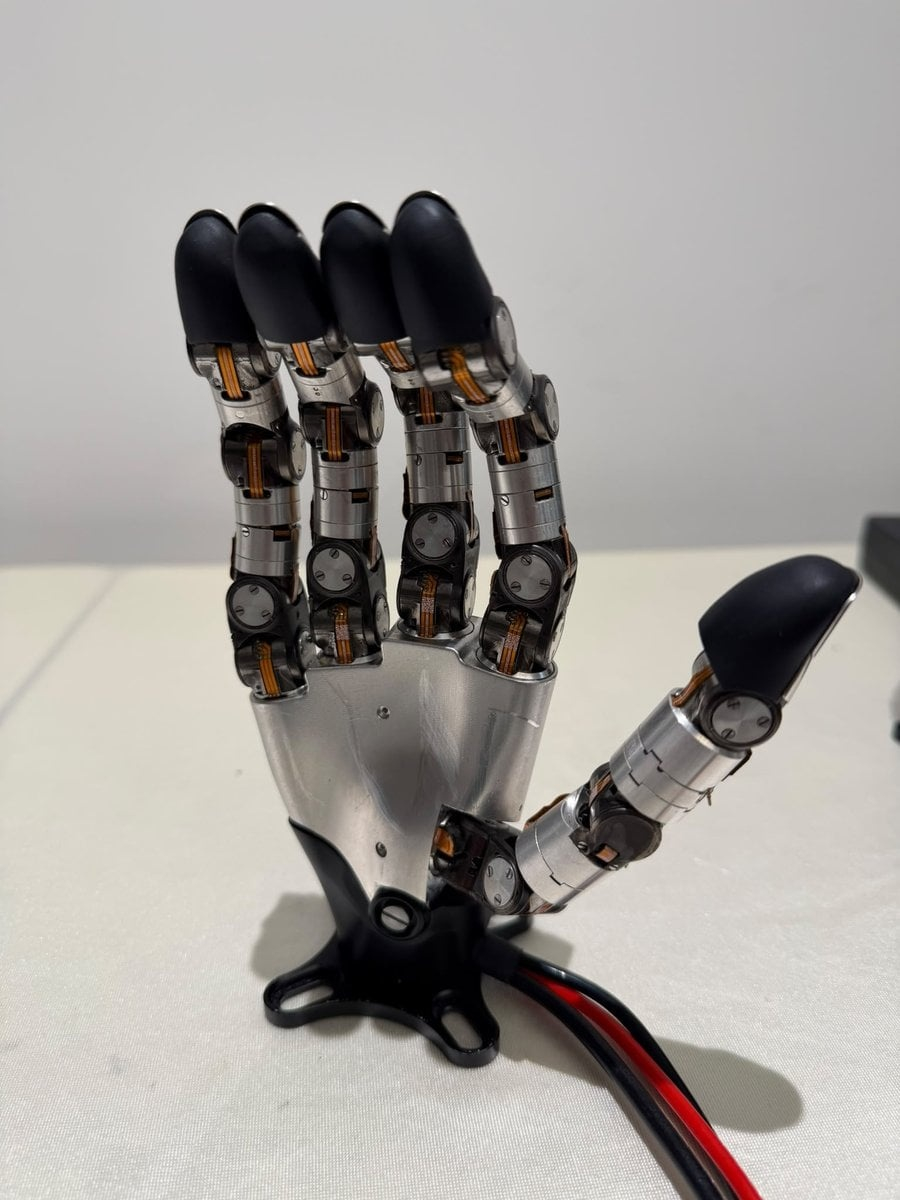
Take the dexterous hands made by Wuji Tech, for example. In a compact form factor close to the size of a human hand, the product integrates more than 1,800 components and outperforms any robotic hand we have seen in the US. Unsurprisingly, Wuji Tech is a quiet but key supplier behind many US tech giants.
Each finger can bend backward, greatly improving durability—a major priority in the robotic-hand field—as well as resistance to accidental impacts. On site, we watched the robotic hand, controlled remotely, precisely peel a single card from a full deck. This may seem effortless for a human, but it is a formidable challenge for robotic manipulation, requiring micron-level control over force and friction.
Another striking, slightly uncanny moment came when we saw a humanoid robot from UBTECH with realistic human skin. It immediately brought to mind the Cylons from Battlestar Galactica.

Another notable feature of the Chinese market is its fiercely intense, cutthroat competition. This relentless pressure keeps driving down product prices and squeezing industry profit margins to nearly zero.
One startup spent a full hour walking us through the technological breakthroughs it had made with its next-generation actuators. But when we asked what would ultimately set it apart in the market, the answer came straight back: “Of course, price is what matters most.” This company is far from alone in thinking that way.
Over lunch, the owner of a retail chain also lamented that it is hard to make a profit doing business in China. There is always a competitor willing to sacrifice this year’s profits to seize market share, hoping to make money next year. Then the next year arrives, and a new disruptor comes along to compete recklessly at an even lower price.
The spirit of “enduring hardship” is deeply rooted in Chinese culture. This willingness to grit one’s teeth and endure hardship over the long term certainly limits any single company’s ability to earn outsized commercial profits, making survival exceptionally difficult for every business. But at the macro level, it has given the country’s entire supply-chain industrial cluster astonishing overall competitiveness.
Beyond its cost and scale advantages, China’s position at the very top of the robotics supply chain gives it another natural advantage that is often underestimated abroad: the ability to gain close-up insight into how the world’s leading technologies are evolving.
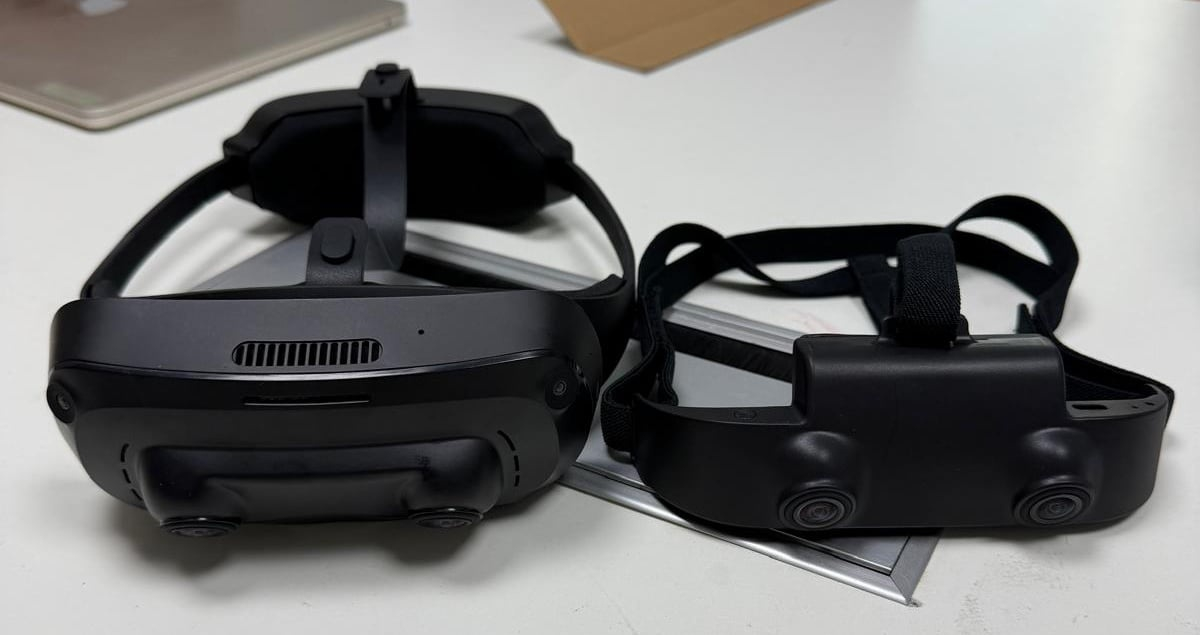
Leading robotics labs are constantly experimenting with new ways to collect data, from gloves equipped with tactile and force-feedback sensors to visual data-capture headsets fitted with eight high-definition cameras for recording a wider field of view.
As perhaps the only supplier in the world able to deliver this kind of cutting-edge hardware quickly and at low cost, Chinese manufacturers can spot subtle shifts in the technical needs of the world’s top labs very early—even anticipate the direction of the next generation of technology 3 to 6 months ahead of the broader market.
But can Chinese companies turn their manufacturing dominance and early access to market insights into core proprietary technology advantages of their own? That is an entirely different question. As our trip went on, our doubts only grew.
Data: Collection Is an Industry Bottleneck, Not a Competitive Moat
Almost every robotics company told us that China is carrying out large-scale data collection and providing this data extensively to customers around the world.
On the surface, this seems reasonable: companies have workers put on data-capture headsets to record first-person, proprioceptive data, earning some extra income in the process. But as we spoke with more startups in China’s ecosystem, it became clear that the underlying mechanisms were far more complicated than they appeared—and often involved explicit direction from local policymakers.
Several industry insiders told us that local governments at various levels in China are in fact the key force driving this wave of data collection. After the central government introduced incentives to support the robotics industry and promote employment, local governments quickly recognized that subsidizing data collection was a shortcut to creating new robotics-related jobs in the short term.
Driven by quantitative performance metrics, local officials often favor short-term results that are easy to measure. At times, this pursuit comes at the expense of broader, long-term industrial strategy.
Millions of dollars are continually being poured into training data of questionable value. So-called “data farms” have sprung up across China, where workers mechanically repeat the same movements day after day, amassing tens of thousands of hours of “robot training data.”
Yet beyond the first few batches, these highly repetitive, homogeneous datasets add virtually no meaningful value to a model’s ability to generalize.
Despite their questionable quality, these datasets can still be sold overseas in a steady stream. This points to a deeper and more sobering reality about the industry: data scarcity remains the biggest bottleneck in robotics model development. Unlike large language models, which can draw on vast amounts of existing text scraped from the internet, robotics has no comparable pool of ready-made data.
Moreover, genuinely valuable robotics training data comes in many forms, and the types of data needed to unlock the next generation of model performance have not yet reached a scale in the real world that makes them practically useful.
The true competitive moat, then, has never been data collection itself, but the ability to turn raw data into high-value training signals.
Encouragingly, an increasing number of early indicators suggest that scaling laws apply to robotics models as well: as the volume of training data grows, model performance improves predictably. This means there will be sustained, strong demand for high-quality, diverse, heterogeneous robotics training data—data that can precisely meet the evolving standards of multimodality, different collection methods, and new training architectures.
In an industry where the definition of “high-quality data” is constantly changing, the most defensible competitive moat lies in becoming an irreplaceable, trusted research partner to the world’s leading frontier labs.
The key to earning this kind of reputation is exceptional expertise and judgment in data annotation, cleaning and curation, and model evaluation—not simply relying on a large workforce to maximize collection capacity.
The winners are unlikely to be the teams that collect the most data, but those with deep research backgrounds in embodied AI who can keep pace with the technological evolution of frontier robotics companies. Just as Scale AI and Mercor have built close ties with the world’s leading large-model labs through their sophisticated research capabilities, the same dynamic applies in embodied AI.
Software: The Elephant in the Room
Robotic automation has been part of industry for decades. Amazon, for example, began introducing robots at scale into its warehouse and logistics operations after acquiring Kiva in 2012. By 2025, it had deployed more than 1 million robots, while continuing to introduce new forms and functions. Building increasingly advanced hardware is therefore simply a natural extension of industrial evolution.
The true paradigm shift in robotics is embodied AI. It breaks through the limitation of robots being narrowly preprogrammed for specific tasks, fundamentally expanding their ability to generalize, understand, and act.
But throughout all our visits in Shenzhen, AI software remained the “elephant in the room”—something no one wanted to bring up directly. Most of the humanoid robots and devices we saw had extremely limited autonomy and ability to generalize. The vast majority relied heavily on human teleoperation or preprogrammed, fixed movements.
Several company executives admitted that their robots currently lack advanced AI capabilities, and that their underlying software algorithms are at least 1 to 2 years behind leading overseas competitors. Conversations with junior employees often offered a less polished, more brutally honest picture. They joked that their software systems simply could not operate properly in complex environments, and that many of their previous efforts had not exactly been wholehearted.
Part of the reason is that our visit focused on hardware-heavy Shenzhen rather than Hangzhou or Shanghai, where software algorithms receive more attention. But this also reflects a broader underlying reality across the industry.
China’s dominance in the two core areas of hardware manufacturing and data collection has not translated naturally into a leading position in software algorithms. Many Chinese humanoid robot makers have not developed their own foundation models from the ground up. Instead, they continue to build their software capabilities on open-source models released by leading US labs, particularly the open-source ecosystems of OpenAI, Nvidia, and Physical Intelligence.
Our conversations with industry researchers suggest that many Chinese robotics companies would rather avoid making huge, capital-intensive investments in foundation-model development and focus instead on post-training and fine-tuning existing open-source models.
For US frontier-model labs, this creates a strategic opening: open source can become an extremely powerful market-distribution strategy, encouraging developers around the world to adopt their models and build ecosystems around them. As these foundation models become increasingly capable, Chinese manufacturers may have even less incentive to develop their own alternatives at the foundational level.
Model distillation has long been an open secret among Chinese companies, and some teams are clearly betting that they can replicate this approach in robotics. But unlike large language models, which can be distilled efficiently using synthetic text, robotics models pose much more complex engineering challenges.
Distilling robotics models requires not only a base-model algorithm, but also vast amounts of real-world physical interaction data, hardware-coordination infrastructure, and rigorous real-world testing. This makes it exponentially harder for even companies with strong hardware manufacturing capabilities to replicate the capabilities of the most advanced overseas models through distillation alone.
The Deep Divide in Business Norms
In a country that has gone from poverty to prosperity in the span of a single generation of executives, the deep imprint of material hardship is plain to see. Chinese society is suffused with a strong culture of striving and catching up, common in places where new wealth has risen rapidly: people want to make reliable business profits as quickly as possible, afraid of falling back into the poverty they remember all too well.
This may sound perfectly reasonable, but what truly surprised us was how profoundly this mindset has shaped the entire startup and venture-capital ecosystem.
During our visits to Chinese startups, we repeatedly heard an envious remark: “US startups don’t have to worry about making money in the short term.” It speaks directly to the intense pressure Chinese teams face from investors to commercialize quickly.
This divide stems from the generally short investment-return horizons in China’s venture-capital ecosystem. Many startups are expected to generate substantial revenue within 2 to 3 years of founding; as soon as they show some promise, investors are eager to push them toward an IPO.
We suspect that Chinese venture-capital firms’ lack of patience for long investment horizons has several causes. On the one hand, there is a shortage of alternative assets offering high returns (over the past decade, equities have traded in a narrow range, residential rental yields in top-tier cities have been around 1%, and capital controls impose further limits). On the other hand, there is a lack of long-term institutional limited partners (LPs) able to tolerate exceptionally long investment cycles, such as university endowments abroad.
This pushes startup teams to focus disproportionately on hardware contract manufacturing and outsourced data collection, businesses that generate revenue and return capital quickly, while steering clear of foundational software development, whose path to commercialization is long and uncertain.
The two markets also differ sharply in their attitudes toward intellectual-property protection. During our visits, we saw patent certificates proudly displayed on the corridor walls of many companies. But the fact that substantive IP protection is relatively weak is widely acknowledged across the industry.
This forces companies to commercialize every small innovation as quickly as possible, or risk having it copied by competitors at lower cost, who then seize the market first.
The result is a structural misalignment of incentives: China has built formidable barriers at the physical layer of robotics, but the current capital environment and performance incentives objectively discourage the patient, long-term investment needed to turn those physical advantages into software leadership.
Pantera’s Key Views on the Robotics Industry
As we left Shenzhen, we had a far clearer and more nuanced understanding than ever before of the global robotics industry’s stage of development, as well as the key gaps and opportunities that will shape its future evolution.
The Robotics Industry Is Still in Its Very Early Stages, and China Is an Indispensable Pillar
Our fieldwork in Shenzhen and conversations with Chinese robotics executives once again confirmed our view: the embodied-AI industry is still in its infancy. Hardware continues to improve, but at least among Chinese teams, there is broad agreement that software algorithms remain a long way from mature commercial deployment.
China’s importance to the global robotics supply chain is greater than ever. Chinese manufacturers are not only key producers of data-collection equipment, but also major suppliers of critical robot components.
Data remains the key bottleneck to unlocking models’ ability to generalize. As long as scaling laws continue to hold, collecting more diverse, higher-quality data will be essential to improving performance. China’s manufacturing ecosystem occupies a unique position in mass-producing data-collection hardware and reliably supplying critical components such as dexterous hands and actuators to global markets.
How China participates in the global robotics ecosystem in the future will directly determine the pace of the industry’s development worldwide. China is likely to retain its hardware dominance for the long term and continue to serve as a core supplier to global robotics companies (even if the FCC imposes a potential ban on complete robots, that restriction would not cover components).
If Chinese teams catch up in algorithms and models in the future, Chinese companies could gain enormous leverage over the global supply chain by raising prices for critical components or restricting hardware supply. This remains unlikely for now, but it is a key potential risk we must consider when assessing investments in US robotics companies.
The Economic Case for Using Robots in China Has Yet to Fully Emerge
Although humanoid robot shipments in China are currently impressive, almost none are being used in production settings that generate meaningful economic output. For now, Chinese humanoid robots are mainly deployed in low-commercial-value display and entertainment settings, such as offering simple directions to visitors in showrooms and at expos, or performing dances and kung fu routines. Most quadruped and even bipedal robots are still sold to university research labs or tech enthusiasts.
This stands in sharp contrast to the US market, where robots are rapidly entering high-value industrial manufacturing and warehouse logistics. Some companies have already secured long-term commercial purchase orders worth tens of millions of dollars.
The key reason for this fundamental divide is the vast difference in labor costs and supply structures between the two markets. High labor costs in the West, combined with younger generations’ aversion to blue-collar physical work, create a powerful economic incentive to reduce costs through automation.
Even so, technological progress often comes long before widespread commercialization. One Chinese entrepreneur shared a vivid analogy with us: today’s humanoid robots are like the first automobiles in the age of horse-drawn carriages. People at the time widely questioned their practical value because carriages already met everyday transportation needs. But they could not foresee that cars would eventually transform the entire landscape of transportation and give rise to a vast new industry.
We firmly believe that this pattern of disruptive evolution applies equally to humanoid robots. The public and businesses today struggle to understand why we need general-purpose humanoid robots simply because they have not yet seen the full potential that general-purpose embodied AI can ultimately unlock. Furthermore, because China lacks an urgent economic need to cut costs by replacing human labor, there is relatively little internal impetus to explore unprecedented commercial applications. This also makes the local startup ecosystem somewhat more conservative.
General-Purpose Humanoid Robots Will Ultimately Become the Lowest-Cost Form of Labor
One central question is hotly debated in the industry: if specialized robots perform specific tasks more efficiently and reliably, why does the world need general-purpose humanoid robots?
Our field research in China confirmed the current state of affairs: at this stage, specialized robots are indeed far more capable in practical tasks than general-purpose robots. By focusing on clearly defined, measurable niche tasks, specialized robots can reach commercial deployment faster.
However, specialized robots have a natural limit when it comes to scaling horizontally. A company cannot buy a dedicated robot for every different task in its day-to-day operations. Likewise, an average household is hardly going to buy one robot to wash dishes, another to wipe tables, another to do laundry, and yet another to fold clothes.
Specialized robots may perform better at an individual task, but when multiple machines are needed to handle a sequence of everyday jobs, the economics of purchasing and maintaining them quickly deteriorate.
We believe general-purpose humanoid robots will ultimately become the lowest-cost form of labor. Their core advantage is not performing one particular task with extreme precision of 99.9%, but being able to handle hundreds of completely different everyday jobs with 99% acceptable accuracy.
A humanoid robot does not need to be the best in the world at washing dishes, folding clothes, or doing laundry. It simply needs to do all three—and many other household chores—well enough. As models become better at generalizing, a single general-purpose hardware platform can unlock an infinitely expandable library of skills, without requiring businesses or households to buy additional specialized equipment.
Ultimately, the economic moat of general-purpose humanoid robots will not come from maximizing performance at any one task, but from maximizing the number of tasks a single machine can perform. This general-purpose ability to generalize, combined with improving operational reliability and continually falling manufacturing costs, will fundamentally transform the economics of physical labor.
The Data-Collection Market Is Huge, with Value Accruing in “Data Intelligence”
As more conclusive evidence emerges that scaling laws extend successfully to physical-world AI, robotics data collection is bound to become a massive market. Figure AI’s recently released Helix 2.5 model offers compelling real-world evidence: as the volume of training data doubles, robotics model capabilities improve in a highly predictable way.
Just as larger datasets and more computing power have driven leaps in the capabilities of large language models, robotics is following the same trajectory. As frontier labs accelerate their race toward general-purpose embodied AI, demand for robotics training data will continue to surge.
However, collecting more data does not automatically mean obtaining higher-quality data. Our fieldwork in China only strengthened this view. Large data farms may be able to churn out tens of thousands of hours of operational footage, but such highly homogeneous data delivers almost no marginal value in improving a model’s ability to generalize.
As the industry enters deeper waters, the bottleneck will quickly shift from “collecting more hours of data” to “precisely identifying the truly valuable core data segments.”
The true blue-ocean opportunity, then, is not in indiscriminate data collection, but in turning raw training hours into measurable gains in model capabilities. This requires more sophisticated systems for data annotation, filtering, cleaning, and evaluation, so that valuable training signals can be extracted from large volumes of redundant, low-quality pipeline data.
As robotics models evolve rapidly and continually reshape data standards, the specialized ability to identify and deliver high-value, high-quality datasets will create a far deeper competitive moat than simply scaling up data collection with more people.
Models Will Gradually Become Commoditized, but the US Will Maintain Its Algorithmic Lead over China
We believe competition among foundational robotics models is heating up rapidly, and over the long term these models face the risk of becoming commoditized.
Over the past few months, several leading US teams—including Physical Intelligence, Generalist, Dyna Robotics, and Figure AI—have independently announced major breakthroughs in model capabilities and generalization. The fact that multiple teams achieved meaningful breakthroughs in rapid succession suggests that frontier embodied AI is unlikely to be monopolized by two giants, as the large-model field has been by OpenAI and Anthropic.
Most blue-collar physical jobs do not require a superhuman IQ of 200. They require only a moderate ability to understand the environment, paired with excellent post-training and fine-tuning. As training methods mature and datasets grow, the industry’s focus will shift decisively from developing general-purpose foundation models to real-world deployment and task-specific post-training. In this landscape, companies betting solely on foundation models will find it increasingly difficult to maintain a differentiated competitive moat.
For the foreseeable future, we believe the US will maintain its lead over China in software algorithms. This is largely because Chinese robotics companies are more inclined to pursue immediate cash flow from hardware sales and outsourced data collection, and lack the patience to make long-term, capital-intensive R&D investments. Ongoing advances in foundational algorithms by US frontier labs will likely deepen Chinese manufacturers’ reliance on overseas open-source ecosystems.
Unlike large language models, which can be quickly replicated through text-based distillation, distilling embodied-AI models is far more difficult. Model cognition must be tightly integrated with real-world interaction data collected across diverse physical environments and different robot embodiments. A one-dimensional advantage in hardware manufacturing alone cannot easily overcome this complex barrier. We believe the generational gap between the US and China in embodied-AI software may prove more persistent than the gap we have observed in large language models.
Robotics Offers Significant Latecomer Advantages
Vast amounts of capital are currently being invested in resolving major foundational debates in robotics—for example, model architecture, mechanical design, and vertical integration versus horizontal specialization. Many early-stage startups are bound to reach dead ends along the way.
New teams entering the field today can learn from the pioneers’ experience and mistakes, avoid spending huge sums on trial and error, and build state-of-the-art architectures directly on the industry’s latest paradigm (Meta).
Conclusion
At 8 p.m. on the final evening of our trip, we climbed into the same car and set off for Hong Kong International Airport, bound for New York. After an intensive, in-depth tour of Shenzhen’s core robotics industrial clusters, we came away with a completely refreshed understanding of the global robotics industry.
“Genchi Genbutsu”—go and see for yourself. This field trip reaffirmed our belief that, in an age of information overload, being on the ground and seeing things firsthand remains the firmest foundation for fundamental investors to develop independent thinking and deep insight.
China will undoubtedly play a pivotal role in reshaping the future of global robotics, and we will continue to closely monitor how hardware, software, and everything in between evolve.
Decades of manufacturing experience have given China an enormous—and perhaps insurmountable—moat in hardware production. But the shortcomings of data collection driven by short-term quantitative targets are becoming apparent, while capital’s short-sighted focus on immediate returns also puts local companies at a greater disadvantage than their US counterparts when it comes to foundational innovation requiring long-term effort.
One thing is clearer than ever: when we left Shenzhen, we felt more confident than ever in the future prospects of robotics and firmly believed that now is an excellent time to make major investments in the industry.
Until foundational software has sufficient generalization capabilities to make humanoid robots genuinely productive, the industry will continue to face enormous structural gaps in data collection, high-dimensional annotation, and data intelligence. We are always looking for exceptional founders building breakthrough solutions in robotics data and embodied AI. If you are working in this space, our investment team would love to speak with you.