
I. Today's Outlook
Bitcoin is now at $70,530, down 4.48% over the past 24 hours. Ethereum is at $2,000.03, down 2.77%. Over a longer time frame, Bitcoin has fallen 6.81% over the past seven days, and its current price is slightly below the seven-day low of $70,688. Ethereum is also near the lower end of its seven-day range. This decline was not triggered by a single sudden news event: the cumulative drop over the past three days is 5.5%, and volatility is also increasing. Today's early-morning volatility was 1.72 times the seven-day average. There are clear signs of deleveraging in the futures market, with liquidations exceeding $750 million over 24 hours, up 166% from the previous day. Funding rates remain positive, however, suggesting that bulls have not fully given up, although they have been forced to cut some of their positions.

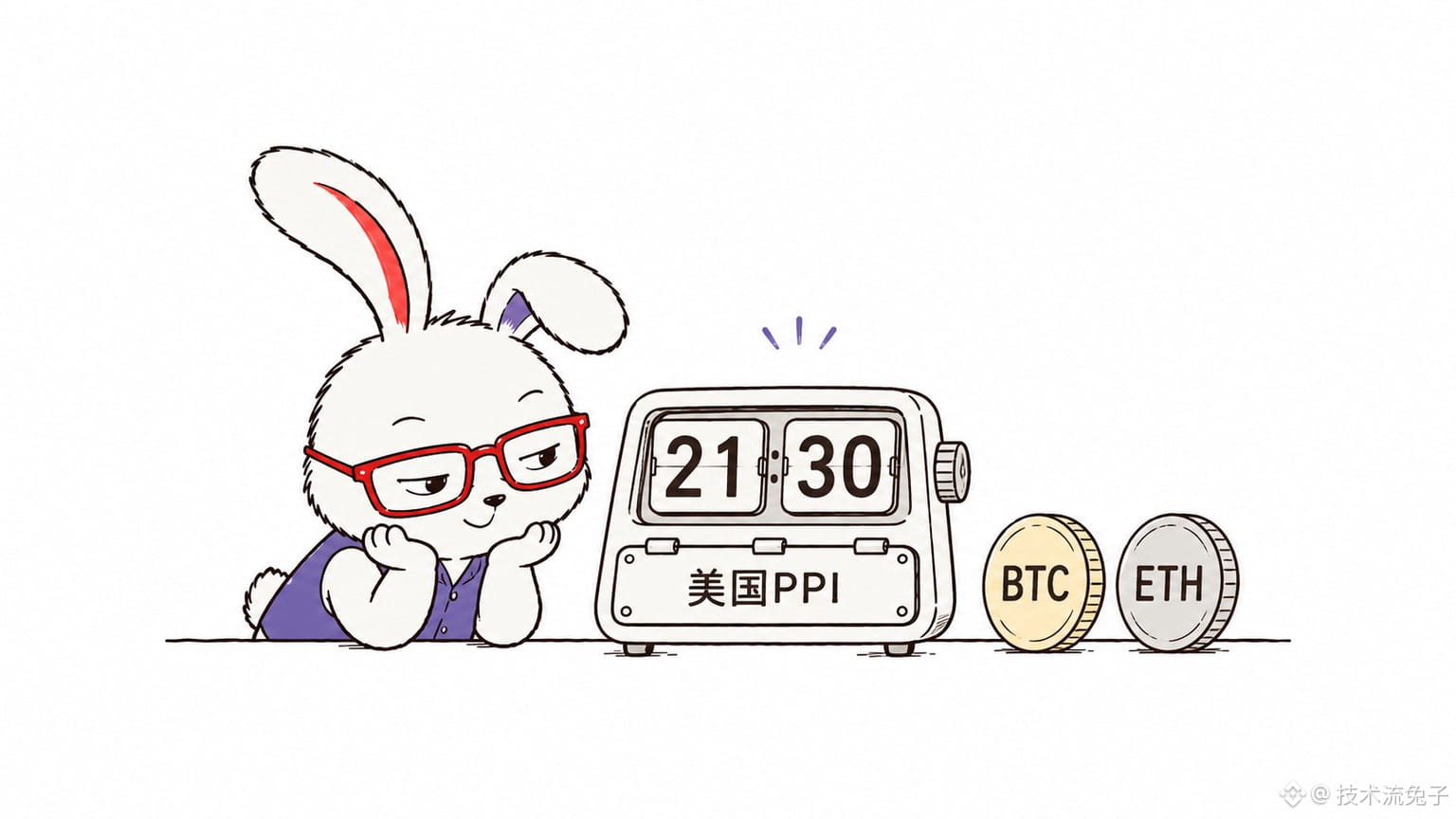
The main pressure on the market still comes from the macroeconomic front. The U.S. 30-year Treasury yield has climbed to 5.445%, and the U.S. Dollar Index has risen above 103. Together, these are classic signs of reduced risk appetite. Treasury yields can be thought of as the interest people can earn without taking risks: the higher the yield, the more inclined people are to shelter in safe assets. Like bringing in the washing when it rains, high-risk assets are sold first. A stronger dollar also puts indirect pressure on all dollar-denominated assets, including Bitcoin and Ethereum. San Francisco Fed President Daly said this morning that further rate hikes may be necessary, and market expectations for a 25-basis-point hike in December have risen to 84.7%, further tightening liquidity expectations. If U.S. PPI, due at 21:30 tonight, comes in above expectations again, this pressure may persist; a lower-than-expected reading could give the market some breathing room.

The most heated topic in the community today was not macroeconomic data, but the rumor that Nvidia CEO Jensen Huang is stepping down. Many posts treated it as the trigger for this downturn. This can only be seen as a sentiment-based explanation; the news flow in the material contains no such report, so it is a discussion point rather than a fact. More people are turning their attention back to more concrete liquidity signals, such as Treasury yields, ETF outflows, and stablecoin contraction. Opinions are divided: some believe this is just a short-term sentiment-driven sell-off, while others think it marks the beginning of a weakening medium-term trend. The Fear and Greed Index is now just 21, indicating very low market sentiment. At this point, the real variable is not who is calling for a rally, but whether tonight's PPI data will further fuel rate-hike expectations, and whether real interest rates and the U.S. Dollar Index can stop rising.
II. Today's News
1. The U.S. 30-year Treasury yield rose to 5.445%
This came after the auction, as long-term U.S. Treasury yields continued to rise. Treasury yields serve as a benchmark for risk-free returns. The higher they go, the less willing investors are to take risks on volatile assets such as stocks and cryptocurrencies. The 30-year yield reaching 5.445% means long-term financing costs have risen further, creating real pressure for risk assets that depend on liquidity. The negative correlation between this indicator and Bitcoin tends to intensify when sentiment is bearish. Many community discussions today ranked it as a more significant factor than news about individual tech stocks.
2. Fed's Daly: Further rate hikes may be necessary to curb inflation
San Francisco Fed President Daly is not a voting member this year, but her comments still added a hawkish note to the market. She said companies are increasingly willing to pass on costs, supported a rate hike in September and holding rates steady in October, and said further tightening may be necessary. The market-implied probability of a 25-basis-point rate hike in December has reached 84.7%, while another 15.3% are even betting on a 50-basis-point hike. As rate-hike expectations rise, the dollar and short-term interest rates are more likely to strengthen, draining some of the dollar liquidity that had previously flowed into risk-taking.
3. The U.S. Dollar Index rose 0.26%, closing at 103.174
A stronger U.S. dollar and cryptocurrencies often move like a seesaw. When the dollar appreciates, Bitcoin and Ethereum become more expensive when converted into other currencies, which can dampen some buying. A strong dollar also often signals tighter global dollar liquidity, putting risk assets under broad pressure. The 103.174 level is not extreme, but alongside rising Treasury yields, today's market clearly showed a greater willingness to stay in dollar assets.
4. Chainlink Reserve buys another 106,300 LINK, bringing cumulative purchases to 6.68 million
Amid the broad market decline, a Chainlink reserve address bought another 106,300 LINK today, bringing its purchases over the past 30 days to 471,200 LINK. This is an on-chain purchase that can be verified from the address; it does not necessarily mean that institutions have a long-term intention, but it does at least show that some project-related funds are still allocating against the trend. Community discussions also mentioned that traditional financial institutions are entering crypto without prices immediately benefiting. Such purchases are more a part of the long-term narrative and offer limited support to prices in the short term.

III. Crypto Calendar
Today's Events
21:30: U.S. PPI year over year and month over month; core PPI year over year and month over month — These producer-price indicators directly affect market expectations for U.S. inflation and the pace of Federal Reserve rate hikes, and can also influence short-term Bitcoin and Ethereum volatility through the dollar and interest-rate expectations.
08:00: Aztec (AZTEC) unlocks approximately 797 million tokens, worth about $10.3 million — A large unlock increases the circulating supply. If holders sell, it could create selling pressure, but this project is relatively independent, so the impact on major tokens is limited.
Time TBD: Users of Kaia public delegated staking must manually migrate to a new contract; detailed instructions will be released today — This only concerns the migration of staking on the Kaia chain and mainly affects relevant users, with little impact on overall crypto-market sentiment.
Upcoming Events
November 14, 11:00: YZY (YZY) unlocks approximately 29.17 million tokens, worth about $8.4 million — These tokens will be tradable after the unlock, increasing short-term supply. The amount is not large, so the main thing to watch is whether the project team and early investors are willing to sell.
November 15, 08:00: Starknet (STRK) unlocks approximately 127 million tokens, worth about $5 million — This is also a supply-side event. The number of tokens is substantial, but their value is limited. Sentiment fluctuations often occur around unlocks; the real impact depends on whether large transfers take place.
IV. Sentiment Monitoring
Community discussions are broadly bearish. None of the 12 technical-analysis discussions were emotional in tone; all were trying to explain this downturn. The main focus was a rumor that Nvidia CEO Jensen Huang is stepping down. Many posts treated it as the trigger for the crypto sell-off, but this was speculation within the discussions, not a fact reflected in the news flow, so it can only be considered a possible explanation for the sentiment shock. A more concrete concern is the rapid rise in U.S. Treasury yields, which many discussions see as a better explanation for pressure on risk assets than news about a single tech company. Consecutive net outflows from crypto ETFs and a contraction in the stablecoin market were cited as evidence of weakening liquidity, with a distinctly defensive tone in the discussions. The fact that traditional financial institutions are moving into crypto more quickly without Bitcoin benefiting has also led some to question how institutional participation is supposed to translate into price gains. No consensus has formed on a single direction: the disagreement centers on whether this is a short-term sentiment shock or the start of a weakening medium-term trend. However, most posts acknowledge that macroeconomic and liquidity pressures are increasing. Discussions also repeatedly mentioned crowded leverage and the divergence between spot and futures markets, with the view that futures positions may have amplified the speed of this downturn while spot holders are relatively more hesitant.
This article is compiled from the day's market data, important news, and sentiment monitoring. It is for reference only and does not constitute investment advice.